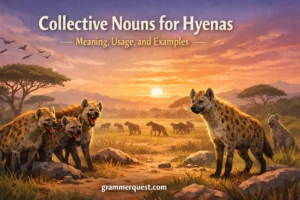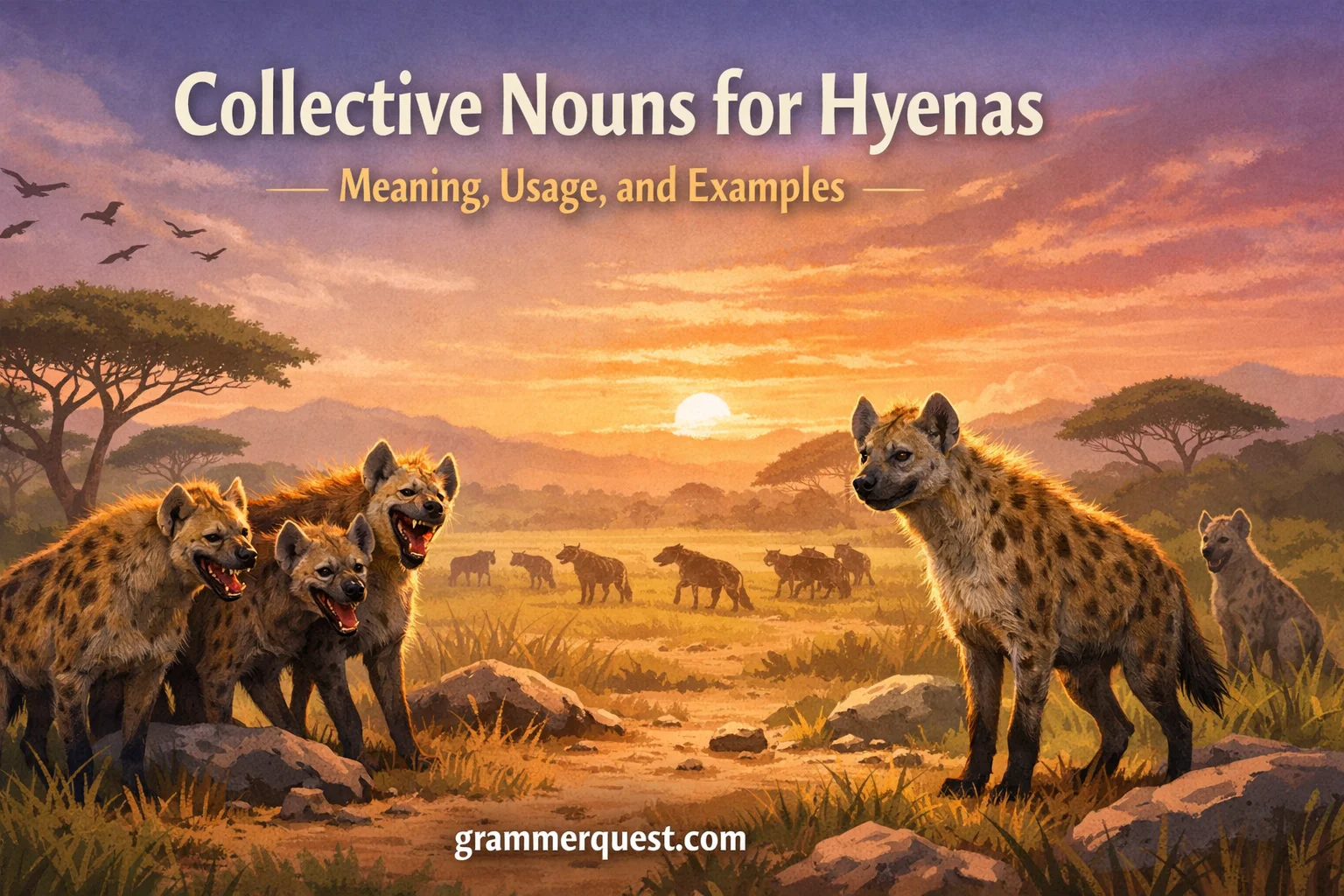
Collective Nouns for Hyenas: Meaning, Usage, and Examples help us understand how hyenas live, behave, and form groups in the wild. Learning this topic also makes safari experiences more fun, educational, and easy to understand for all ages.
On an African safari, you quickly notice how nature offers thrilling wildlife experiences, especially in Southern Africa, where diverse ecosystems support many animals. A game drive shows Big Five sightings, herds roaming savannas, and moments to witness nature. Collective nouns add knowledge, fun, and depth to the experience.
These terms describe groups of animals and reflect behaviour, social structure, and physical traits. This helps travellers identify animal groupings and gain insight into life in the bush. It also helps engage children, encourage learning, and impress guests. Hyenas often laugh, hunt, and challenge lions as a group. So, what is a group of hyenas called? The answer depends on experts or friends, but it is descriptive and appropriate.
Collective Nouns for Hyenas
Below is a simple table to help you understand the most commonly used collective nouns for hyenas:
TypeExample UsageClanA clan of hyenas gathered near the water.CackleA cackle of hyenas echoed through the night.Pack (less common)A pack of hyenas moved across the plains.
Examples and Usage in Sentences
Clan of Hyenas
The word clan is the most accurate and widely used collective noun for hyenas, reflecting their strong social structure.
Examples:
- A clan of hyenas rested under the shade during the heat of the day.
- The clan of hyenas worked together to hunt their prey.
- We spotted a clan of hyenas near the watering hole.
- The clan of hyenas defended their territory fiercely.
- A large clan of hyenas surrounded the carcass.
Cackle of Hyenas
This term comes from the unique laughing sounds hyenas make, often heard at night.
Examples:
- A cackle of hyenas filled the air with eerie laughter.
- We heard a cackle of hyenas in the distance after sunset.
- The cackle of hyenas signaled their presence nearby.
- A cackle of hyenas gathered as the hunt ended.
- The forest echoed with a cackle of hyenas.
Pack of Hyenas (Less Common)
Though not as precise, pack is sometimes used informally.
Examples:
- A pack of hyenas followed the migrating herd.
- The pack of hyenas moved quickly across the savannah.
- We saw a pack of hyenas near the riverbank.
- The pack of hyenas chased away other scavengers.
- A hungry pack of hyenas searched for food.
Read More: Collective Nouns for Mosquitoes: A Detailed Guide
Interesting Facts About Hyenas
- Hyenas are highly social animals that live in structured groups led by dominant females.
- A hyena clan can include up to 80 members, making it one of the largest carnivorous groups.
- Despite their reputation as scavengers, hyenas are skilled hunters.
- Their “laughing” sound is actually a form of communication used to express excitement or stress.
- Female hyenas are typically larger and more dominant than males.
- Hyenas have incredibly strong jaws capable of crushing bones.
- They play an important role in ecosystems by cleaning up remains and preventing disease spread.
FAQs:
1. What are collective nouns?
Collective nouns are terms used to describe groups of animals, and they help us understand their behaviour and social structure.
2. What is a group of hyenas called?
A group of hyenas is commonly called a clan, which reflects their strong group and behaviour in the wild.
3. Why are collective nouns important?
They help travellers and learners identify animal groupings, making learning more fun and easy.
4. Where can you see hyenas in groups?
You can see hyenas in groups during an African safari, especially in Southern Africa.
5. Do collective nouns help in education?
Yes, they improve education and give fascinating insight into animals and their habits.
6. Are collective nouns used for all animals?
Yes, almost all animals have collective nouns that describe their groups and behaviour.
7. Why are hyenas interesting?
Hyenas are interesting because they laugh, hunt, and challenge lions as a group.
8. How do collective nouns help children?
They help engage children, encourage curiosity, and make learning more fun.
9. Can collective nouns change?
Yes, some terms can change based on context and usage, but many are widely accepted.
10. What makes hyenas unique in groups?
Their social structure, behaviour, and unique sounds make them stand out in the animal kingdom.
Conclusion:
Collective nouns for hyenas help us better understand their group behaviour, social structure, and role in the animal kingdom. These terms are not just language tools, but they also make wildlife learning more fascinating, engaging, and fun for everyone, especially during an African safari.
In simple words, learning about a group of hyenas—their clan and their behaviour—adds depth to your knowledge and enhances your overall experience. It also helps you identify animals more easily and enjoy nature in a more meaningful way.

Emma Brooke is a passionate language enthusiast and the voice behind GrammarQuest.com. With a sharp eye for detail and a love for clear communication, she simplifies complex grammar rules into easy, practical lessons. Her goal is to help you write with confidence, clarity, and style—whether you’re a student, professional, or everyday writer.