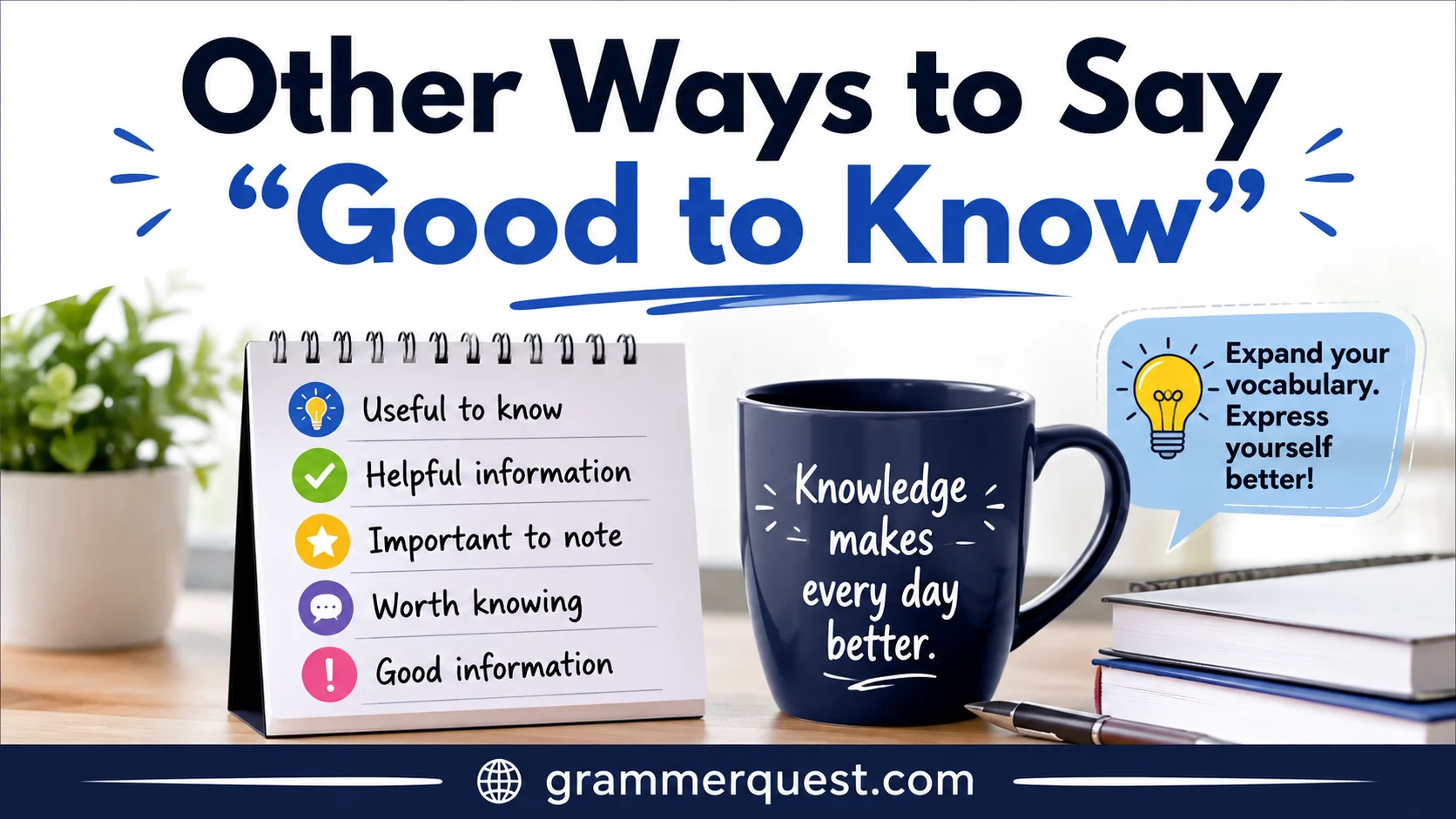
“Other Ways to Say “Good to Know” (With Examples)” can help you respond naturally when someone shares new information, an update, advice, or something important. While “good to know” is common in everyday conversations, using different expressions can make your English communication sound more natural and engaging. The right phrase can show appreciation, interest, politeness, or confidence without making your response feel repetitive or robotic.
Learning these alternatives is especially useful in professional emails, workplace conversations, school discussions, text messages, and friendly chats. Depending on the situation, you might want to sound friendly, professional, warm, or thoughtful. Choosing the right expression helps you acknowledge information clearly, show respect and attentiveness, and communicate your thoughts more effectively in both personal and professional situations.
Did You Know “Good to Know” Can Have Different Meanings?
The phrase “Good to Know” is a simple but powerful expression that shows appreciation for valuable information. It can mean that something is useful, helpful, interesting, or worth remembering.
Although it is often used casually, the meaning changes depending on tone and context. For example, saying “Good to know, thanks!” shows gratitude, while saying “That’s good to know before we make a decision” shows that the information will influence future actions.
This phrase is commonly used in workplaces, education, customer service, friendships, and daily conversations. Learning different alternatives allows speakers and writers to express themselves with more variety.
What Does “Good to Know” Mean?
“Good to Know” means that the information someone has provided is valuable, useful, or helpful to understand. It is a positive response that acknowledges the importance of a fact, suggestion, or piece of advice.
The expression can be used when learning something new, confirming information, or showing appreciation for someone’s effort in sharing knowledge. It does not always mean excitement; sometimes it simply shows awareness and acceptance.
For example:
Person A: “The meeting has been moved to Friday afternoon.” Person B: “Good to know. I’ll adjust my schedule.”
Here, the phrase means that the information is helpful because it allows the listener to prepare.
Professional or Polite Ways to Say “Good to Know”
In professional environments, replacing “Good to Know” with more formal expressions can make communication sound more respectful and polished. Business emails, workplace discussions, presentations, and official conversations often require a slightly more refined tone.
Some professional alternatives include:
- That is helpful information.
- I appreciate you sharing this.
- That is valuable to know.
- Thank you for bringing this to my attention.
- This information is very useful.
These expressions show that you value the information while maintaining a professional tone.
“Good to Know” Synonyms
- Helpful to Know
- Useful Information
- Valuable Insight
- That’s Helpful
- I Appreciate the Information
- Thanks for Letting Me Know
- That’s Great to Hear
- Noted, Thank You
- I’m Glad I Know This
- That’s Worth Knowing
- This Is Important Information
- I’m Happy to Learn This
- That’s Good Information
- I’ll Keep That in Mind
- This Helps a Lot
- I’m Grateful for the Update
- That Makes Sense
- This Is Useful to Remember
- I Value This Information
- That’s Interesting to Know
- I’m Thankful for the Details
- This Is Great Insight
- I’m Informed Now
- That Clears Things Up
- I’m Glad You Mentioned It
1. Helpful to Know
Definition: “Helpful to Know” means that the information provided is useful and can assist someone in making a decision or understanding a situation better.
It is a friendly and practical alternative to “Good to Know” that highlights usefulness.
Meanings:
The phrase “Helpful to Know” expresses that a piece of information has value because it provides guidance, support, or awareness. It is commonly used when someone shares advice, instructions, or important details that can make a task easier.
Example:
“Your tips about preparing for the interview were helpful to know. I feel more confident now.”
Detailed Explanation:
Helpful to Know is a versatile phrase suitable for both personal and professional conversations. It shows that you recognize the benefit of the information someone has shared. This expression focuses more on practicality than excitement, making it ideal when the information will help you complete a task or avoid a problem. It creates a positive impression because it acknowledges the effort someone made to provide useful knowledge.
Tone: Friendly, practical, appreciative, and polite.
Best use: Use it when someone gives advice, instructions, recommendations, or information that improves your understanding.
2. Useful Information
Definition: “Useful Information” refers to facts, details, or knowledge that can help someone in a meaningful way.
It is a more formal alternative to “Good to Know” often used in professional settings.
Meanings:
The phrase highlights that the information has practical value. It suggests that the details shared are not only interesting but also beneficial for future actions or decisions.
Example:
“The report contains useful information about customer preferences.”
Detailed Explanation:
Useful Information is commonly used in workplaces, education, research, and formal communication. Unlike casual phrases, it emphasizes the importance and application of knowledge. When someone says information is useful, they are recognizing that it can solve a problem, improve understanding, or support better choices. This phrase works well in emails, meetings, and written communication.
Tone: Professional, clear, and informative.
Best use: Use it in business communication, reports, presentations, and educational discussions.
3. Valuable Insight
Definition: “Valuable Insight” means an important understanding or perspective that helps someone see a situation more clearly.
It expresses that the information shared has deeper meaning or importance.
Meanings:
This phrase goes beyond basic facts and suggests that the information provides wisdom, understanding, or a new viewpoint. It is often used when someone shares experience-based knowledge.
Example:
“Your experience with this project gave me a valuable insight into managing teams.”
Detailed Explanation:
Valuable Insight is an excellent alternative when the information shared helps someone think differently or make better decisions. It is commonly used in professional, academic, and leadership environments. The phrase shows respect for someone’s knowledge and experience. It can also express admiration when a person provides advice based on expertise.
Tone: Respectful, professional, and thoughtful.
Best use: Use it when discussing expert opinions, advice, lessons, or meaningful information.
4. That’s Helpful
Definition: “That’s Helpful” means that something someone said or provided is useful and makes a situation easier.
It is a simple, natural, and conversational alternative to “Good to Know.”
Meanings:
The phrase shows appreciation for assistance or information. It is commonly used when someone provides a suggestion, answer, or explanation that solves a problem.
Example:
“Knowing the store closes late is helpful. I can visit after work.”
Detailed Explanation:
That’s Helpful is one of the most common everyday alternatives to “Good to Know.” It works well in casual conversations because it sounds warm and genuine. It tells the speaker that their information has made a positive difference. This phrase is suitable for friends, coworkers, customers, and family members.
Tone: Casual, friendly, and appreciative.
Best use: Use it during everyday conversations, chats, and informal professional discussions.
5. I Appreciate the Information
Definition: “I Appreciate the Information” expresses gratitude for someone sharing useful knowledge or details.
It is a polite and professional way to acknowledge helpful information.
Meanings:
This phrase focuses on gratitude rather than simply recognizing information. It shows respect toward the person who took time to provide details.
Example:
“I appreciate the information about the updated schedule. It helps me plan better.”
Detailed Explanation:
I Appreciate the Information is especially useful in professional communication because it sounds respectful and thoughtful. It creates a positive relationship by showing that you value someone’s effort. This expression is often used in emails, workplace conversations, customer interactions, and formal discussions where politeness matters.
Tone: Professional, grateful, and respectful.
Best use: Use it in emails, workplace messages, customer service, and formal conversations.
6. Thanks for Letting Me Know
Definition: “Thanks for Letting Me Know” is a polite expression used to show appreciation when someone shares information with you.
It is a natural alternative to “Good to Know” that focuses on gratitude and acknowledgment.
Meanings:
This phrase means that you appreciate receiving an update, reminder, explanation, or important detail. It recognizes the effort someone made to keep you informed and shows that the information is valuable.
Example:
“Thanks for letting me know about the schedule change. I’ll be prepared for the new timing.”
Detailed Explanation:
Thanks for Letting Me Know is one of the most commonly used alternatives to “Good to Know” in everyday and professional communication. It sounds friendly while still being respectful. This phrase works especially well when someone provides an update, correction, reminder, or announcement. It helps create positive communication because it shows that you value being informed and appreciate the other person’s effort.
Tone: Friendly, polite, appreciative, and conversational.
Best use: Use it in emails, text messages, workplace conversations, and casual discussions when someone gives you new information.
7. That’s Great to Hear
Definition: “That’s Great to Hear” expresses happiness or excitement after receiving positive information.
It is a warmer alternative to “Good to Know” when the information brings a positive feeling.
Meanings:
This phrase means that the information shared is pleasing, encouraging, or welcome. It is often used when someone shares good news, progress, success, or positive updates.
Example:
“You got the promotion? That’s great to hear! Congratulations.”
Detailed Explanation:
That’s Great to Hear adds emotional value to a conversation because it shows genuine interest and happiness. While “Good to Know” simply acknowledges information, this phrase communicates a stronger positive reaction. It is commonly used between friends, family members, and coworkers when responding to achievements, improvements, or exciting news.
Tone: Warm, cheerful, supportive, and positive.
Best use: Use it when responding to good news, achievements, successful results, or encouraging updates.
8. Noted, Thank You
Definition: “Noted, Thank You” means that you have received, understood, and recorded the information provided.
It is a concise and professional alternative to “Good to Know.”
Meanings:
This phrase shows that you acknowledge information and will remember or act on it when necessary. It is often used in professional settings where clear communication is important.
Example:
“The deadline has been moved to Monday.” “Noted, thank you. I’ll submit the report accordingly.”
Detailed Explanation:
Noted, Thank You is commonly used in workplaces, business emails, and formal conversations. It communicates that you have understood the message without needing a long response. Although brief, it remains polite because it includes appreciation. This expression is useful when responding to instructions, updates, reminders, or important announcements.
Tone: Professional, brief, respectful, and efficient.
Best use: Use it in emails, workplace chats, meetings, and formal communication.
9. I’m Glad I Know This
Definition: “I’m Glad I Know This” expresses happiness or relief after learning something important.
It is a personal and emotional alternative to “Good to Know.”
Meanings:
This phrase shows that the information has personal value. It suggests that knowing this detail will make a situation easier, safer, or more understandable.
Example:
“I’m glad I know this before traveling. Now I can prepare properly.”
Detailed Explanation:
I’m Glad I Know This is often used when information prevents confusion or helps someone make better decisions. It carries a stronger emotional response than simple acknowledgment because it shows appreciation for gaining knowledge at the right time. This phrase works well in personal conversations and situations where information has a direct impact.
Tone: Personal, thankful, relieved, and sincere.
Best use: Use it when learning important facts, advice, warnings, or helpful details.
10. That’s Worth Knowing
Definition: “That’s Worth Knowing” means that the information is important enough to remember or consider.
It is a thoughtful alternative to “Good to Know” that highlights importance.
Meanings:
This phrase suggests that the information has special value and should not be ignored. It is often used when something can influence choices, actions, or understanding.
Example:
“The company offers free training programs. That’s worth knowing before applying.”
Detailed Explanation:
That’s Worth Knowing is useful when you want to emphasize that information deserves attention. It is stronger than simply saying something is good to know because it suggests the detail may have practical importance. This expression is common in discussions about opportunities, advice, recommendations, and important facts.
Tone: Thoughtful, informative, and slightly formal.
Best use: Use it when sharing valuable tips, opportunities, warnings, or important facts.
11. This Is Important Information
Definition: “This Is Important Information” highlights that a piece of knowledge has significant value or importance.
It is a formal alternative to “Good to Know.”
Meanings:
The phrase communicates that the information should receive attention and may affect future decisions or actions. It is often used when discussing serious topics.
Example:
“The safety instructions are important information for all employees.”
Detailed Explanation:
This Is Important Information is commonly used in professional, educational, and official environments. It tells the listener that the information should be remembered and taken seriously. Unlike casual expressions, this phrase carries authority and emphasizes the importance of understanding the details being shared.
Tone: Formal, serious, and informative.
Best use: Use it in workplace training, announcements, reports, instructions, and educational settings.
12. I’m Happy to Learn This
Definition: “I’m Happy to Learn This” expresses pleasure or satisfaction after discovering new information.
It is a positive and personal way to say “Good to Know.”
Meanings:
This phrase shows enthusiasm for gaining knowledge. It suggests that the information brings benefit, improvement, or a positive feeling.
Example:
“I’m happy to learn this new technique. It will improve my work.”
Detailed Explanation:
I’m Happy to Learn This reflects curiosity and a willingness to grow. It is especially suitable when someone shares knowledge, skills, or opportunities for improvement. The phrase creates a friendly atmosphere because it shows appreciation for learning rather than simply receiving information. It works well in educational, professional, and personal situations.
Tone: Positive, curious, and appreciative.
Best use: Use it when learning new skills, ideas, methods, or helpful information.
13. That’s Good Information
Definition: “That’s Good Information” means that the details shared are useful, relevant, or valuable.
It is a straightforward alternative to “Good to Know” that recognizes the quality of the information.
Meanings:
This phrase shows that you consider the information helpful and worth considering. It is often used when someone provides facts, updates, or explanations that improve understanding.
Example:
“The new software will save employees several hours each week.” “That’s good information. It will help us plan better.”
Detailed Explanation:
That’s Good Information is a simple expression that works in both casual and professional conversations. It acknowledges that the information has practical value without sounding overly emotional. This phrase is useful when discussing reports, research, workplace updates, or everyday facts. It shows that you have received the message positively and recognize its usefulness.
Tone: Neutral, positive, and informative.
Best use: Use it during discussions, meetings, learning situations, and conversations where facts are being shared.
14. I’ll Keep That in Mind
Definition: “I’ll Keep That in Mind” means that you will remember and consider the information in the future.
It is a thoughtful alternative to “Good to Know” that shows attention and consideration.
Meanings:
This phrase indicates that the information may influence your future actions, choices, or decisions. It shows that you value the advice or suggestion someone has provided.
Example:
“I’ll keep that in mind when I choose a new laptop. Thanks for the advice.”
Detailed Explanation:
I’ll Keep That in Mind is commonly used when someone shares recommendations, warnings, suggestions, or important reminders. It does more than acknowledge information because it shows that you plan to use or remember it. This phrase is especially useful when responding to advice from experienced people or when discussing future plans.
Tone: Respectful, thoughtful, and considerate.
Best use: Use it when receiving advice, suggestions, feedback, or reminders.
15. This Helps a Lot
Definition: “This Helps a Lot” means that the information or assistance provided is very useful.
It is a warm and appreciative alternative to “Good to Know.”
Meanings:
The phrase expresses gratitude and shows that someone’s information has made a situation easier. It focuses on the positive impact of what was shared.
Example:
“Your explanation about the process helps a lot. Now I understand what to do.”
Detailed Explanation:
This Helps a Lot is a natural phrase used in everyday conversations when someone provides support, guidance, or useful details. It creates a friendly connection because it directly acknowledges the benefit of another person’s help. This expression is suitable for personal conversations, teamwork, customer support, and learning situations.
Tone: Friendly, grateful, and sincere.
Best use: Use it when someone solves a problem, provides guidance, or makes something easier.
16. I’m Grateful for the Update
Definition: “I’m Grateful for the Update” expresses appreciation for receiving new information or a recent change.
It is a polite and professional alternative to “Good to Know.”
Meanings:
This phrase shows that you value being informed and appreciate the effort someone made to provide an update. It is often used when receiving important changes or progress reports.
Example:
“I’m grateful for the update about the project timeline. It helps us prepare properly.”
Detailed Explanation:
I’m Grateful for the Update is an excellent phrase for professional communication because it combines appreciation with respect. It is especially useful when responding to emails, project updates, announcements, or status reports. The phrase creates a positive impression because it recognizes the importance of clear communication and teamwork.
Tone: Professional, thankful, and respectful.
Best use: Use it in business emails, workplace conversations, project discussions, and formal messages.
17. That Makes Sense
Definition: “That Makes Sense” means that you understand and accept the information or explanation given.
It is a conversational alternative to “Good to Know” that shows understanding.
Meanings:
This phrase communicates that something is logical, reasonable, or clear. It is often used after receiving an explanation or learning the reason behind something.
Example:
“Traffic is heavier today because of the event downtown.” “That makes sense. I wondered why the roads were so busy.”
Detailed Explanation:
That Makes Sense is widely used in casual and professional conversations. While it does not directly express gratitude, it shows that the information has helped you understand a situation. It is useful when someone explains a process, decision, or reason. This phrase creates a feeling of agreement and connection during conversations.
Tone: Natural, understanding, and conversational.
Best use: Use it when someone explains something, provides reasoning, or clears up confusion.
18. This Is Useful to Remember
Definition: “This Is Useful to Remember” means that certain information should be kept in mind for future situations.
It is a practical alternative to “Good to Know” that emphasizes memory and importance.
Meanings:
The phrase suggests that the information may become valuable later. It highlights the benefit of remembering a fact, rule, suggestion, or piece of advice.
Example:
“This is useful to remember when preparing your presentation because timing matters.”
Detailed Explanation:
This Is Useful to Remember is commonly used in educational and professional settings. It encourages people to store important information for future use. This phrase works well when sharing lessons, instructions, tips, or experiences. It shows that the information is not only helpful now but may continue to provide value over time.
Tone: Educational, practical, and thoughtful.
Best use: Use it for advice, lessons, instructions, training, and important reminders.
19. I Value This Information
Definition: “I Value This Information” means that you consider the knowledge shared to be important and meaningful.
It is a respectful and formal alternative to “Good to Know.”
Meanings:
This phrase expresses appreciation and shows that the information has significance. It often suggests respect for the person who provided the knowledge.
Example:
“I value this information because it will help us make better decisions.”
Detailed Explanation:
I Value This Information is often used in professional, academic, and leadership settings. It communicates a deeper level of appreciation compared to simple acknowledgment. This phrase is suitable when someone provides expert advice, research findings, or important insights. It demonstrates respect and encourages positive communication.
Tone: Formal, respectful, and appreciative.
Best use: Use it in professional emails, meetings, research discussions, and serious conversations.
20. That’s Interesting to Know
Definition: “That’s Interesting to Know” expresses curiosity and appreciation after learning something new.
It is a friendly alternative to “Good to Know.”
Meanings:
This phrase shows that the information caught your attention and increased your understanding. It is often used when discovering unusual facts or new ideas.
Example:
“That’s interesting to know. I didn’t realize the company started so many years ago.”
Detailed Explanation:
That’s Interesting to Know adds curiosity and engagement to a conversation. It is especially useful when discussing history, culture, personal experiences, discoveries, or surprising facts. The phrase encourages further discussion because it shows genuine interest in the topic. It helps conversations feel more natural and interactive.
Tone: Curious, friendly, and engaging.
Best use: Use it when learning surprising facts, stories, experiences, or new perspectives.
21. I’m Thankful for the Details
Definition: “I’m Thankful for the Details” expresses appreciation for someone sharing specific information or explanations.
It is a warm and respectful alternative to “Good to Know” that focuses on gratitude.
Meanings:
This phrase means that you appreciate the effort someone made to provide complete and clear information. It shows that the details shared have helped you understand something better.
Example:
“I’m thankful for the details about the event schedule. Now I know exactly what to expect.”
Detailed Explanation:
I’m Thankful for the Details is a thoughtful expression that works well when someone provides extra information or explains something carefully. It recognizes not only the information itself but also the effort behind sharing it. This phrase is useful in personal and professional communication because it creates a feeling of appreciation and respect. It is especially suitable when receiving instructions, explanations, plans, or updates.
Tone: Grateful, warm, respectful, and sincere.
Best use: Use it when someone gives detailed explanations, instructions, guidance, or important updates.
22. This Is Great Insight
Definition: “This Is Great Insight” means that the information provided offers valuable understanding or a new perspective.
It is a professional and thoughtful alternative to “Good to Know.”
Meanings:
The phrase suggests that the information goes beyond basic facts and provides deeper understanding. It is often used when someone shares experience, expertise, or meaningful observations.
Example:
“Your feedback about customer behavior is great insight for our future plans.”
Detailed Explanation:
This Is Great Insight is commonly used in business, leadership, education, and analytical discussions. It shows that you recognize the importance of someone’s knowledge or perspective. Unlike simple facts, insight helps people understand reasons, patterns, and possibilities. This phrase is a strong choice when you want to show respect for someone’s expertise or thoughtful contribution.
Tone: Professional, intelligent, and appreciative.
Best use: Use it during meetings, research discussions, strategy conversations, and expert exchanges.
23. I’m Informed Now
Definition: “I’m Informed Now” means that you have received enough information to understand a topic or situation.
It is a clear alternative to “Good to Know” that emphasizes awareness.
Meanings:
This phrase indicates that you were previously unaware but now have the necessary knowledge. It shows that the information successfully improved your understanding.
Example:
“Thank you for explaining the new policy. I’m informed now and can follow the correct process.”
Detailed Explanation:
I’m Informed Now is useful when someone provides clarification, education, or an important update. It highlights the change from not knowing something to having awareness. This phrase is especially suitable in workplace settings, training sessions, and discussions where understanding is the main goal. It communicates confidence and readiness to move forward.
Tone: Clear, professional, and confident.
Best use: Use it after receiving explanations, instructions, updates, or important facts.
24. That Clears Things Up
Definition: “That Clears Things Up” means that the information has removed confusion or helped you understand something better.
It is a natural conversational alternative to “Good to Know.”
Meanings:
This phrase expresses relief or satisfaction after receiving an explanation. It shows that the information solved uncertainty or answered a question.
Example:
“I wasn’t sure about the deadline, but that clears things up. Thank you.”
Detailed Explanation:
That Clears Things Up is a very common expression in everyday conversations and workplaces. It is especially useful when someone explains a misunderstanding, corrects incorrect information, or provides missing details. The phrase creates a positive response because it shows that the speaker’s explanation was effective. It is friendly, simple, and easy to use in many situations.
Tone: Casual, relieved, and appreciative.
Best use: Use it when receiving clarification, explanations, corrections, or answers to questions.
25. I’m Glad You Mentioned It
Definition: “I’m Glad You Mentioned It” expresses appreciation when someone brings up useful or important information.
It is a warm and personal alternative to “Good to Know.”
Meanings:
This phrase means that the information was timely and helpful. It suggests that knowing this detail at that moment is beneficial.
Example:
“I’m glad you mentioned it. I almost forgot to bring the required documents.”
Detailed Explanation:
I’m Glad You Mentioned It is a natural expression used when someone reminds you of something important or shares information you needed. It often carries a sense of relief because the information arrived at the right time. This phrase works well in friendly conversations, workplace discussions, and situations where someone’s comment prevents a mistake or improves preparation.
Tone: Friendly, thankful, and conversational.
Best use: Use it when someone reminds you, provides a useful detail, or shares timely information.
Faqs :
1. What does “good to know” mean?
“Good to know” means that the information someone shared is useful, helpful, or interesting. It’s commonly used in everyday conversations, texts, and professional settings.
2. What is a professional way to say “good to know”?
You can say “That’s helpful to know,” “I appreciate the information,” “Thank you for letting me know,” or “That’s useful information.” These sound polite and professional.
3. Can I use “good to know” in an email?
Yes. “Good to know” works well in casual or moderately professional emails. For formal communication, phrases such as “Thank you for the update” or “I appreciate you sharing this information” may sound more appropriate.
4. What can I say instead of “good to know” in a casual conversation?
In casual conversations, try “That’s helpful,” “Nice to know,” “I’m glad you told me,” or “Thanks for letting me know.” Your choice can depend on how friendly or enthusiastic you want to sound.
5. Why should I use alternatives to “good to know”?
Using different expressions helps you avoid repetition and makes your English communication more natural. It also allows you to match your tone to the situation, whether it’s professional, friendly, polite, or appreciative.
Conclusion :
Knowing other ways to say “Good to Know” gives you more flexibility in everyday and professional communication. Instead of repeating the same phrase, you can choose an expression that better matches your tone and situation. Whether you’re responding to useful information, an important update, or personal news, using varied phrases can make your English sound more natural, confident, and thoughtful.

Emma Brooke is a passionate language enthusiast and the voice behind GrammarQuest.com. With a sharp eye for detail and a love for clear communication, she simplifies complex grammar rules into easy, practical lessons. Her goal is to help you write with confidence, clarity, and style—whether you’re a student, professional, or everyday writer.