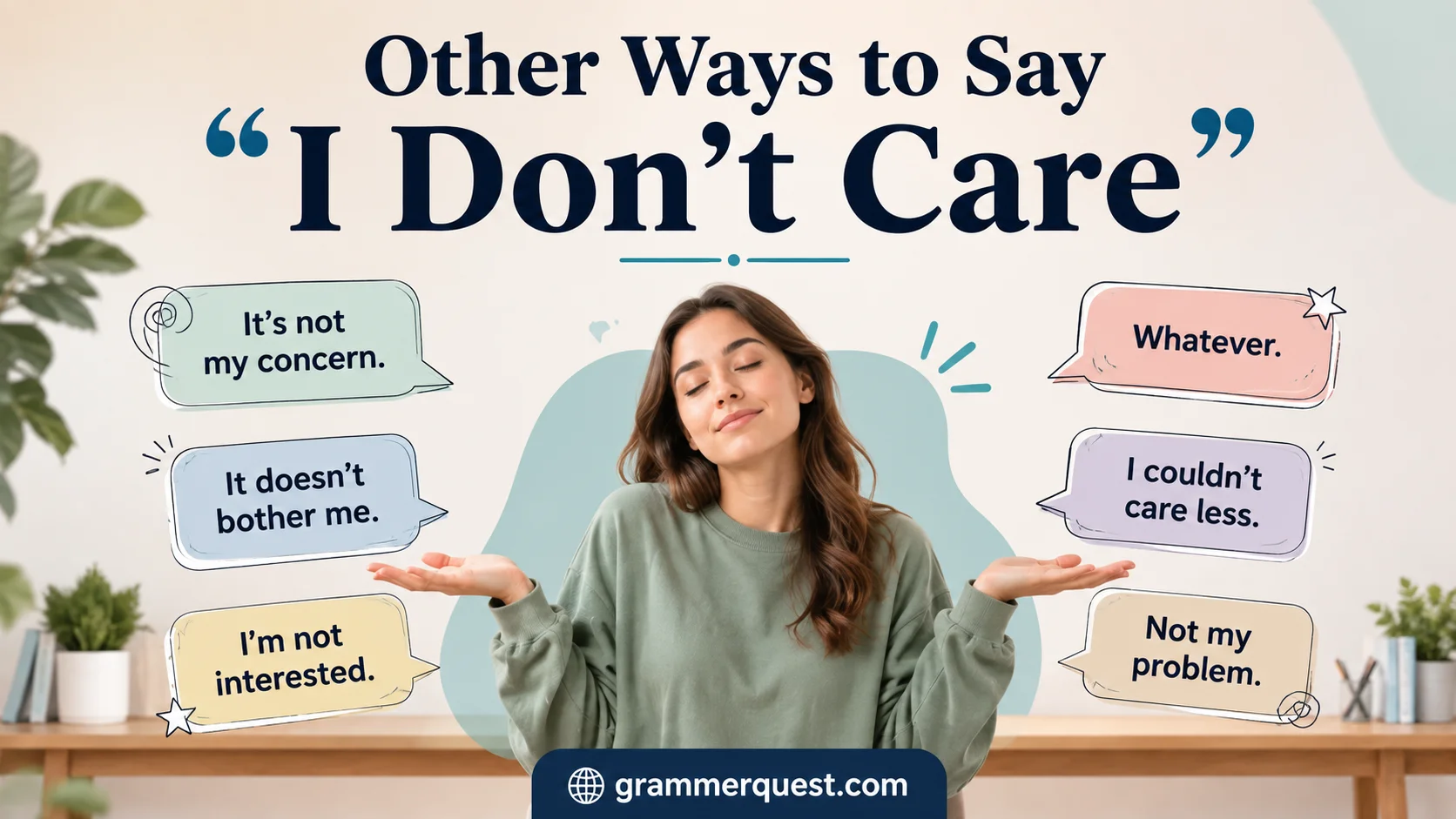
Finding the right words matters when expressing feelings because Other Ways to Say “I Don’t Care” (With Examples) helps people choose better expressions. The phrase “I don’t care” can sound rude, blunt, cold, or dismissive depending on the context, tone, and situation. Using simple words, careful phrasing, and a respectful tone allows people to share their emotion, sentiment, and attitude with more balance and neutrality.
In real life, people may feel indifferent, uninterested, or unconcerned during an everyday conversation, casual conversation, or serious discussion. Choosing alternative phrases, creative alternatives, and thoughtful expressions improves communication, professional communication, and personal interactions. These choices help build trust, stronger relationships, and better understanding while keeping conversations warm, kind, and positive.
Did You Know About “I Don’t Care”?
The expression “I don’t care” has been used in English for centuries to show a lack of concern, interest, or preference. However, its meaning is not always negative. In some situations, it can mean that someone is not worried about criticism, accepts any outcome, or does not want to waste energy on unnecessary problems.
In modern communication, especially online conversations and workplace discussions, people often replace “I don’t care” with softer expressions to avoid sounding disrespectful. Words such as “I have no preference,” “it doesn’t matter to me,” or “I’m not concerned” can communicate the same idea in a more polite way.
Understanding the context behind this phrase is important because the same words can sound confident, careless, relaxed, or even offensive depending on the speaker’s tone.
What Does “I Don’t Care” Mean?
“I don’t care” means that someone has little or no interest, concern, or emotional attachment toward a particular situation, choice, opinion, or outcome. It can show that something is not important to the speaker or that they do not want to spend time thinking about it.
For example, if someone says, “I don’t care where we eat tonight,” they usually mean they have no preference and are happy with any option. However, if someone says, “I don’t care what you think,” it may sound disrespectful because it suggests that the other person’s opinion has no value.
The meaning of “I don’t care” depends greatly on tone, body language, and context. It can express confidence, independence, emotional protection, or a lack of interest.
Professional or Political Ways to Say “I Don’t Care”
In professional and political settings, directly saying “I don’t care” may appear unprofessional or insensitive. Instead, speakers often use more diplomatic expressions that communicate neutrality, lack of concern, or a different priority.
Some professional alternatives include:
- “I have no particular preference.”
- “I am open to different options.”
- “I am not concerned about that matter at this time.”
- “That is not a priority for me right now.”
- “I will respect whatever decision is made.”
- “I have no strong opinion on this issue.”
- “My focus remains on other important matters.”
In political communication, leaders and public figures usually avoid saying “I don’t care” because it may appear dismissive toward citizens or opposing viewpoints. Instead, they use phrases that show neutrality, strategic focus, or consideration of broader priorities.
“I Don’t Care” Synonym
- It Doesn’t Matter to Me
- I Have No Preference
- I’m Not Concerned
- It’s Not Important to Me
- I’m Indifferent
- Either Way Is Fine With Me
- I’m Not Bothered
- I Don’t Mind
- Whatever Works for You
- I’m Okay With Anything
- It’s All the Same to Me
- I’m Not Worried About It
- I Have Bigger Things to Focus On
- That’s Not My Concern
- I’m Unaffected by It
- I’m Beyond Worrying About It
- I’ll Leave It Up to You
- I’m Not Invested in That
- It Doesn’t Affect Me
- I’m Neutral About It
- I Don’t Have a Strong Opinion
- I’m Fine Either Way
- I’m Not Paying Attention to That
- I’m Not Interested in That Matter
- I Choose Not to Focus on It
1. It Doesn’t Matter to Me
Definition: “It doesn’t matter to me” means you do not have a strong preference about a choice or outcome. It is a calm and polite way to show neutrality.
Meanings: This phrase suggests flexibility, openness, and a relaxed attitude. It tells the other person that either option is acceptable.
Example: “We can meet at 6 or 7. It doesn’t matter to me.”
Detailed Explanation: This expression is one of the safest and most natural ways to say “I don’t care” without sounding rude. It works well in everyday conversations, office settings, and group discussions because it shows that you are cooperative. People often use it when they do not want to control the decision or create unnecessary tension. It also sounds more considerate than a blunt response, especially when another person is trying to help or make a choice. In many situations, this phrase gives the impression that you are easygoing, respectful, and comfortable with either option.
Tone: Polite, relaxed, neutral
Best use: Use this when you want to sound kind, flexible, and socially aware.
2. I Have No Preference
Definition: “I have no preference” means you are equally fine with more than one option. It shows that you are not leaning toward any single choice.
Meanings: This phrase communicates neutrality in a clear and professional way. It is often used when someone is asking for your opinion, but you truly do not mind either option.
Example: “Tea or coffee? I have no preference.”
Detailed Explanation: This is one of the most professional alternatives to “I don’t care” because it sounds respectful and mature. It avoids emotional sharpness and makes your response easy for others to understand. In workplaces, meetings, and formal conversations, this phrase is especially useful because it does not sound careless or dismissive. It can also work in casual settings when you want to appear calm and cooperative. By using this expression, you show that you are not difficult to please and that you trust the other person’s judgment.
Tone: Professional, polite, neutral
Best use: Use this in formal conversations, workplace chats, and respectful discussions.
3. I’m Not Concerned
Definition: “I’m not concerned” means that something does not cause worry, stress, or interest for you. It shows that you do not see the situation as a problem.
Meanings: This phrase expresses a lack of worry or emotional involvement. It can mean that you trust the situation will be fine or that the matter is not important enough to affect you.
Example: “The deadline was extended, but I’m not concerned because my work is already complete.”
Detailed Explanation: “I’m not concerned” is a more mature and controlled alternative to “I don’t care.” Instead of sounding dismissive, it suggests that you are calm and confident about the situation. This phrase is often used when someone wants to show that they are not worried about criticism, changes, or possible problems. In professional environments, it helps communicate confidence without appearing disrespectful. However, the meaning can change depending on tone because it may also suggest that someone is not interested in an issue that others consider important.
Tone: Calm, professional, confident
Best use: Use this when you want to express confidence, emotional control, or lack of worry.
4. It’s Not Important to Me
Definition: “It’s not important to me” means that something does not have much value, priority, or personal significance.
Meanings: This phrase shows that a particular issue is not a major concern in your life. It can express low interest, different priorities, or emotional distance.
Example: “Winning the competition is nice, but the prize itself is not important to me.”
Detailed Explanation: This expression is useful when explaining that something is not a priority rather than simply saying “I don’t care.” It allows you to communicate your feelings in a thoughtful way. People often use it when discussing personal choices, relationships, goals, or material things. The phrase can sound positive when it shows that someone values deeper things over small matters. However, if used toward another person’s feelings or opinions, it may sound insensitive. Choosing the right tone is important when using this alternative.
Tone: Neutral, personal, sometimes emotional
Best use: Use this when explaining your priorities, values, or personal choices.
5. I’m Indifferent
Definition: “I’m indifferent” means that you have no strong feelings, interest, or preference about something.
Meanings: This phrase describes a state where you neither strongly support nor oppose a situation. It shows emotional neutrality.
Example: “I’m indifferent about which movie we watch tonight.”
Detailed Explanation: “I’m indifferent” is a direct and formal alternative to “I don’t care.” It is commonly used when discussing opinions, decisions, or reactions. While it clearly communicates neutrality, it can sometimes sound cold because it suggests a lack of emotional connection. In academic writing, business discussions, and serious conversations, this word is often useful because it describes a balanced position. In personal relationships, however, it should be used carefully because someone may interpret it as a sign of disinterest.
Tone: Formal, neutral, emotionally distant
Best use: Use this in formal discussions, analysis, writing, and situations where neutrality is needed.
6. Either Way Is Fine With Me
Definition: “Either way is fine with me” means that you are comfortable with any available option. You do not have a strong preference and will accept the decision.
Meanings: This phrase expresses flexibility and willingness to cooperate. It shows that you are open to different choices without feeling strongly attached to one outcome.
Example: “Should we travel on Friday or Saturday?” “Either way is fine with me.”
Detailed Explanation: “Either way is fine with me” is a friendly and positive alternative to “I don’t care.” Instead of showing a lack of interest, it highlights your ability to adapt and work with others. This expression is commonly used in everyday conversations, planning, and group decisions where everyone’s opinion matters. It helps avoid unnecessary arguments because it gives others the freedom to choose. The phrase creates a cooperative feeling and shows that you are easy to communicate with.
Tone: Friendly, flexible, cooperative
Best use: Use this when making plans, choosing between options, or showing that you are easygoing.
7. I’m Not Bothered
Definition: “I’m not bothered” means that something does not upset, worry, or affect you. It shows that you are comfortable with the situation.
Meanings: This phrase can mean that you are relaxed, unconcerned, or not emotionally affected by something. It often shows confidence and a calm attitude.
Example: “Some people disagree with my decision, but I’m not bothered.”
Detailed Explanation: This expression is a casual and natural way to say “I don’t care” without sounding harsh. It is often used when someone wants to show emotional strength or that they are not affected by criticism or small problems. In friendships and everyday conversations, it can show that you are relaxed and do not want to create unnecessary drama. However, the tone matters because saying it in a serious situation may make others feel that their concerns are being ignored. When used properly, it communicates confidence and peace of mind.
Tone: Casual, confident, relaxed
Best use: Use this when expressing calmness, confidence, or freedom from unnecessary worries.
8. I Don’t Mind
Definition: “I don’t mind” means that you are comfortable with a situation and do not object to a particular choice.
Meanings: This phrase shows acceptance and flexibility. It means that something is acceptable to you, even if it was not your first choice.
Example: “Would you like to sit outside?” “I don’t mind. Either place is okay.”
Detailed Explanation: “I don’t mind” is one of the most common polite alternatives to “I don’t care.” It is especially useful when responding to requests, suggestions, or decisions. Unlike the original phrase, it usually carries a softer meaning and shows that you are willing to accept another person’s choice. This expression works well in both casual and professional conversations. It helps maintain positive communication because it focuses on acceptance rather than a lack of interest.
Tone: Polite, friendly, accepting
Best use: Use this when you want to show agreement, flexibility, or willingness to accept a choice.
9. Whatever Works for You
Definition: “Whatever works for you” means that you are allowing another person to choose the option that is best or most convenient for them.
Meanings: This phrase communicates support and flexibility. It shows that you are not focused on controlling the decision and are comfortable following someone else’s preference.
Example: “We can meet in the morning or afternoon.” “Whatever works for you.”
Detailed Explanation: This phrase is a thoughtful alternative to “I don’t care” because it puts attention on the other person’s needs. It is often used between friends, coworkers, and family members when making plans. It shows that you are cooperative and willing to adjust. In some situations, it can also suggest that you are not deeply invested in the decision, so your tone should remain warm and respectful. When spoken kindly, it creates a sense of teamwork and understanding.
Tone: Friendly, considerate, flexible
Best use: Use this when making plans, scheduling meetings, or allowing someone else to decide.
10. I’m Okay With Anything
Definition: “I’m okay with anything” means that you accept all available choices and do not have a specific preference. It shows that you are comfortable with any result.
Meanings: This phrase expresses openness, flexibility, and a relaxed attitude. It tells others that they can choose without worrying about disappointing you.
Example: “What should we order for dinner?” “I’m okay with anything. You can choose.”
Detailed Explanation: “I’m okay with anything” is a warm and friendly way to express the idea behind “I don’t care.” It focuses more on acceptance than on a lack of interest. People often use this phrase when they want to make decisions easier for others or avoid unnecessary disagreements. It works especially well in personal conversations, group activities, and casual planning. This expression creates a positive impression because it shows that you are flexible and willing to go along with different possibilities.
Tone: Friendly, relaxed, cooperative
Best use: Use this when you want to show openness and flexibility in everyday situations.
11. It’s All the Same to Me
Definition: “It’s all the same to me” means that different options have equal importance or value to you. You do not see one choice as better than another.
Meanings: This phrase expresses neutrality and a lack of preference. It shows that the final decision will not make a significant difference to you.
Example: “Do you want to watch a comedy or an action movie?” “It’s all the same to me.”
Detailed Explanation: This expression is a natural conversational alternative to “I don’t care.” It communicates that you are comfortable with any option without sounding too negative. It is commonly used when discussing simple choices, such as food, entertainment, travel plans, or schedules. The phrase can sound casual and relaxed among friends, but in certain situations, it may appear slightly distant if the topic is important to someone else. Adding a friendly tone can make the meaning more positive.
Tone: Casual, neutral, relaxed
Best use: Use this for small decisions and everyday conversations.
12. I’m Not Worried About It
Definition: “I’m not worried about it” means that you are not feeling anxious, stressed, or concerned about a situation.
Meanings: This phrase shows confidence, calmness, and emotional control. It suggests that you believe the situation will be fine or does not require your attention.
Example: “The results have not arrived yet, but I’m not worried about it.”
Detailed Explanation: “I’m not worried about it” is a useful alternative when “I don’t care” means that something does not affect you emotionally. It does not necessarily mean that you have no interest; instead, it often shows that you are calm and trusting. This phrase is commonly used when dealing with uncertainty, mistakes, delays, or unexpected situations. It can help reassure others that you are handling the matter well. However, it should be used carefully when someone else is genuinely concerned, as it may sound like you are ignoring their feelings.
Tone: Calm, confident, reassuring
Best use: Use this when expressing peace of mind, confidence, or lack of stress.
13. I Have Bigger Things to Focus On
Definition: “I have bigger things to focus on” means that you consider other matters more important and choose to spend your attention elsewhere.
Meanings: This phrase shows that something is not a priority because you have more significant goals, responsibilities, or concerns.
Example: “People may criticize my choice, but I have bigger things to focus on.”
Detailed Explanation: This is a powerful alternative to “I don’t care” because it explains the reason behind your lack of attention. Instead of simply rejecting something, you show that your energy is directed toward more meaningful goals. This phrase is often used by people who want to show maturity, ambition, or emotional discipline. It can be helpful in professional situations where distractions need to be ignored. However, the tone should remain respectful so it does not sound like you are looking down on others’ concerns.
Tone: Confident, focused, determined
Best use: Use this when showing that you are prioritizing important goals over minor issues.
Also Read This: 25 Other Ways to Say “I Am Writing to Inform You” (With Examples)
14. That’s Not My Concern
Definition: “That’s not my concern” means that something is not your responsibility, priority, or area of involvement. It shows that you do not feel personally connected to the issue.
Meanings: This phrase communicates distance from a situation. It can mean that you are not responsible for solving a problem or that the matter does not require your attention.
Example: “The manager will handle the budget decisions. That’s not my concern.”
Detailed Explanation: “That’s not my concern” is a more formal alternative to “I don’t care,” especially when discussing responsibilities or professional matters. It helps explain that something is outside your role or focus. In workplaces, this phrase can be useful when setting boundaries and making responsibilities clear. However, it may sound cold if used when someone is sharing a personal problem or seeking support. Using a polite tone can make the expression sound professional rather than dismissive.
Tone: Formal, direct, professional
Best use: Use this when discussing responsibilities, boundaries, or matters outside your role.
15. I’m Unaffected by It
Definition: “I’m unaffected by it” means that something does not influence your emotions, decisions, or actions.
Meanings: This phrase shows emotional strength and independence. It suggests that a situation has little impact on you.
Example: “People have different opinions about my work, but I’m unaffected by it.”
Detailed Explanation: This expression is a confident way to communicate the idea of “I don’t care” without sounding careless. It focuses on emotional stability rather than a lack of interest. People often use it when discussing criticism, pressure, competition, or outside opinions. It suggests that they are able to stay focused despite what happens around them. In personal conversations, it can show confidence, but it may also sound distant if someone expects an emotional reaction. The meaning depends greatly on the situation and delivery.
Tone: Confident, strong, emotionally controlled
Best use: Use this when expressing resilience, confidence, or independence from outside influence.
16. I’m Beyond Worrying About It
Definition: “I’m beyond worrying about it” means that you have reached a point where you no longer spend time feeling stressed or concerned about something.
Meanings: This phrase suggests acceptance, emotional growth, or a decision to stop focusing on a problem. It often shows that someone has moved forward.
Example: “I used to care about negative comments, but I’m beyond worrying about it now.”
Detailed Explanation: This phrase provides a deeper emotional meaning than simply saying “I don’t care.” It often suggests that someone has learned from experience and decided not to give unnecessary attention to certain issues. It can express maturity, personal growth, and inner peace. People commonly use it when talking about past struggles, criticism, or situations they have accepted. The phrase has a reflective quality and can show that someone has chosen emotional freedom over stress.
Tone: Reflective, mature, peaceful
Best use: Use this when expressing acceptance, personal growth, or emotional freedom.
17. I’ll Leave It Up to You
Definition: “I’ll leave it up to you” means that you are allowing another person to make the final decision.
Meanings: This phrase shows trust, flexibility, and willingness to accept someone else’s choice. It means you are comfortable giving control to another person.
Example: “Where should we celebrate your birthday?” “I’ll leave it up to you.”
Detailed Explanation: This is one of the most positive alternatives to “I don’t care.” Instead of suggesting disinterest, it shows that you respect another person’s judgment. It is commonly used in relationships, teamwork, and planning situations. This phrase can make conversations easier because it reduces pressure and allows others to choose what they prefer. It also creates a cooperative atmosphere where everyone feels valued.
Tone: Trusting, polite, supportive
Best use: Use this when you want to show trust, cooperation, and respect for another person’s decision.
18. I’m Not Invested in That
Definition: “I’m not invested in that” means that you do not have a strong emotional, personal, or professional connection to a particular matter. It shows that something is not a priority for you.
Meanings: This phrase expresses a lack of attachment or involvement. It means you are not putting your energy, time, or emotions into that situation.
Example: “Everyone has their own opinion about the competition, but I’m not invested in that.”
Detailed Explanation: “I’m not invested in that” is a thoughtful alternative to “I don’t care” because it explains that you have chosen not to dedicate your attention to something. It does not always mean that you are completely uninterested; instead, it often suggests that the matter is simply not connected to your goals or priorities. This phrase is commonly used in professional discussions, personal decisions, and emotional conversations. It can show that someone is protecting their energy and focusing on things that matter more. However, it should be used carefully when discussing another person’s feelings because it may sound detached.
Tone: Neutral, mature, emotionally distant
Best use: Use this when explaining that you are not personally involved or emotionally connected to a situation.
19. It Doesn’t Affect Me
Definition: “It doesn’t affect me” means that something does not change your feelings, decisions, or situation. It shows that you remain unchanged by an event or opinion.
Meanings: This phrase communicates emotional independence and confidence. It means that something has little or no impact on you.
Example: “People can disagree with my choice, but it doesn’t affect me.”
Detailed Explanation: This expression is a calm and confident way to say “I don’t care.” It focuses on the result of a situation rather than showing a lack of interest. People often use it when discussing criticism, rumors, competition, or outside opinions. It suggests that they are secure in their decisions and do not allow external factors to control their emotions. In professional and personal situations, this phrase can show strength and self-confidence. However, the speaker’s tone should remain respectful so it does not sound arrogant.
Tone: Confident, calm, independent
Best use: Use this when expressing emotional strength and confidence in your choices.
20. I’m Neutral About It
Definition: “I’m neutral about it” means that you do not support or oppose something strongly. You have no strong opinion either way.
Meanings: This phrase describes a balanced position where someone remains unbiased or undecided. It is often used when discussing opinions, choices, or disagreements.
Example: “Some people support the new policy, while others disagree. I’m neutral about it.”
Detailed Explanation: “I’m neutral about it” is a professional and respectful alternative to “I don’t care.” It is especially useful when discussing sensitive topics where a person wants to avoid taking sides. This phrase shows that you are considering the situation without emotional involvement. It is commonly used in workplaces, debates, academic discussions, and social conversations. Unlike the original phrase, it does not suggest that the issue is meaningless; instead, it simply shows that you do not have a strong position.
Tone: Professional, balanced, diplomatic
Best use: Use this when expressing objectivity, fairness, or a lack of strong opinion.
21. I Don’t Have a Strong Opinion
Definition: “I don’t have a strong opinion” means that you do not feel strongly about a particular subject, choice, or decision.
Meanings: This phrase shows that you are open-minded and do not have a fixed preference. It allows others to understand that you are willing to consider different possibilities.
Example: “What do you think about the new design?” “I don’t have a strong opinion yet.”
Detailed Explanation: This expression is a polite and mature replacement for “I don’t care.” It works well when you want to be honest about your feelings without appearing dismissive. It is commonly used in meetings, discussions, and decision-making situations. By saying this, you show that you are open to hearing more information before making a judgment. It also creates a respectful environment because it acknowledges that the topic may matter to others even if you personally feel neutral.
Tone: Polite, thoughtful, open-minded
Best use: Use this in discussions, meetings, and situations where opinions are requested.
22. I’m Fine Either Way
Definition: “I’m fine either way” means that you are comfortable with any of the available choices. You do not have a preference and will accept whichever option is selected.
Meanings: This phrase expresses flexibility and acceptance. It shows that both possibilities are equally acceptable to you and that you are not concerned about the final decision.
Example: “Should we go out for dinner or cook at home?” “I’m fine either way.”
Detailed Explanation: “I’m fine either way” is a friendly and natural alternative to “I don’t care.” It focuses on being agreeable rather than showing a lack of interest. People commonly use this phrase when making plans with friends, family members, or coworkers. It helps keep conversations simple because it removes pressure from the decision-making process. This expression also creates a positive impression because it shows that you are adaptable and easy to work with. It is especially useful when the choice is not important enough to require a strong opinion.
Tone: Friendly, flexible, cooperative
Best use: Use this when you want to show acceptance and willingness to go along with different choices.
23. I’m Not Paying Attention to That
Definition: “I’m not paying attention to that” means that you are choosing not to focus on or spend time thinking about something.
Meanings: This phrase shows that a person has decided to ignore a matter because it is not important, useful, or worth their energy.
Example: “People keep discussing online rumors, but I’m not paying attention to that.”
Detailed Explanation: This expression is a practical alternative to “I don’t care” when someone wants to show that they are intentionally avoiding distractions. It suggests that the person has chosen to focus on more meaningful things instead. It is often used when discussing gossip, unnecessary criticism, or minor problems. The phrase can show discipline and self-control because it reflects a decision to protect your time and attention. However, it may sound dismissive if used when someone is sharing a serious concern.
Tone: Casual, focused, independent
Best use: Use this when expressing that you are ignoring distractions or choosing where to spend your attention.
24. I’m Not Interested in That Matter
Definition: “I’m not interested in that matter” means that a particular topic or situation does not attract your attention or curiosity.
Meanings: This phrase shows a lack of interest or involvement. It explains that the subject is not something you want to discuss or focus on.
Example: “Thank you for explaining the topic, but I’m not interested in that matter.”
Detailed Explanation: This is a more formal alternative to “I don’t care.” It is useful when you want to clearly communicate that a subject does not concern you personally. In professional environments, this phrase can help maintain polite boundaries and keep conversations focused. However, because it directly shows a lack of interest, it should be used carefully in emotional conversations. A softer tone or additional explanation can make it sound more respectful and considerate.
Tone: Formal, direct, reserved
Best use: Use this in professional communication, formal discussions, or when setting boundaries.
25. I Choose Not to Focus on It
Definition: “I choose not to focus on it” means that you are intentionally deciding not to give attention, energy, or importance to something.
Meanings: This phrase expresses personal choice and emotional control. It suggests that you are aware of the situation but have decided to direct your attention elsewhere.
Example: “There will always be negative comments, but I choose not to focus on it.”
Detailed Explanation: “I choose not to focus on it” is one of the most thoughtful and empowering alternatives to “I don’t care.” Instead of suggesting that something has no value, it shows that you are making a conscious decision about your priorities. This phrase is often used in personal development, emotional conversations, and motivational discussions. It reflects maturity because it shows that you understand what deserves your attention and what does not. It can also express inner peace, confidence, and the ability to move forward without unnecessary distractions.
Tone: Positive, mature, intentional
Best use: Use this when expressing self-control, emotional balance, and personal priorities.
FAQs:
1. Why should I use other ways to say “I don’t care”?
Using different expressions helps you communicate your feelings without sounding harsh or disrespectful. It allows you to maintain a respectful tone while sharing your thoughts clearly.
2. Is “I don’t care” always considered rude?
Not always, but the meaning depends on the context, tone, and situation. In many conversations, it may sound blunt or dismissive if used without care.
3. What are some polite alternatives to “I don’t care”?
Polite alternatives include “doesn’t matter to me,” “fine with anything,” and “your choice works for me.” These phrases sound more flexible and considerate.
4. Can I use these alternatives in professional settings?
Yes, using thoughtful expressions in workplace and business settings can improve communication and help maintain positive relationships with colleagues.
5. How can better wording improve communication skills?
Better wording improves clarity, confidence, and understanding. It helps people express emotions, opinions, and decisions in a more positive and effective way.
Conclusion
Choosing the right expression instead of saying “I don’t care” can make your communication more respectful, positive, and effective. Using alternative phrases helps you share your thoughts without sounding rude, cold, or dismissive. Whether in professional communication, personal interactions, or daily conversations, thoughtful wording creates better connections and shows emotional awareness.

Henry Collins is a passionate grammar expert and the voice behind GrammerQuest.com. With a sharp eye for language and a love for clear communication, he simplifies complex grammar rules into easy, practical lessons.