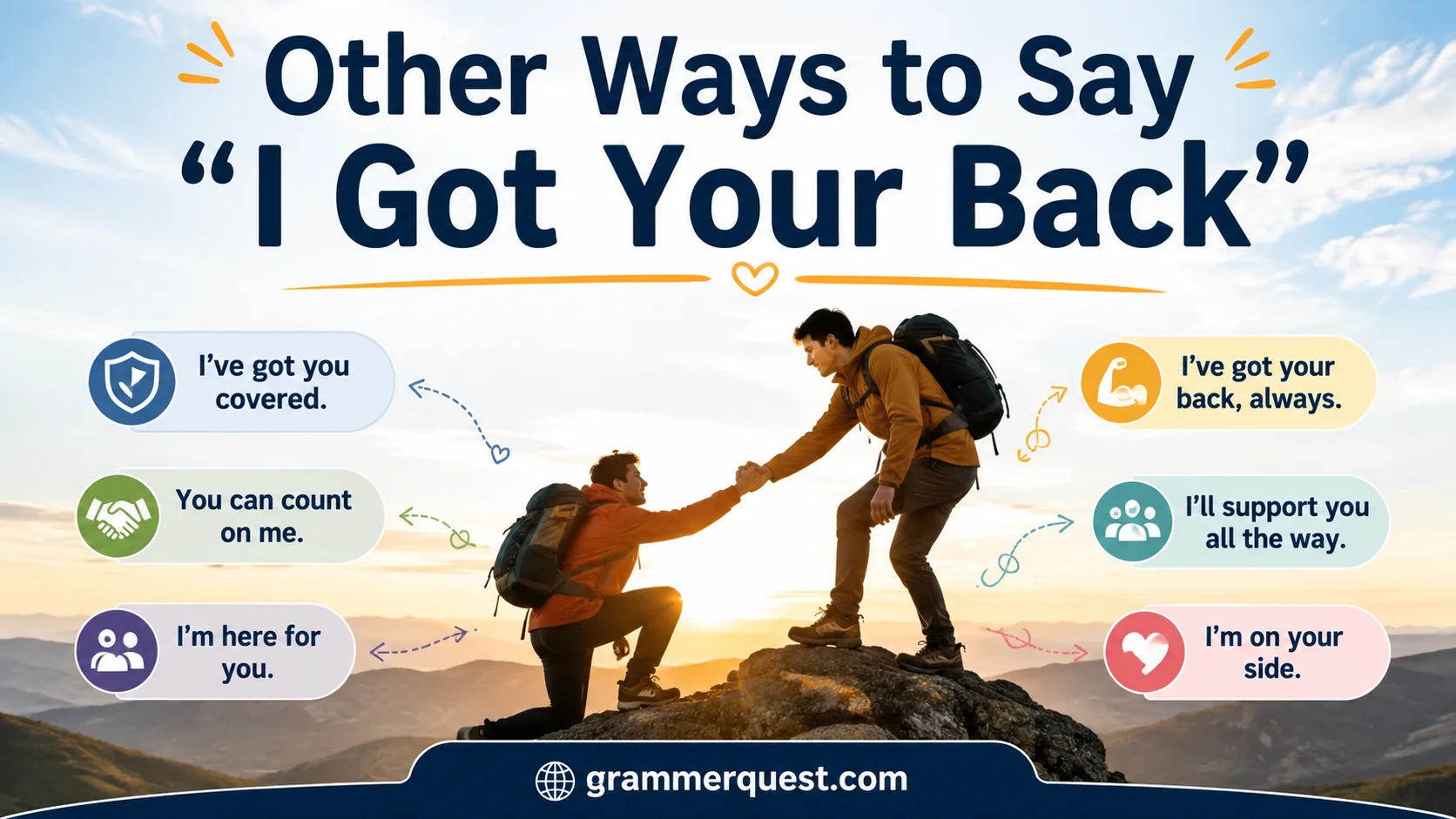
Learning Other Ways to Say “I Got Your Back” (With Examples) helps you understand different ways to show support, care, and loyalty in daily conversations. When a friend or coworker faces a tough time, simple actions like offering help, showing up, and giving a hand can create a real difference. This common idiom represents trust, reassurance, and a promise to protect someone.
Choosing the right expression can build stronger connections and make your messages more meaningful. Through English writing and communication, alternative phrases help you adapt your tone for formal emails, friendly chats, and personal relationships. True support comes from kindness, empathy, commitment, and being ready to stand by someone during challenging situations.
Did You Know “I Got Your Back”?
The phrase “I got your back” is an informal expression that means “I will support you, protect you, or help you when you need me.” It is often connected with trust, teamwork, friendship, and loyalty. The phrase became popular through military and team environments, where watching someone’s back meant protecting them from danger.
Today, “I got your back” is widely used in everyday conversations, professional relationships, and personal connections. It represents reliability and emotional support, showing someone that they are not facing challenges alone.
What Does “I Got Your Back” Mean?
“I got your back” means that a person is willing to provide help, encouragement, protection, or assistance when another person needs it. It communicates a strong feeling of commitment and dependability.
The phrase does not always mean physical protection. It can also refer to emotional support, professional assistance, problem-solving, or simply being there for someone during stressful times. For example, a friend may say it before an important event, or a coworker may use it when offering help with a project.
Professional or Political Way to Say “I Got Your Back”
In professional or political settings, the phrase “I got your back” may sound too casual. Instead, more formal expressions can be used to communicate trust and support.
Some professional alternatives include:
- “I fully support your efforts.”
- “You can count on my support.”
- “I stand with you on this matter.”
- “I am committed to helping you succeed.”
- “You have my full backing.”
These phrases maintain the meaning of loyalty and support while sounding more appropriate in business meetings, leadership discussions, and official communication.
“I Got Your Back” Synonyms
- I’m Here for You
- You Can Count on Me
- I’ll Stand by You
- I Support You
- I’ve Got Your Side
- I’m Behind You
- I’ll Be There for You
- I’m With You All the Way
- I’ll Back You Up
- I’ll Stand With You
- You Have My Support
- I’ll Help You Through This
- I’m On Your Team
- I’ll Protect Your Interests
- I’ll Watch Your Back
- I’m In Your Corner
- I’ll Lend You a Hand
- You Can Rely on Me
- I’ll Stick With You
- I’m Your Support System
- I’ll Walk Beside You
- I’ll Have Your Back Always
- I’ll Help You Succeed
- I’m Standing Beside You
- I’ll Never Leave You Alone
1. I’m Here for You
Definition: “I’m here for you” means offering emotional, mental, or practical support to someone. It shows that you are available whenever they need help.
Meanings: This phrase expresses care, kindness, and willingness to provide comfort. It tells someone that they do not have to handle challenges alone because you are ready to listen, assist, or encourage them.
Example: “Don’t worry about the situation; I’m here for you whenever you need me.”
Detailed Explanation: “I’m here for you” is one of the most common and heartfelt alternatives to “I got your back.” It is often used between close friends, family members, and romantic partners. The phrase focuses more on emotional presence rather than protection. It creates a sense of trust and security by showing that someone has a dependable person beside them. This expression works well during difficult times, personal struggles, or moments when someone needs encouragement.
Tone: Warm, caring, supportive, and emotional.
Best Use: Use this phrase with friends, family, partners, or anyone who needs reassurance.
2. You Can Count on Me
Definition: “You can count on me” means that someone can trust you to provide help, support, or assistance when needed.
Meanings: This phrase highlights reliability and responsibility. It tells another person that you are dependable and willing to fulfill your promise.
Example: “If you need help preparing for the presentation, you can count on me.”
Detailed Explanation: “You can count on me” is a powerful alternative to “I got your back” because it emphasizes trust and dependability. It is suitable for both personal and professional situations. The phrase shows that your support is not temporary but something the other person can rely on. It is often used when making a commitment or offering assistance.
Tone: Reliable, confident, and reassuring.
Best Use: Use it with coworkers, friends, family members, or teammates.
3. I’ll Stand by You
Definition: “I’ll stand by you” means promising loyalty and support, especially during challenging situations.
Meanings: This phrase represents commitment, faithfulness, and dedication. It shows that you will not abandon someone when problems arise.
Example: “Whatever happens next, I’ll stand by you.”
Detailed Explanation: “I’ll stand by you” carries a strong emotional meaning and is often associated with loyalty and deep relationships. It can be used in friendships, romantic relationships, and professional partnerships. The expression shows that support continues even when circumstances become difficult. It creates a feeling of strength, trust, and unity between two people.
Tone: Loyal, emotional, and committed.
Best Use: Best for close relationships, serious promises, and moments requiring encouragement.
4. I Support You
Definition: “I support you” means expressing approval, encouragement, or assistance toward someone’s goals, decisions, or actions. It shows that you believe in someone and are willing to help them succeed.
Meanings: This phrase communicates encouragement and acceptance. It can refer to emotional support, professional cooperation, or standing behind someone’s choices. It is a simple but powerful way to show that someone has your confidence and respect.
Example: “I support you in your decision to start a new career.”
Detailed Explanation: “I support you” is a versatile alternative to “I got your back” that works in both personal and professional conversations. It focuses on encouragement rather than protection. People often use this phrase when they want to show understanding and respect for another person’s goals or challenges. In workplaces, it can demonstrate teamwork, while in relationships, it can express care and acceptance.
Tone: Positive, respectful, and encouraging.
Best Use: Use it in professional discussions, friendships, family conversations, and relationships.
5. I’ve Got Your Side
Definition: “I’ve got your side” means showing that you agree with and support someone during a situation. It expresses loyalty and a willingness to support their position.
Meanings: This phrase suggests that you are standing with someone and considering their perspective. It is often used when someone needs reassurance that they are not facing a problem alone.
Example: “Don’t worry about the disagreement; I’ve got your side.”
Detailed Explanation: “I’ve got your side” is a casual expression that emphasizes loyalty and agreement. It is commonly used among friends and teammates when someone needs confidence or encouragement. The phrase shows that you are willing to defend or support another person’s viewpoint. While it is less common than “I’m on your side,” it still communicates the idea of partnership and trust.
Tone: Casual, friendly, and loyal.
Best Use: Use it in informal conversations with friends, family, or teammates.
6. I’m Behind You
Definition: “I’m behind you” means giving someone your full support, encouragement, or approval. It shows that you believe in their decisions and abilities.
Meanings: This expression communicates confidence and motivation. It tells someone that they have your support as they move forward with a plan, goal, or challenge.
Example: “Whatever career path you choose, I’m behind you.”
Detailed Explanation: “I’m behind you” is a strong alternative to “I got your back” because it focuses on encouragement and trust. It is often used by mentors, family members, friends, and leaders. The phrase can inspire confidence by reminding someone that they have people who believe in them. It is especially meaningful when someone is taking a risk or facing an important decision.
Tone: Motivational, supportive, and confident.
Best Use: Use it when encouraging someone’s goals, dreams, or important choices.
7. I’ll Be There for You
Definition: “I’ll be there for you” means promising your presence and support whenever someone needs you. It expresses care, loyalty, and emotional availability.
Meanings: This phrase means that you are willing to provide help, comfort, or encouragement during both good and difficult times. It creates a feeling of security and trust.
Example: “Even when things get difficult, I’ll be there for you.”
Detailed Explanation: “I’ll be there for you” is one of the most heartfelt ways to express the meaning of “I got your back.” It is often used in close relationships because it emphasizes emotional connection. The phrase shows that support is not limited to one specific moment but continues over time. It can provide comfort to someone who feels uncertain, stressed, or overwhelmed.
Tone: Loving, caring, and emotional.
Best Use: Best for romantic relationships, friendships, and family situations.
8. I’m With You All the Way
Definition: “I’m with you all the way” means giving complete support and commitment to someone’s journey or decision. It shows dedication from beginning to end.
Meanings: This phrase communicates strong loyalty and encouragement. It means you are willing to continue supporting someone regardless of challenges or obstacles.
Example: “You want to launch your own business? I’m with you all the way.”
Detailed Explanation: “I’m with you all the way” is an enthusiastic alternative to “I got your back.” It shows a deeper level of commitment because it suggests ongoing support. This phrase is commonly used when someone is pursuing a difficult goal or facing a major life change. It creates a feeling of teamwork and shared determination.
Tone: Enthusiastic, loyal, and motivating.
Best Use: Use it with friends, partners, teammates, or people working toward a shared goal.
9. I’ll Back You Up
Definition: “I’ll back you up” means offering support, assistance, or protection when someone needs help. It shows that you are ready to stand with someone during a situation.
Meanings: This phrase suggests that you will provide help, confirm someone’s words, or support their actions. It is often connected with teamwork and cooperation.
Example: “If anyone questions your decision, I’ll back you up.”
Detailed Explanation: “I’ll back you up” is one of the closest alternatives to “I got your back.” It is commonly used in workplaces, friendships, and team environments. The phrase shows that you are prepared to help someone handle difficulties or challenges. It can mean providing practical assistance, defending someone’s position, or offering encouragement when needed.
Tone: Confident, supportive, and dependable.
Best Use: Use it in casual conversations, workplace teamwork, and group situations.
10. I’ll Stand With You
Definition: “I’ll stand with you” means showing loyalty and unity with someone during a situation. It expresses a promise to remain supportive and present.
Meanings: This phrase represents solidarity and commitment. It is often used when someone needs emotional strength or support while facing challenges.
Example: “During this difficult time, I’ll stand with you.”
Detailed Explanation: “I’ll stand with you” carries a powerful message of loyalty and togetherness. It is often used in serious situations where someone needs reassurance. The phrase can apply to personal relationships, social causes, or professional partnerships. It shows that you are willing to share responsibility and remain supportive.
Tone: Strong, loyal, and respectful.
Best Use: Use it during serious conversations, commitments, and moments requiring solidarity.
11. You Have My Support
Definition: “You have my support” means offering approval, encouragement, or assistance to someone. It is a formal way to show that you believe in someone’s efforts.
Meanings: This phrase communicates trust and confidence. It tells someone that they can move forward knowing they have your encouragement and backing.
Example: “You have my support as you take on this new leadership role.”
Detailed Explanation: “You have my support” is a professional alternative to “I got your back.” It is commonly used in business, leadership, and formal communication. Unlike casual expressions, it sounds more respectful and appropriate in official situations. It can also be used personally when expressing sincere encouragement.
Tone: Professional, respectful, and reassuring.
Best Use: Use it in workplaces, formal conversations, and leadership situations.
12. I’ll Help You Through This
Definition: “I’ll help you through this” means promising assistance during a difficult period. It shows that you are willing to provide guidance and comfort.
Meanings: This phrase focuses on helping someone overcome problems, stress, or challenges. It expresses patience, kindness, and emotional support.
Example: “Don’t worry about the upcoming changes; I’ll help you through this.”
Detailed Explanation: “I’ll help you through this” is a caring expression that focuses on overcoming difficulties together. It is often used when someone is experiencing a stressful situation. The phrase shows compassion and reminds the person that they have someone beside them. It can strengthen relationships by creating feelings of trust and safety.
Tone: Compassionate, gentle, and supportive.
Best Use: Use it with friends, family, partners, or anyone facing challenges.
13. I’m On Your Team
Definition: “I’m on your team” means that you support someone and share their goals or interests. It shows that you are working together and willing to cooperate.
Meanings: This phrase expresses teamwork, partnership, and loyalty. It tells someone that you are not against them but instead willing to help them succeed.
Example: “Remember, I’m on your team, and I want you to succeed.”
Detailed Explanation: “I’m on your team” is a friendly and encouraging alternative to “I got your back.” It is often used in workplaces, friendships, sports, and group projects. The phrase creates a sense of unity and reminds people that they have someone working alongside them. It is especially useful when someone feels uncertain or alone because it highlights cooperation and shared purpose.
Tone: Friendly, supportive, and cooperative.
Best Use: Use it with coworkers, teammates, friends, and people working toward the same goal.
14. I’ll Protect Your Interests
Definition: “I’ll protect your interests” means promising to look after someone’s needs, rights, or advantages. It shows responsibility and commitment to someone’s well-being.
Meanings: This phrase suggests that you will act carefully to make sure someone is treated fairly. It is often connected with professional responsibility, leadership, and trust.
Example: “As your representative, I’ll protect your interests throughout the process.”
Detailed Explanation: “I’ll protect your interests” is a formal alternative to “I got your back.” It is commonly used in legal, business, financial, and leadership settings. Instead of expressing emotional support, it focuses on responsibility and taking action to help someone. This phrase demonstrates reliability and professionalism when important decisions are involved.
Tone: Professional, responsible, and serious.
Best Use: Use it in business, legal matters, negotiations, and official situations.
15. I’ll Watch Your Back
Definition: “I’ll watch your back” means promising to protect, support, or look out for someone. It is one of the closest expressions to “I got your back.”
Meanings: This phrase means that you will pay attention to possible problems and help someone when needed. It expresses trust, friendship, and loyalty.
Example: “Focus on your presentation; I’ll watch your back during the meeting.”
Detailed Explanation: “I’ll watch your back” has a strong connection with teamwork and friendship. It suggests that you are paying attention to things the other person may not notice. The phrase is often used among close friends, coworkers, and teammates. It creates a feeling of safety because it shows that someone is willing to protect and support you.
Tone: Protective, loyal, and casual.
Best Use: Use it in friendships, teamwork, and informal conversations.
Read More: 25 Other Ways to Say “If Time Permits” (With Examples)
16. I’m In Your Corner
Definition: “I’m in your corner” means that you support someone and want them to succeed. It comes from the idea of standing beside someone during a competition or challenge.
Meanings: This phrase expresses encouragement, loyalty, and emotional support. It shows that someone believes in you and is ready to help.
Example: “No matter what happens, remember that I’m in your corner.”
Detailed Explanation: “I’m in your corner” is a warm and encouraging alternative to “I got your back.” It is commonly used when someone is facing difficulties, making important decisions, or working toward a goal. The phrase creates a sense of partnership and reminds someone that they have an ally. It is especially common in motivational conversations.
Tone: Encouraging, friendly, and supportive.
Best Use: Use it with friends, mentors, teammates, or people who need motivation.
17. I’ll Lend You a Hand
Definition: “I’ll lend you a hand” means offering help or assistance to someone. It shows kindness and willingness to make a task easier.
Meanings: This phrase focuses on practical support. It means that you are ready to help someone complete a task, solve a problem, or overcome a challenge.
Example: “Moving to your new house sounds stressful, but I’ll lend you a hand.”
Detailed Explanation: “I’ll lend you a hand” is a casual and friendly way to express support. While it does not always carry the same emotional meaning as “I got your back,” it shows helpfulness and cooperation. This expression is commonly used in everyday situations when someone needs assistance. It creates a positive feeling of teamwork and generosity.
Tone: Friendly, helpful, and casual.
Best Use: Use it for daily tasks, favors, and informal situations.
18. You Can Rely on Me
Definition: “You can rely on me” means that someone can trust you to provide help or support. It expresses dependability and commitment.
Meanings: This phrase communicates that you are responsible and trustworthy. It assures someone that you will keep your promises and provide assistance when needed.
Example: “If you need advice during this project, you can rely on me.”
Detailed Explanation: “You can rely on me” is a strong alternative to “I got your back” because it highlights trust and consistency. It works well in both personal and professional environments. The phrase shows that your support is dependable and not just a temporary offer. It helps build confidence between people by showing that you can be trusted.
Tone: Reliable, professional, and reassuring.
Best Use: Use it with coworkers, friends, family, and business partners.
19. I’ll Stick With You
Definition: “I’ll stick with you” means promising to remain loyal and supportive. It shows that you will not leave someone during difficult moments.
Meanings: This phrase represents commitment, friendship, and patience. It tells someone that your support will continue even when things become challenging.
Example: “Things may be difficult now, but I’ll stick with you.”
Detailed Explanation: “I’ll stick with you” is an emotional alternative to “I got your back.” It is often used between close friends and partners because it expresses long-term loyalty. The phrase suggests that you are willing to face challenges together. It creates a feeling of trust and emotional security.
Tone: Loyal, caring, and personal.
Best Use: Use it in friendships, relationships, and strong personal connections.
20. I’m Your Support System
Definition: “I’m your support system” means being someone who provides ongoing encouragement, assistance, and care. It shows a strong commitment to helping someone.
Meanings: This phrase refers to emotional, practical, and sometimes professional support. It means that someone can depend on you during different stages of life.
Example: “Whenever you face challenges, remember that I’m your support system.”
Detailed Explanation: “I’m your support system” is a meaningful alternative to “I got your back.” It suggests continuous support rather than help in one specific situation. The phrase is often used in relationships, personal development, and mental wellness conversations. It highlights the importance of having trusted people who provide encouragement and strength.
Tone: Caring, emotional, and dependable.
Best Use: Use it in close relationships, family conversations, and supportive environments.
21. I’ll Walk Beside You
Definition: “I’ll walk beside you” means promising to accompany and support someone throughout their journey. It represents companionship and encouragement.
Meanings: This phrase has a gentle meaning connected with friendship, love, and emotional support. It shows that you are willing to share experiences and challenges.
Example: “Whatever path you choose, I’ll walk beside you.”
Detailed Explanation: “I’ll walk beside you” is a warm and sometimes romantic alternative to “I got your back.” It focuses on companionship rather than protection. The phrase suggests equality, understanding, and a shared journey. It is often used in meaningful conversations where emotional connection matters.
Tone: Romantic, gentle, and supportive.
Best Use: Use it with partners, close friends, and family members.
22. I’ll Have Your Back Always
Definition: “I’ll have your back always” means making a lasting promise to support and protect someone. It expresses lifelong loyalty, trust, and commitment.
Meanings: This phrase emphasizes continuous support and dedication. It tells someone that your care and assistance will remain strong, even during difficult situations or changes in life.
Example: “Through every success and challenge, I’ll have your back always.”
Detailed Explanation: “I’ll have your back always” is a more emotional version of “I got your back.” It strengthens the original meaning by adding a sense of permanence and deep commitment. This expression is often used between close friends, family members, and romantic partners. It reassures someone that they have a person who will continue supporting them through different stages of life.
Tone: Deep, emotional, and loyal.
Best Use: Use it in meaningful conversations, close relationships, and personal promises.
23. I’ll Help You Succeed
Definition: “I’ll help you succeed” means offering support, guidance, or resources to help someone achieve their goals. It shows encouragement and a desire to see someone grow.
Meanings: This phrase focuses on motivation and assistance. It means that you are willing to contribute to another person’s progress and achievements.
Example: “I believe in your abilities, and I’ll help you succeed.”
Detailed Explanation: “I’ll help you succeed” is a positive alternative to “I got your back” that focuses on growth and achievement. It is commonly used by teachers, mentors, leaders, and supportive friends. The phrase shows that you are not only offering comfort but also actively helping someone reach their goals. It creates a feeling of encouragement and partnership.
Tone: Motivational, positive, and encouraging.
Best Use: Use it in professional settings, mentorship, education, and personal growth situations.
24. I’m Standing Beside You
Definition: “I’m standing beside you” means showing loyalty and support by remaining present during a situation. It expresses commitment and emotional strength.
Meanings: This phrase communicates that you are willing to face challenges together. It shows unity, understanding, and a promise not to abandon someone.
Example: “No matter what happens, I’m standing beside you.”
Detailed Explanation: “I’m standing beside you” is a powerful alternative to “I got your back” because it highlights presence and loyalty. It can be used during difficult moments when someone needs reassurance. The phrase creates a sense of partnership and courage. It is often found in emotional conversations where trust and commitment are important.
Tone: Strong, supportive, and sincere.
Best Use: Use it in serious conversations, relationships, and moments of difficulty.
25. I’ll Never Leave You Alone
Definition: “I’ll never leave you alone” means promising to remain present and supportive when someone needs help. It expresses care, protection, and emotional connection.
Meanings: This phrase tells someone that they will not have to face challenges without support. It represents loyalty, compassion, and a strong bond.
Example: “Even during your hardest days, I’ll never leave you alone.”
Detailed Explanation: “I’ll never leave you alone” is a deeply emotional way to express the meaning of “I got your back.” It focuses on providing comfort and reassurance during difficult times. Although the phrase should be used carefully because it can sound very intense, it can beautifully express dedication in close relationships. It reminds someone that they have a trusted person who cares about their well-being.
Tone: Emotional, protective, and loving.
Best Use: Use it with close friends, family members, and romantic partners.
FAQs:
1. What does “I got your back” mean?
“I got your back” means that someone is ready to support, protect, and help you when you need assistance. It shows trust, loyalty, and reassurance.
2. Is “I got your back” a formal expression?
No, “I got your back” is mostly used in casual conversations. In professional settings, phrases like “I support you” or “You can rely on me” may sound more appropriate.
3. What are other ways to say “I got your back”?
Some alternatives include “I’m here for you,” “You can count on me,” “I’ll support you,” “I stand with you,” and “I’m always ready to help.”
4. Can I use “I got your back” at work?
Yes, you can use it with close coworkers in friendly communication. However, for formal emails or professional messages, a more polished expression is usually better.
5. Why is showing support important?
Showing support builds trust, strengthens relationships, and helps people feel safe and valued during challenging situations. It creates a positive connection between individuals.
Conclusion
Understanding Other Ways to Say “I Got Your Back” (With Examples) helps you express support, trust, and care in a more personal way. Whether you are talking to a friend, coworker, or loved one, choosing the right words can create stronger connections. These expressions show that you are ready to help, protect, and stand with someone during difficult moments.

George Whitaker is the voice behind GrammarQuest, dedicated to making grammar simple, engaging, and easy to understand. He helps learners turn confusion into confidence with clear explanations and real-world examples.