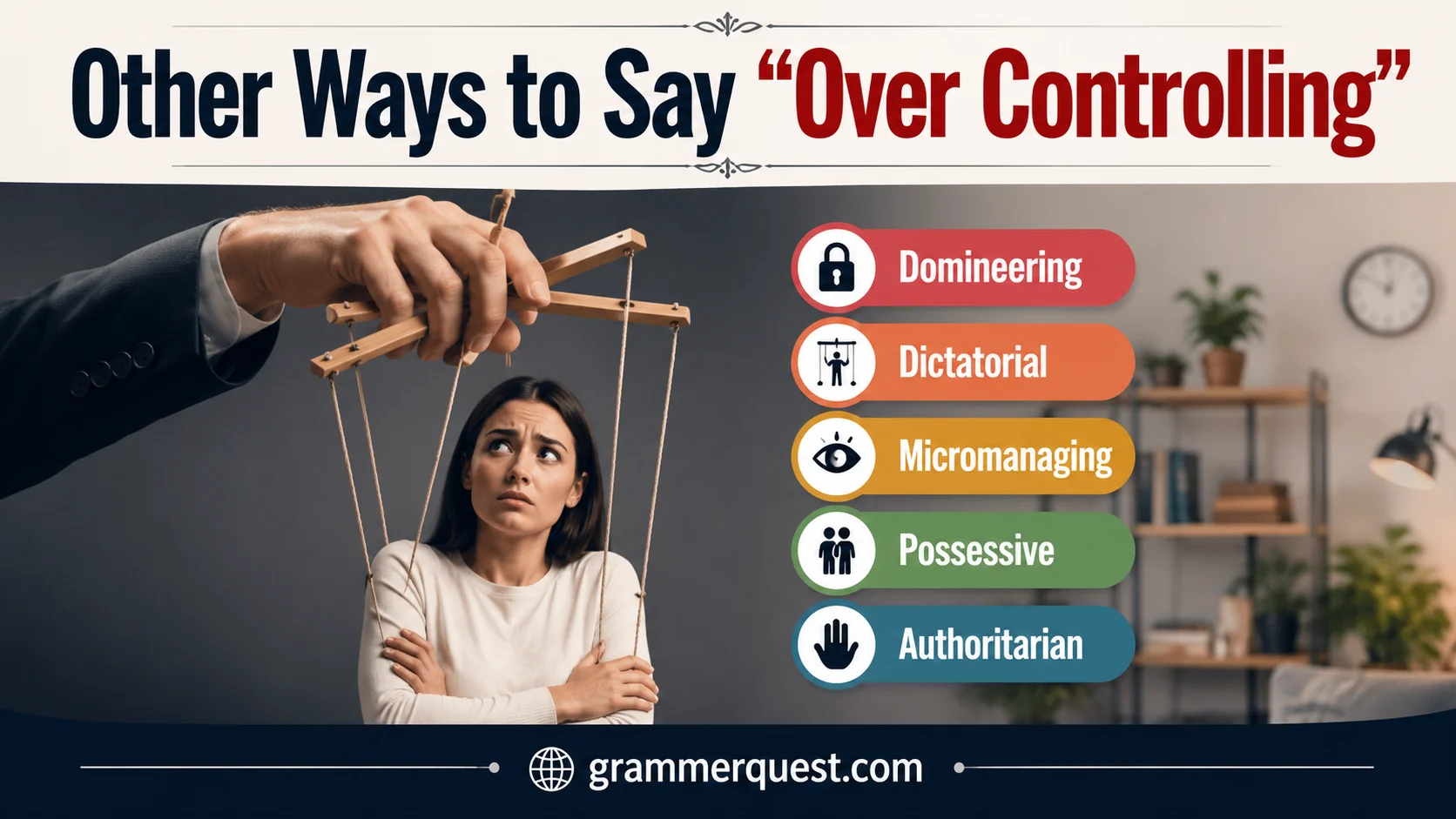
Other Ways to Say “Over Controlling” can help you describe a person’s controlling behavior in a more respectful, professional, and natural way. Instead of repeating the same phrase, using better synonyms and alternative expressions makes your writing and conversations clearer. These options are useful in workplaces, relationships, and everyday communication, allowing you to express your thoughts without sounding overly harsh or judgmental.
Choosing the right words improves communication skills, adds emotional nuance, and helps explain dominant, overbearing, or micromanaging behavior with greater accuracy. Whether you are talking about a boss, friend, family member, or teammate, these alternatives fit different situations and tones. They make your message more effective, fluent, and engaging, while helping you maintain respect, reduce conflict, and build stronger interpersonal relationships.
Did You Know About “Over Controlling”?
The term over controlling is often connected with behaviors such as excessive supervision, possessiveness, micromanagement, and a strong desire to influence others. Although control can sometimes come from care or responsibility, too much control may make people feel restricted or unheard.
In psychology and communication, overly controlling behavior is often linked to a need for certainty, fear of losing control, or difficulty trusting others. Understanding different words for this behavior allows people to discuss it without always sounding negative or judgmental.
What Does “Over Controlling” Mean?
Over controlling means trying to control situations, people, or decisions more than is necessary or acceptable. A person who is over controlling may constantly interfere, give unwanted instructions, or attempt to decide what others should do.
For example, a boss who checks every tiny task an employee completes may be described as over controlling, while a partner who wants to decide everything in a relationship may also show controlling behavior.
Professional or Political Way to Say “Over Controlling”
In professional or political contexts, the phrase over controlling may sound too direct. More formal alternatives include micromanaging, authoritarian, excessively restrictive, overly directive, or domineering.
These words are often used in workplaces, leadership discussions, and social analysis to describe someone who uses too much authority or limits the freedom of others.
“Over Controlling” Synonyms
- Micromanaging
- Authoritarian
- Domineering
- Overbearing
- Controlling
- Bossy
- Restrictive
- Manipulative
- Possessive
- Dictatorial
- Intrusive
- Demanding
- Heavy-handed
- Oppressive
- Interfering
- Commanding
- Rigid
- Inflexible
- Overprotective
- Controlling-minded
- Power-hungry
- Controlling personality
- Excessively directive
- Authoritative
- Controlling nature
1. Micromanaging
Definition: Micromanaging describes closely controlling every small detail of someone’s work, actions, or decisions. It often involves unnecessary supervision and a lack of trust.
Meanings: Micromanaging means managing something in an overly detailed way, where a person constantly checks, corrects, or directs others instead of allowing independence.
Example: “My manager is micromanaging every step of the project, which makes it difficult for the team to work freely.”
Detailed Explanation: A micromanaging person usually believes that everything must be done according to their exact expectations. This behavior is common in workplaces where leaders struggle to delegate responsibilities. Although attention to detail can be helpful, excessive monitoring can reduce creativity, confidence, and motivation among team members.
Tone: Professional and critical
Best use: Use this term when describing workplace behavior, leadership styles, or situations involving excessive supervision.
2. Authoritarian
Definition: Authoritarian refers to someone who expects complete obedience and uses strong authority to control others. This person often allows little room for discussion or disagreement.
Meanings: It means relying on power, strict rules, and commands rather than cooperation or mutual understanding.
Example: “The teacher’s authoritarian approach made students afraid to share their opinions.”
Detailed Explanation: An authoritarian person often believes that their decisions should be followed without question. This style can create order in certain situations, but when used excessively, it may damage trust and communication. The term is commonly used in discussions about leadership, parenting, politics, and organizations.
Tone: Formal and serious
Best use: Use this word for describing strict leaders, governments, managers, or people who demand obedience.
3. Domineering
Definition: Domineering describes someone who tries to control others by being forceful, aggressive, or overly confident. They often want to make decisions for everyone.
Meanings: It means acting as if one has the right to control other people’s choices, opinions, or actions.
Example: “His domineering personality made it hard for others to express their ideas.”
Detailed Explanation: A domineering person usually takes charge in a way that ignores the needs and opinions of others. While leadership can be positive, domineering behavior crosses the line by removing equality and cooperation. This word is often used when describing relationships, workplaces, or social situations where one person tries to dominate.
Tone: Negative and descriptive
Best use: Use it when talking about someone who controls others through confidence, pressure, or force.
4. Overbearing
Definition: Overbearing describes someone who is excessively controlling, pushy, or demanding toward others. Their behavior can feel overwhelming.
Meanings: It means being too strong in personality, authority, or influence, making others feel pressured or uncomfortable.
Example: “Her overbearing attitude made it difficult for her children to make their own decisions.”
Detailed Explanation: An overbearing person often believes they know what is best for everyone. They may offer constant advice, interfere with personal choices, or expect others to follow their preferences. Although their intentions may sometimes come from concern, the behavior can create frustration and distance in relationships.
Tone: Personal and emotional
Best use: Use this word for family relationships, friendships, romantic situations, or social interactions.
5. Controlling
Definition: Controlling describes someone who tries to influence or manage another person’s behavior, choices, or activities excessively.
Meanings: It means wanting power over situations or people instead of allowing freedom and independence.
Example: “He became too controlling and always wanted to know where she was and what she was doing.”
Detailed Explanation: A controlling person may attempt to decide what others should wear, do, think, or choose. In relationships, controlling behavior can reduce trust and create emotional pressure. However, the meaning can vary depending on context because some forms of control may simply describe organization or responsibility.
Tone: Common and direct
Best use: Use it in everyday conversations, relationships, psychology discussions, and general descriptions.
6. Bossy
Definition: Bossy describes someone who frequently tells others what to do and expects people to follow their instructions. It is often used for a person who acts like they are always in charge.
Meanings: It means being overly commanding, pushy, or acting as though one has authority over others even when they do not.
Example: “My colleague can be very bossy and often tries to control how everyone completes their tasks.”
Detailed Explanation: A bossy person usually gives orders instead of making polite suggestions or working together with others. This behavior can make people feel ignored, pressured, or less valued. Although being confident and taking initiative can be positive qualities, being too bossy may create conflict in friendships, families, and workplaces.
Tone: Casual and slightly negative
Best use: Use this word in everyday conversations when describing someone who is too demanding or likes to control others.
7. Restrictive
Definition: Restrictive describes something or someone that limits freedom, choices, or opportunities. It suggests that too many rules or controls are being placed on others.
Meanings: It means creating unnecessary limitations or preventing people from acting independently.
Example: “The company’s restrictive policies made employees feel they had very little freedom.”
Detailed Explanation: A restrictive person or system focuses heavily on rules, boundaries, and limitations. While some restrictions can provide safety and structure, excessive restrictions may prevent growth and creativity. This term is often used when discussing relationships, workplaces, governments, or social environments where people feel controlled.
Tone: Formal and analytical
Best use: Use it for policies, rules, relationships, organizations, and situations where freedom is limited.
8. Manipulative
Definition: Manipulative describes someone who tries to control others indirectly by using emotions, pressure, or clever strategies. This person often influences people for personal benefit.
Meanings: It means using hidden methods to control someone’s thoughts, feelings, or decisions.
Example: “His manipulative behavior made others feel guilty whenever they disagreed with him.”
Detailed Explanation: A manipulative person may use guilt, fear, persuasion, or emotional pressure to get what they want. Unlike direct control, manipulation is often less obvious because it works through psychological influence. This behavior can damage trust and create unhealthy relationships when it becomes a repeated pattern.
Tone: Serious and negative
Best use: Use this term when discussing toxic relationships, emotional control, workplace conflicts, or personality traits.
9. Possessive
Definition: Possessive describes someone who wants excessive control over another person, especially in close relationships. It often comes from insecurity or fear of losing someone.
Meanings: It means treating a person as if they belong to you and trying to control their choices or interactions.
Example: “Her partner became too possessive and wanted to control who she spent time with.”
Detailed Explanation: Possessive behavior is commonly seen in romantic relationships, friendships, and family connections. A possessive person may constantly seek attention, demand updates, or become jealous when others have independence. While care and affection are healthy, extreme possessiveness can reduce trust and personal freedom.
Tone: Emotional and personal
Best use: Use it when talking about relationships, jealousy, attachment, and excessive emotional control.
10. Dictatorial
Definition: Dictatorial describes someone who controls others by making decisions alone and expecting complete obedience. It suggests a very strict and powerful style of control.
Meanings: It means behaving like a dictator by refusing cooperation, discussion, or disagreement.
Example: “The manager’s dictatorial leadership style created fear among employees.”
Detailed Explanation: A dictatorial person usually believes their opinions and decisions are more important than everyone else’s. They may ignore feedback and force others to follow their commands. This word is commonly connected with political leadership but can also describe strict managers, parents, or individuals in everyday situations.
Tone: Formal and strongly negative
Best use: Use it for leaders, authority figures, organizations, or situations involving extreme control.
11. Intrusive
Definition: Intrusive describes someone who interferes too much in another person’s private life, decisions, or personal space. It suggests unwanted involvement.
Meanings: It means crossing boundaries by becoming involved where one is not invited or needed.
Example: “His intrusive questions made everyone uncomfortable during the conversation.”
Detailed Explanation: An intrusive person often believes they have the right to know or influence everything about others. They may ask personal questions, interfere with choices, or ignore boundaries. Although their actions may sometimes come from curiosity or concern, excessive intrusion can make people feel controlled and disrespected.
Tone: Neutral to negative
Best use: Use it when describing personal boundaries, privacy issues, relationships, or social behavior.
12. Demanding
Definition: Demanding describes someone who expects a lot from others and often wants things done according to their standards. It can involve excessive expectations or pressure.
Meanings: It means requiring too much effort, attention, or obedience from people.
Example: “My supervisor is very demanding and expects everyone to work according to his exact methods.”
Detailed Explanation: A demanding person may set high expectations and constantly ask others to meet them. While ambition and high standards can lead to success, excessive demands can create stress and frustration. This word can describe both positive situations, such as a challenging job, and negative situations involving controlling behavior.
Tone: Depends on context
Best use: Use it for bosses, parents, partners, projects, or situations involving high expectations.
13. Heavy-handed
Definition: Heavy-handed describes someone who uses too much force, authority, or control when dealing with others. It suggests a lack of sensitivity.
Meanings: It means handling situations in an overly strict, aggressive, or controlling way.
Example: “The leader’s heavy-handed approach caused many team members to lose motivation.”
Detailed Explanation: A heavy-handed person often tries to solve problems through pressure instead of communication. Their actions may produce quick results, but they can harm trust and cooperation over time. This term is often used in professional, political, and social discussions.
Tone: Formal and critical
Best use: Use it for leadership styles, government actions, management decisions, and strict behavior.
Read More: 25 Other Ways to Say “Spirit Animal” (With Examples)
14. Oppressive
Definition: Oppressive describes behavior or systems that unfairly limit freedom and create feelings of pressure or suffering. It represents extreme forms of control.
Meanings: It means using power in a way that restricts, burdens, or dominates others.
Example: “The community struggled under an oppressive system that controlled many aspects of daily life.”
Detailed Explanation: Oppressive control goes beyond normal authority and creates an environment where people feel powerless. This word is commonly used in discussions about politics, social issues, and harmful relationships. It highlights situations where control becomes unfair, excessive, or damaging to human freedom.
Tone: Very serious and negative
Best use: Use it for extreme situations involving unfair power, abuse of authority, or loss of freedom.
15. Interfering
Definition: Interfering describes someone who becomes involved in situations where their involvement is unnecessary or unwanted. It often suggests unwanted control.
Meanings: It means stepping into other people’s affairs and trying to influence their decisions.
Example: “She is always interfering in her friends’ personal matters.”
Detailed Explanation: An interfering person may believe they are helping, but their actions can make others feel controlled or uncomfortable. They may give unwanted advice, make decisions for others, or involve themselves in private matters. Healthy support requires respecting boundaries and allowing people to manage their own choices.
Tone: Casual and negative
Best use: Use it for family situations, friendships, social interactions, and personal relationships.
16. Commanding
Definition: Commanding describes someone who gives orders or strongly influences others through authority and confidence. It can suggest control when used excessively.
Meanings: It means having a powerful presence or expecting others to follow instructions without much discussion.
Example: “His commanding personality often made others follow his decisions without question.”
Detailed Explanation: A commanding person usually takes charge and wants situations to move according to their plans. In some cases, this quality represents strong leadership and confidence. However, when a person becomes too commanding, they may ignore other opinions and create an environment where people feel controlled.
Tone: Formal and powerful
Best use: Use it for leadership, workplace behavior, public speaking, or describing someone with a strong personality.
17. Rigid
Definition: Rigid describes someone who refuses to change their ideas, rules, or expectations. A rigid person often wants things done only in their preferred way.
Meanings: It means being strict, inflexible, and unwilling to accept different opinions or approaches.
Example: “His rigid attitude made it difficult for the team to try new ideas.”
Detailed Explanation: A rigid person may believe that their methods are always correct and may resist suggestions from others. While having principles can be valuable, excessive rigidity can limit creativity and cooperation. This behavior is often seen in strict managers, parents, or individuals who struggle with change.
Tone: Neutral to negative
Best use: Use it when describing strict rules, personalities, work methods, or decision-making styles.
18. Inflexible
Definition: Inflexible describes someone who is unwilling to adjust, compromise, or consider other viewpoints. It can reflect a controlling attitude.
Meanings: It means being unable or unwilling to change plans, opinions, or expectations.
Example: “The supervisor’s inflexible approach created problems for the employees.”
Detailed Explanation: An inflexible person often wants situations to follow a fixed pattern and may reject alternatives. Although consistency can be helpful, refusing to adapt can make relationships and teamwork difficult. This word is useful when describing people who try to maintain control by avoiding change.
Tone: Professional and critical
Best use: Use it in workplace discussions, personal relationships, leadership analysis, and problem-solving situations.
19. Overprotective
Definition: Overprotective describes someone who tries to protect another person so much that they limit their freedom and independence.
Meanings: It means showing excessive care by controlling choices, actions, or experiences.
Example: “Her overprotective parents rarely allowed her to make decisions on her own.”
Detailed Explanation: An overprotective person usually acts out of concern, love, or fear of harm. However, too much protection can prevent people from learning, growing, and becoming independent. This behavior is common in family relationships but can also appear in friendships and romantic relationships.
Tone: Caring but sometimes negative
Best use: Use it for parents, partners, guardians, or anyone whose protection becomes excessive.
20. Controlling-Minded
Definition: Controlling-minded describes someone who naturally thinks in a way that focuses on managing and directing others. Their decisions often come from a desire to maintain control.
Meanings: It means having a strong tendency to influence situations, people, or outcomes.
Example: “His controlling-minded nature made teamwork challenging because he wanted every decision to go through him.”
Detailed Explanation: A controlling-minded person often struggles with sharing responsibility or trusting others. They may feel more comfortable when they have authority over situations. Although planning and organization are useful skills, this mindset can become harmful when it prevents cooperation and independence.
Tone: Descriptive and critical
Best use: Use it when discussing personality traits, relationships, or leadership habits.
21. Power-Hungry
Definition: Power-hungry describes someone who strongly desires authority, influence, or control over others. It suggests an unhealthy need for power.
Meanings: It means wanting more control, status, or influence than is necessary.
Example: “The power-hungry leader ignored the opinions of others and made every decision alone.”
Detailed Explanation: A power-hungry person often seeks control because they value authority and influence. They may compete for dominance and dislike sharing responsibility. This term is commonly used in political discussions, organizations, and situations where someone abuses their position.
Tone: Strongly negative
Best use: Use it for leaders, managers, politicians, or individuals who misuse authority.
22. Controlling Personality
Definition: A controlling personality describes a person whose regular behavior involves managing, directing, or influencing others excessively.
Meanings: It refers to a pattern of behavior where someone constantly tries to control situations and people around them.
Example: “Her controlling personality often caused disagreements with her family members.”
Detailed Explanation: Someone with a controlling personality may have difficulty trusting others or allowing independent decisions. They often want things organized according to their own preferences and may become uncomfortable when they cannot influence outcomes. Recognizing this behavior can help improve communication and create healthier relationships.
Tone: Psychological and descriptive
Best use: Use it when discussing personality traits, relationships, self-improvement, or behavior patterns.
23. Excessively Directive
Definition: Excessively directive describes someone who gives too many instructions and tries to guide every action of others.
Meanings: It means providing more control, orders, or guidance than a situation requires.
Example: “The manager was excessively directive, leaving employees with little freedom to make decisions.”
Detailed Explanation: An excessively directive person often believes that constant guidance is necessary for success. While direction can help people understand expectations, too much instruction can reduce confidence and creativity. This term is commonly used in professional and leadership settings.
Tone: Formal and workplace-focused
Best use: Use it for managers, supervisors, teachers, coaches, or leadership discussions.
24. Authoritative
Definition: Authoritative describes someone who has strong knowledge, confidence, and influence. In some situations, it can also suggest a controlling approach.
Meanings: It means having authority or being someone whose opinions carry weight.
Example: “The coach used an authoritative style that helped the team stay disciplined.”
Detailed Explanation: Unlike authoritarian behavior, authoritative leadership can be positive because it combines guidance with understanding. However, when authority becomes excessive, it may feel controlling. The meaning depends on whether the person respects others while using their influence.
Tone: Professional and balanced
Best use: Use it for leadership, education, parenting, expertise, and professional situations.
25. Controlling Nature
Definition: A controlling nature refers to a person’s tendency to manage, influence, or direct others more than necessary.
Meanings: It means having a natural habit of seeking control over situations, decisions, or people.
Example: “His controlling nature sometimes prevented others from expressing their own opinions.”
Detailed Explanation: A person with a controlling nature often feels responsible for every outcome and may struggle to let others take charge. This behavior can come from confidence, fear, concern, or a desire for perfection. Understanding this trait helps people create better communication and healthier boundaries.
Tone: Neutral to negative
Best use: Use it for personality descriptions, relationships, and discussions about behavior.
FAQs :
1. What does “over controlling” mean?
Over controlling describes someone who tries to manage or influence every detail of a situation or another person’s actions, often limiting their independence.
2. What are some professional alternatives to “over controlling”?
Professional alternatives include micromanaging, overbearing, authoritative, domineering, restrictive, and excessively controlling, depending on the context.
3. Why should I use alternatives to “over controlling”?
Using different expressions makes your communication more natural, respectful, and effective. It also helps avoid repetition and better matches different situations.
4. Can these alternatives be used in workplace communication?
Yes. Many alternatives are suitable for business emails, meetings, and professional conversations, especially when giving constructive feedback or describing leadership styles.
5. How do I choose the right alternative?
Select a word based on the tone, relationship, and context. Softer terms work well for personal discussions, while more precise terms fit professional or formal communication.
Conclusion :
Learning Other Ways to Say “Over Controlling” helps you communicate with greater clarity, confidence, and professionalism. Whether you’re describing a boss, friend, family member, or colleague, using the right synonyms and alternative expressions makes your message more accurate and respectful. Expanding your vocabulary also improves your English communication skills, reduces repetition, and helps you express ideas naturally in both personal and professional situations.

Emma Brooke is a passionate language enthusiast and the voice behind GrammarQuest.com. With a sharp eye for detail and a love for clear communication, she simplifies complex grammar rules into easy, practical lessons. Her goal is to help you write with confidence, clarity, and style—whether you’re a student, professional, or everyday writer.