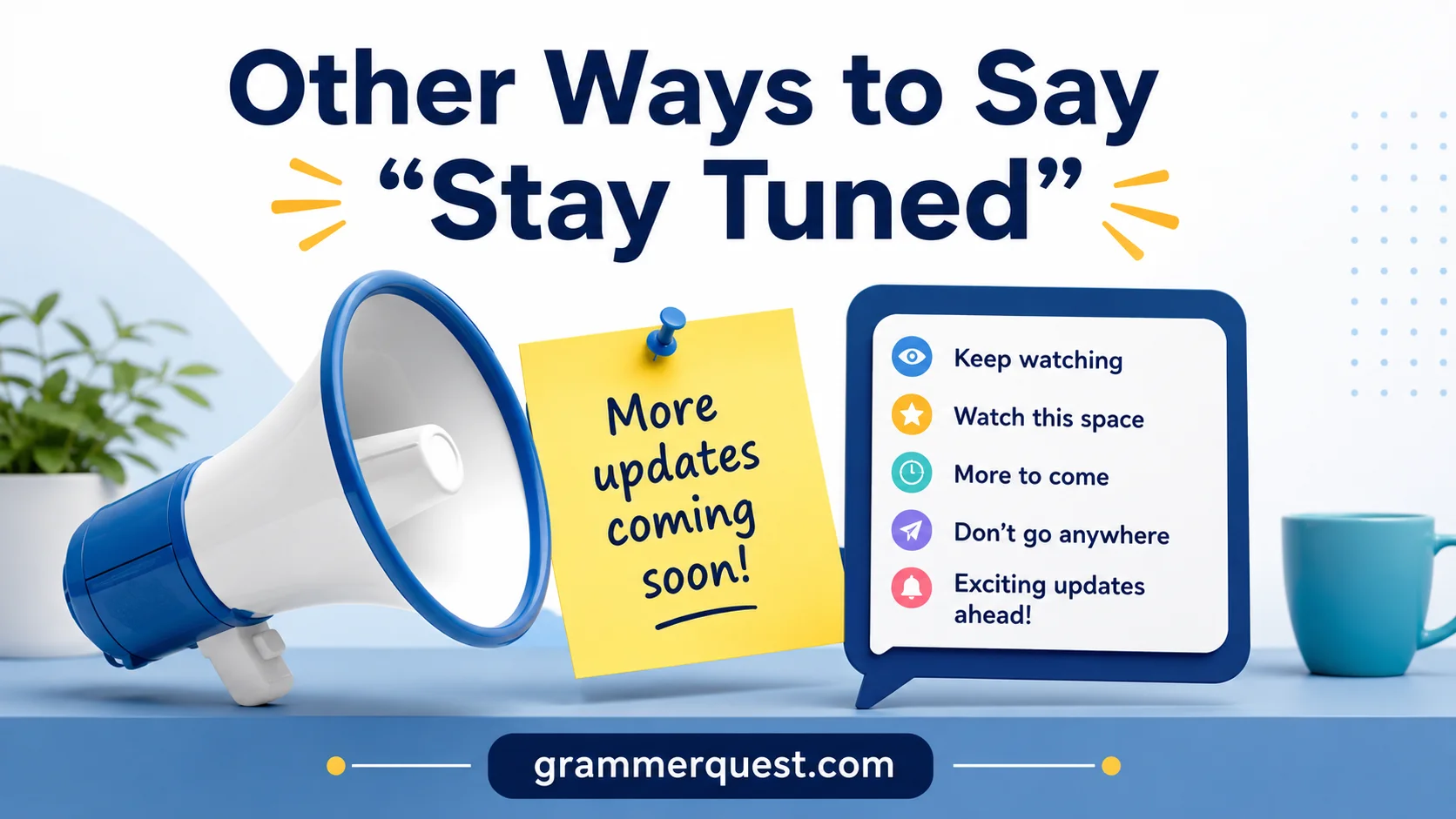
Other Ways to Say “Stay Tuned” (With Examples) offers fresh and engaging expressions that help your messages sound more natural, friendly, and professional. Whether you’re writing an email, blog post, social media update, or announcement, using the right alternative keeps your audience interested and excited about what comes next. These phrases also make your communication feel more personal and less repetitive.
Using creative alternatives instead of repeating “Stay Tuned” can strengthen your communication and improve engagement. In this guide, you’ll discover useful expressions with clear examples, tones, best uses, and real-life scenarios. Each option is designed to help you build trust, maintain your readers’ attention, and create a lasting connection while keeping every message clear, inviting, and memorable.
Did You Know “Stay Tuned” Has a History?
The phrase “stay tuned” originally came from the world of radio and television. In the early days of broadcasting, listeners were asked to keep their radios tuned to a specific frequency so they would not miss upcoming programs or important announcements.
Today, “stay tuned” has expanded beyond broadcasting and is widely used in digital communication, marketing, social media, and personal conversations. It is now a common expression that encourages people to wait for future updates, exciting developments, or more information.
What Does “Stay Tuned” Mean?
“Stay tuned” means to continue paying attention, remain connected, or wait for something that will happen soon. It is a friendly expression used to create anticipation and encourage people to follow future updates.
The phrase can be used in many situations, such as:
- Waiting for a new product launch
- Following upcoming news
- Expecting more details about an event
- Keeping interest in a conversation
- Watching for future announcements
For example:
“Stay tuned for our exciting new collection coming next week.”
This means people should keep watching or checking for the upcoming announcement.
Professional or Political Ways to Say “Stay Tuned”
In professional, business, or political communication, “stay tuned” may sound slightly informal. More polished alternatives include:
- Please remain informed
- Further updates will follow
- More details will be announced soon
- Please watch for future announcements
- We will provide additional information shortly
These phrases create a more official and confident tone while still keeping the audience interested.
“Stay Tuned” Synonyms
- Keep Watching
- Keep an Eye Out
- Stay Updated
- Stay Informed
- Watch This Space
- More to Come
- Coming Soon
- Don’t Go Anywhere
- Keep Following
- Remain Connected
- Follow Along
- Look Forward To More
- Await Further Updates
- Keep Checking Back
- Be on the Lookout
- Stay Alert
- Keep Listening
- Hold Tight
- Wait for It
- Keep Yourself Posted
- Expect More News Soon
- Stay in the Loop
- More Information Is Coming
- Keep Your Eyes Open
- Stay Engaged
1. Keep Watching
Definition: “Keep watching” means continuing to pay attention to something that is happening or will happen soon. It is a simple and direct alternative to “stay tuned.”
Meanings: It encourages someone to continue following updates, videos, shows, or announcements.
Example: “Keep watching for our special announcement tomorrow.”
Detailed Explanation: This phrase is commonly used in entertainment, online content, and marketing. It creates curiosity and tells people that something interesting is coming. It feels natural and friendly, making it suitable for audiences of all ages.
Tone: Casual, exciting, friendly.
Best Use: Social media posts, videos, TV programs, and announcements.
2. Keep an Eye Out
Definition: “Keep an eye out” means to watch carefully for something expected to appear. It is a conversational way to ask someone to remain aware.
Meanings: It suggests paying attention and noticing future updates or events.
Example: “Keep an eye out for our new website launch.”
Detailed Explanation: This phrase works well when something is not available yet but will appear soon. It is commonly used in everyday conversations and online communication. It gives a friendly reminder without sounding too formal.
Tone: Casual and approachable.
Best Use: Friends, customers, social media, and informal announcements.
3. Stay Updated
Definition: “Stay updated” means keeping yourself informed about the latest information. It focuses on receiving new details as they become available.
Meanings: It encourages people to follow changes, news, or developments.
Example: “Stay updated with our latest offers and services.”
Detailed Explanation: This phrase is widely used by companies, organizations, and online platforms. It sounds professional while still being simple and clear. It is ideal when the goal is to encourage people to follow ongoing progress.
Tone: Professional and informative.
Best Use: Business emails, websites, and newsletters.
4. Stay Informed
Definition: “Stay informed” means continuing to learn about important information or developments. It encourages awareness and knowledge.
Meanings: It asks people to remain aware of future updates.
Example: “Stay informed about upcoming policy changes.”
Detailed Explanation: This alternative is more formal than “stay tuned.” It is often used by governments, organizations, and professionals. It emphasizes knowledge and responsibility rather than excitement.
Tone: Formal and authoritative.
Best Use: Official announcements, news, and professional communication.
5. Watch This Space
Definition: “Watch this space” means something interesting or important will happen soon. It invites people to pay attention for future developments.
Meanings: It creates anticipation for upcoming news or events.
Example: “Watch this space for our next big announcement.”
Detailed Explanation: This phrase is popular in marketing and creative industries. It creates excitement and encourages curiosity. It is especially effective when promoting upcoming launches or projects.
Tone: Exciting and promotional.
Best Use: Advertising, campaigns, and social media.
6. More to Come
Definition: “More to come” means additional information or events are expected in the future. It tells people that the current update is not the end.
Meanings: It creates anticipation for future content.
Example: “Thank you for your support. More to come soon.”
Detailed Explanation: This phrase is short, memorable, and versatile. It works well in personal messages, professional updates, and online posts. It keeps audiences interested without giving too much information away.
Tone: Positive and exciting.
Best Use: Announcements, social media, and conversations.
7. Coming Soon
Definition: “Coming soon” means something will be available or revealed in the near future. It builds excitement about upcoming events or products.
Meanings: It signals that people should wait for a future release.
Example: “Our new collection is coming soon.”
Detailed Explanation: This phrase is widely recognized and often used in marketing. It creates curiosity and encourages people to return for updates. It is simple but powerful when promoting something new.
Tone: Exciting and promotional.
Best Use: Product launches, movies, websites, and events.
8. Don’t Go Anywhere
Definition: “Don’t go anywhere” means stay where you are and wait for something else. It is a direct way to ask someone to remain present.
Meanings: It encourages continued attention.
Example: “Don’t go anywhere, we have more exciting news coming.”
Detailed Explanation: This phrase is often used in entertainment and live broadcasts. It creates a feeling of immediate continuation and keeps audiences engaged.
Tone: Friendly and energetic.
Best Use: Live shows, videos, and casual communication.
9. Keep Following
Definition: “Keep following” means continue paying attention to updates or progress. It encourages ongoing connection.
Meanings: It asks people to continue supporting or tracking something.
Example: “Keep following us for more updates.”
Detailed Explanation: This phrase is especially common on social media platforms. It encourages audiences to remain connected with a brand, creator, or community.
Tone: Friendly and digital.
Best Use: Social media, online communities, and marketing.
10. Remain Connected
Definition: “Remain connected” means maintaining contact or communication. It highlights continued interaction.
Meanings: It encourages people to stay involved.
Example: “Remain connected for future opportunities.”
Detailed Explanation: This phrase has a professional and relationship-focused feel. It is useful when talking about long-term communication and building trust.
Tone: Professional and warm.
Best Use: Business relationships, networking, and communities.
11. Follow Along
Definition: “Follow along” means to continue paying attention and staying involved with something as it develops. It encourages people to remain part of a journey, activity, or story.
Meanings: It means keeping track of progress, updates, or events as they happen. It invites someone to continue watching, listening, or participating.
Example: “Follow along as we reveal the steps behind our new project.”
Detailed Explanation: Follow along is a friendly and engaging alternative to “stay tuned.” It is often used when sharing a process, story, tutorial, or ongoing event. This phrase makes the audience feel included rather than simply waiting for information. It creates a sense of connection and encourages active participation.
Tone: Friendly, inviting, and interactive.
Best Use: Social media content, tutorials, storytelling, live events, and educational videos.
12. Look Forward to More
Definition: “Look forward to more” means feeling excited and positive about future updates, experiences, or information.
Meanings: It expresses anticipation and encourages people to expect something enjoyable in the future.
Example: “Thank you for joining us today. Look forward to more exciting updates soon.”
Detailed Explanation: Look forward to more adds an emotional and positive feeling to communication. Unlike “stay tuned,” which simply asks someone to wait, this phrase focuses on excitement and expectation. It works well when building a relationship with an audience and creating enthusiasm for future content.
Tone: Positive, warm, and optimistic.
Best Use: Professional messages, newsletters, customer communication, and personal updates.
13. Await Further Updates
Definition: “Await further updates” means waiting for additional information that will be provided later.
Meanings: It tells people that more details or announcements will follow in the future.
Example: “Please await further updates regarding the event schedule.”
Detailed Explanation: Await further updates is a formal alternative to “stay tuned.” It is commonly used in official communication where a professional tone is required. This phrase sounds organized and reliable, making it suitable for situations where people need accurate information rather than casual excitement.
Tone: Formal, professional, and official.
Best Use: Government announcements, business emails, legal notices, and formal statements.
Also Read This: 25 Other Ways to Say “Special Thanks” (With Examples)
14. Keep Checking Back
Definition: “Keep checking back” means returning regularly to find new information, updates, or changes.
Meanings: It encourages people to visit again or look for future announcements.
Example: “Keep checking back for the latest updates on our services.”
Detailed Explanation: Keep checking back is commonly used on websites, blogs, and online platforms. It is a practical way to tell visitors that new content will be added soon. This phrase encourages repeated engagement and helps maintain audience interest over time.
Tone: Helpful, casual, and informative.
Best Use: Websites, blogs, online stores, and digital platforms.
15. Be on the Lookout
Definition: “Be on the lookout” means to watch carefully and pay attention for something expected to happen.
Meanings: It encourages awareness of upcoming opportunities, announcements, or changes.
Example: “Be on the lookout for our special holiday offers.”
Detailed Explanation: Be on the lookout is a flexible phrase that works in both casual and professional situations. It creates a feeling of awareness and preparation. Businesses often use it to encourage customers to notice upcoming deals, while individuals use it when asking others to watch for something specific.
Tone: Alert, friendly, and encouraging.
Best Use: Promotions, announcements, personal messages, and reminders.
16. Stay Alert
Definition: “Stay alert” means to remain aware and pay attention to what is happening around you.
Meanings: It encourages someone to watch for important information, changes, or events.
Example: “Stay alert for more details about tomorrow’s meeting.”
Detailed Explanation: Stay alert has a stronger meaning than “stay tuned” because it focuses on awareness and readiness. It is useful when the information being shared is important or time-sensitive. While it can sound serious, it can also be used casually when reminding people to pay attention.
Tone: Serious, careful, and informative.
Best Use: Safety updates, important announcements, professional communication, and urgent messages.
17. Keep Listening
Definition: “Keep listening” means continuing to pay attention to spoken information or audio content.
Meanings: It asks someone to remain focused because more information is coming.
Example: “Keep listening because we have a special message coming next.”
Detailed Explanation: Keep listening is a natural alternative to “stay tuned” for audio-based communication. It is commonly used by radio hosts, podcast creators, and speakers. This phrase creates anticipation and keeps listeners engaged throughout a conversation or program.
Tone: Friendly, engaging, and conversational.
Best Use: Podcasts, radio programs, speeches, and audio content.
18. Hold Tight
Definition: “Hold tight” means to wait patiently for a short time until something happens or information becomes available.
Meanings: It encourages someone to be patient while expecting a future update.
Example: “Hold tight, we will share the final results soon.”
Detailed Explanation: Hold tight is a warm and casual expression that makes waiting feel more comfortable. It is often used when there is a short delay before sharing information. This phrase creates a friendly connection and reassures people that something is coming.
Tone: Casual, reassuring, and friendly.
Best Use: Customer service, conversations, online updates, and informal announcements.
19. Wait for It
Definition: “Wait for it” means to be patient because something surprising, exciting, or important is about to happen.
Meanings: It builds suspense and creates curiosity about what comes next.
Example: “Our biggest announcement is coming… wait for it!”
Detailed Explanation: Wait for it is a popular phrase used to create drama and excitement. It is often found in entertainment, storytelling, and social media content. This expression makes the audience curious and encourages them to continue paying attention.
Tone: Playful, exciting, and dramatic.
Best Use: Stories, videos, entertainment, and casual conversations.
20. Keep Yourself Posted
Definition: “Keep yourself posted” means to continue receiving updates and information about a situation.
Meanings: It encourages someone to stay informed about future developments.
Example: “Keep yourself posted about the progress of the project.”
Detailed Explanation: Keep yourself posted is a common phrase in professional and personal communication. It suggests regular updates and continued awareness. This expression is useful when people are involved in a process and need to know what happens next.
Tone: Professional, friendly, and practical.
Best Use: Work communication, project updates, emails, and personal conversations.
21. Expect More News Soon
Definition: “Expect more news soon” means that additional information or announcements will be shared in the near future. It creates anticipation for upcoming updates.
Meanings: It tells people that they should prepare for more details, developments, or important information.
Example: “Expect more news soon about our upcoming event schedule.”
Detailed Explanation: Expect more news soon is a clear and professional alternative to “stay tuned.” It directly informs the audience that new information is on the way. This phrase works well when you want to create interest while maintaining a confident and informative tone. It is especially useful for organizations, brands, and public announcements where people are waiting for future details.
Tone: Professional, confident, and informative.
Best Use: Business updates, official announcements, media releases, and company communication.
22. Stay in the Loop
Definition: “Stay in the loop” means to remain informed and involved in ongoing information or conversations.
Meanings: It encourages someone to continue receiving updates and remain connected with a group, project, or situation.
Example: “Stay in the loop by subscribing to our newsletter.”
Detailed Explanation: Stay in the loop is a modern and popular expression used in workplaces, online communities, and social communication. It suggests that someone is part of a conversation or process rather than simply waiting for information. This phrase creates a feeling of inclusion and connection, making it useful for building relationships with an audience.
Tone: Friendly, modern, and professional.
Best Use: Workplaces, team communication, newsletters, social media, and communities.
23. More Information Is Coming
Definition: “More information is coming” means that additional details will be provided in the future.
Meanings: It informs people that the current information is incomplete and further explanations or updates will follow.
Example: “More information is coming about the new program next week.”
Detailed Explanation: More information is coming is a straightforward alternative to “stay tuned.” It is useful when people need reassurance that unanswered questions will be addressed soon. This phrase works well in professional communication because it clearly communicates that updates are planned. It avoids confusion and keeps the audience informed about future developments.
Tone: Clear, professional, and reassuring.
Best Use: Company announcements, news updates, educational content, and official communication.
24. Keep Your Eyes Open
Definition: “Keep your eyes open” means to stay aware and watch carefully for something that may happen.
Meanings: It encourages someone to notice opportunities, updates, changes, or important information.
Example: “Keep your eyes open for our special discount offers.”
Detailed Explanation: Keep your eyes open is a natural and expressive alternative to “stay tuned.” It creates a sense of awareness and curiosity. This phrase can be used both literally and figuratively, making it flexible for different situations. It works well when you want people to actively notice something instead of simply waiting.
Tone: Casual, encouraging, and alert.
Best Use: Everyday conversations, promotions, reminders, and social media content.
25. Stay Engaged
Definition: “Stay engaged” means to continue showing interest, attention, and involvement in something.
Meanings: It encourages people to remain connected with content, discussions, events, or activities.
Example: “Stay engaged with our community for more exciting updates.”
Detailed Explanation: Stay engaged is a professional and modern alternative to “stay tuned.” It focuses on active participation rather than passive waiting. Businesses, educators, and online communities often use this phrase to encourage audiences to interact, respond, and remain connected. It creates a stronger relationship between the speaker and the audience.
Tone: Professional, motivating, and inclusive.
Best Use: Online communities, education, marketing, business communication, and social media.
FAQs :
1. What does “Stay Tuned” mean?
“Stay Tuned” means to wait for more information because additional updates, news, or announcements will be shared soon.
2. What are some professional alternatives to “Stay Tuned”?
You can use phrases like Keep an eye out, More updates are coming, Watch this space, There’s more to come, or We’ll keep you posted in professional communication.
3. When should I use alternatives to “Stay Tuned”?
Use them in emails, social media posts, blogs, newsletters, and business announcements to keep your message fresh and engaging.
4. Why should I avoid repeating “Stay Tuned”?
Repeating the same phrase can make your writing sound repetitive. Using different expressions makes your communication more natural, interesting, and personal.
5. Which alternative is best for casual conversations?
Friendly options like Don’t go anywhere, Keep watching, More is on the way, or You won’t want to miss this work well in casual conversations and online content.
Conclusion :
Using Other Ways to Say “Stay Tuned” helps your writing sound more engaging, professional, and human. Choosing the right phrase for the situation keeps your audience interested while adding variety to your communication. Whether you’re creating emails, blog posts, social media updates, or announcements, these alternatives make your message more inviting and encourage readers to look forward to your next update.

Henry Collins is a passionate grammar expert and the voice behind GrammerQuest.com. With a sharp eye for language and a love for clear communication, he simplifies complex grammar rules into easy, practical lessons.