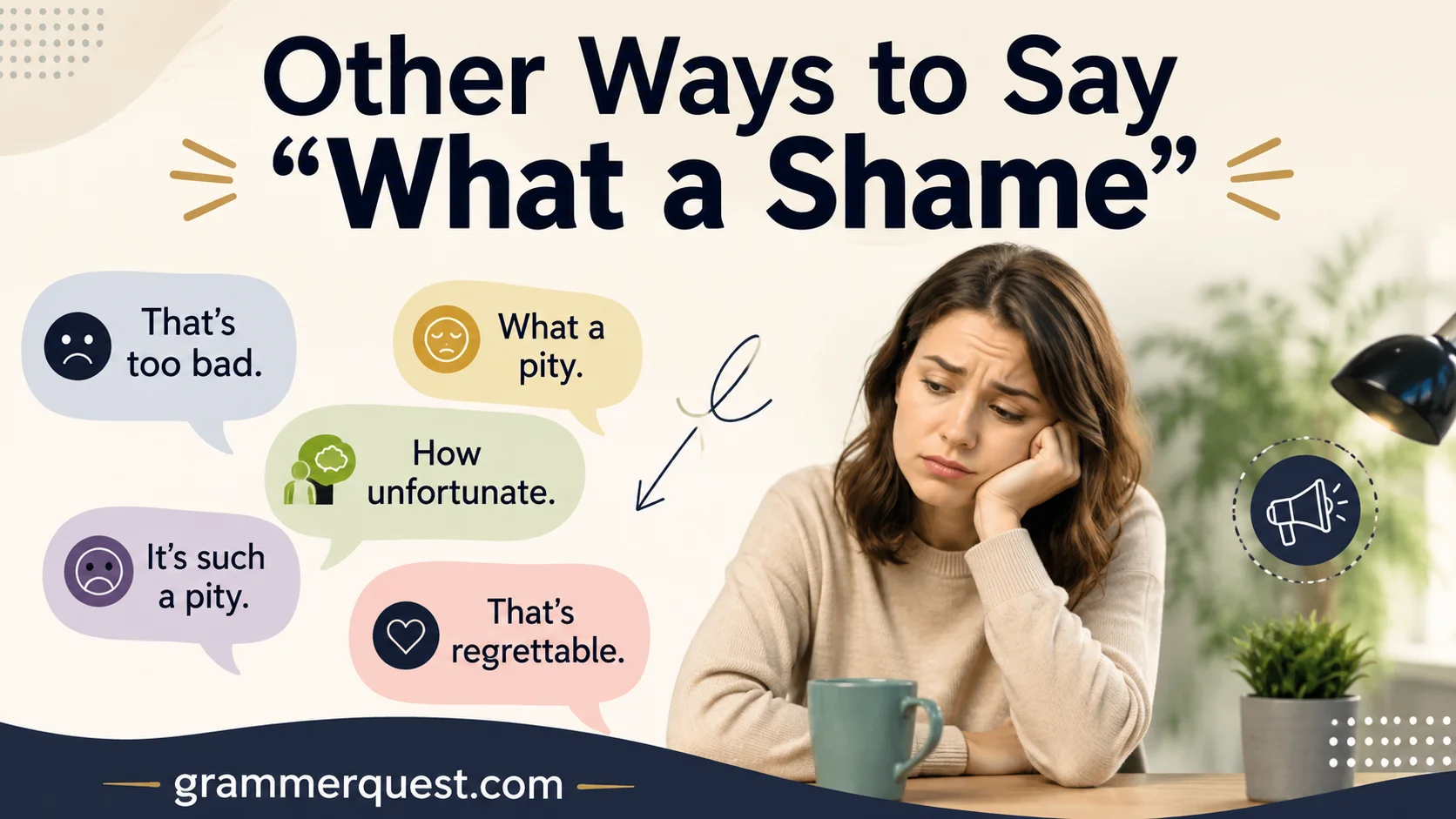
Other Ways to Say “What a Shame” (With Examples) helps you express sympathy, regret, and empathy with better words in different situations. While What a Shame is a familiar phrase, using fresh alternatives makes your communication sound more natural, thoughtful, and meaningful. Whether someone shares unfortunate news, faces a setback, or misses an opportunity, choosing the right response shows kindness, support, and compassion while improving your conversation and English skills.
The right expression can make every message feel more authentic, friendly, and helpful. In personal and professional situations, a warm tone and thoughtfulness help people feel understood. Instead of repeating the same words, explore creative and polite options that fit the context. A caring reply with reassurance, understanding, and sensitivity leaves a positive impact. These simple choices improve your vocabulary, communication skills, and confidence in everyday conversations.
Did You Know About “What a Shame”?
The expression “What a shame” has been part of English for centuries and is commonly used to express regret, disappointment, sympathy, or pity. It doesn’t necessarily blame anyone. Instead, it simply acknowledges that something unfortunate has happened.
Today, native English speakers use this phrase in both formal and informal settings. However, depending on the context, there are many alternatives that sound more compassionate, professional, emotional, or conversational. Expanding your vocabulary allows you to communicate your feelings with greater precision while making your speech more engaging.
What Does “What a Shame” Mean?
The phrase “What a shame” is used when something unfortunate, disappointing, or regrettable happens. It expresses sympathy for another person’s situation or disappointment about an event that could have turned out better.
For example, if someone tells you they missed an important opportunity, you might respond with “What a shame.” The phrase communicates understanding and empathy without sounding overly dramatic. Depending on the situation, however, another expression may better match the tone you want to convey.
Professional or Political Ways to Say “What a Shame”
In professional environments, diplomatic conversations, or public statements, directly saying “What a shame” may sound too informal. Instead, people often choose more polished alternatives such as:
- That’s unfortunate.
- It’s regrettable.
- That is disappointing.
- We regret to hear that.
- It is most unfortunate.
- That is certainly regrettable.
- It’s disappointing to learn this.
- This is an unfortunate outcome.
These expressions communicate empathy while maintaining professionalism and respect.
“What a Shame” Synonyms
- That’s Unfortunate
- That’s Too Bad
- What a Pity
- That’s Disappointing
- That’s Regrettable
- Such a Shame
- That’s Really Sad
- What an Unfortunate Situation
- I’m Sorry to Hear That
- That’s Heartbreaking
- That’s a Real Shame
- That’s Tough
- How Unfortunate
- That’s Distressing
- That’s Awful
- That’s Unlucky
- That’s a Shame Indeed
- What an Upset
- That’s Disheartening
- That’s Miserable
- That’s Quite Unfortunate
- That’s Truly Regrettable
- I Feel for You
- My Heart Goes Out to You
- That’s Hard to Hear
1. That’s Unfortunate
Definition:
“That’s unfortunate” is a polite and professional expression used to acknowledge that something unpleasant or disappointing has happened. It communicates sympathy without sounding overly emotional.
Meanings:
This phrase expresses regret, disappointment, or empathy toward an unfortunate event. It is widely used in workplaces, academic settings, customer service, and everyday conversations because it maintains a respectful and neutral tone.
Example:
“Your flight was canceled? That’s unfortunate. I hope you’re able to find another one soon.”
Detailed Explanation:
“That’s unfortunate” is one of the closest alternatives to “What a shame.” It works well when you want to express concern while remaining professional and composed. Unlike stronger emotional expressions, it avoids exaggeration and focuses on acknowledging the unfortunate circumstances. Because of its neutral nature, it is suitable for emails, meetings, customer interactions, and formal conversations while still conveying genuine empathy.
Tone:
Professional, polite, sympathetic, neutral.
Best use:
Business communication, formal conversations, academic discussions, customer service, and respectful everyday situations.
Reply “next part” and I’ll continue with Synonyms #2 to #6 in the same format.
7. That’s Really Sad
Definition:
“That’s really sad” is a compassionate expression used to show genuine sorrow or empathy when hearing unfortunate or heartbreaking news. It conveys a stronger emotional response than “What a shame.”
Meanings:
This phrase expresses heartfelt sympathy and acknowledges that a situation is emotionally painful or deeply disappointing. It is often used when comforting someone during difficult times.
Example:
“Your childhood pet passed away? That’s really sad. I know how much your family loved him.”
Detailed Explanation:
“That’s really sad” communicates sincere emotional support and understanding. Unlike more neutral alternatives, this phrase openly recognizes the sadness surrounding a situation. It is especially appropriate when responding to personal loss, family difficulties, or emotional setbacks. Because it sounds caring and authentic, it helps the other person feel heard and supported without appearing overly formal or distant.
Tone:
Compassionate, emotional, caring.
Best use:
Comforting friends, family conversations, emotional discussions, and offering sympathy after personal loss.
8. What an Unfortunate Situation
Definition:
“What an unfortunate situation” is a polite expression used to acknowledge that circumstances have turned out badly. It sounds thoughtful and slightly more formal than “What a shame.”
Meanings:
This phrase emphasizes the unfortunate nature of an event rather than focusing on a specific person. It expresses concern while maintaining a respectful and balanced tone.
Example:
“The company had to postpone the launch because of technical issues. What an unfortunate situation.”
Detailed Explanation:
This expression is useful when discussing complex problems, workplace challenges, or public events. Rather than sounding emotional, it objectively recognizes that circumstances are difficult. It is commonly used in business meetings, news reports, academic discussions, and formal conversations. Because it avoids assigning blame, it works well in diplomatic communication where professionalism is important.
Tone:
Professional, respectful, diplomatic.
Best use:
Business meetings, public statements, formal discussions, and workplace communication.
9. I’m Sorry to Hear That
Definition:
“I’m sorry to hear that” is a kind and empathetic phrase used to express sympathy after hearing unfortunate news. It directly acknowledges another person’s feelings.
Meanings:
This expression shows compassion, concern, and emotional support. It lets the other person know that you genuinely care about what they are experiencing.
Example:
“You didn’t get the job you wanted? I’m sorry to hear that. I know how much effort you put into the interview.”
Detailed Explanation:
Unlike “What a shame,” this phrase places greater emphasis on the other person’s emotions. It is widely used in both personal and professional conversations because it sounds sincere without becoming overly emotional. Whether someone is facing illness, disappointment, financial problems, or personal loss, “I’m sorry to hear that” offers comfort and understanding in a respectful manner.
Tone:
Kind, sympathetic, sincere.
Best use:
Personal conversations, customer service, professional emails, and comforting someone after bad news.
10. That’s Heartbreaking
Definition:
“That’s heartbreaking” is a deeply emotional expression used to describe a situation that causes great sadness or emotional pain. It is much stronger than “What a shame.”
Meanings:
This phrase expresses profound sympathy and acknowledges that a situation is extremely upsetting or tragic. It is generally reserved for serious events rather than everyday disappointments.
Example:
“The family lost their home in the fire. That’s heartbreaking.”
Detailed Explanation:
“That’s heartbreaking” should be used when responding to situations involving grief, tragedy, or significant emotional loss. Because the phrase carries strong emotional weight, it demonstrates deep compassion and genuine concern. It helps communicate that you understand the seriousness of the situation and are emotionally affected by what has happened. However, it may sound too intense for minor inconveniences or everyday frustrations.
Tone:
Deeply emotional, compassionate, sincere.
Best use:
Serious personal loss, tragic news, condolences, and emotionally significant conversations.
11. That’s a Real Shame
Definition:
“That’s a real shame” is an emphatic variation of “What a shame” that adds extra sincerity and emotional emphasis. It highlights genuine disappointment.
Meanings:
The phrase communicates that something unfortunate has occurred and that the speaker feels authentic regret about the outcome. It is suitable for both personal and informal professional conversations.
Example:
“You couldn’t finish your degree because of health issues? That’s a real shame.”
Detailed Explanation:
Adding the word “real” strengthens the expression and makes it sound more heartfelt. It is commonly used when someone experiences a missed opportunity, unexpected setback, or disappointing event. The phrase remains conversational while expressing stronger empathy than the original expression. It is natural in spoken English and helps conversations feel warm and supportive.
Tone:
Sympathetic, conversational, heartfelt.
Best use:
Friendly conversations, family discussions, and expressing genuine disappointment.
12. That’s Tough
Definition:
“That’s tough” is an informal phrase used to acknowledge that someone is dealing with a difficult or challenging situation. It expresses sympathy while sounding casual and supportive.
Meanings:
This phrase recognizes hardship, struggle, or disappointment. It lets the other person know that you understand their difficulties without sounding overly sentimental.
Example:
“You have to work all weekend instead of taking your vacation? That’s tough.”
Detailed Explanation:
“That’s tough” is one of the most common expressions used in everyday English. It works especially well when responding to challenges, stressful situations, or frustrating experiences. Although the phrase is brief, it often feels genuine because of its conversational style. It is ideal for talking with friends, classmates, coworkers, or family members when offering encouragement and understanding.
Tone:
Casual, supportive, empathetic.
Best use:
Informal conversations, workplace chats, school discussions, and everyday situations involving difficulties.
13. How Unfortunate
Definition:
“How unfortunate” is a polite and formal expression used to acknowledge an unfortunate event with sympathy and respect. It sounds more refined than “What a shame.”
Meanings:
This phrase expresses regret and disappointment while maintaining a composed and courteous tone. It is often used in professional, academic, and official settings where diplomacy is important.
Example:
“The conference had to be canceled because of severe weather. How unfortunate.”
Detailed Explanation:
“How unfortunate” is an excellent choice when you want to sound thoughtful and professional. Rather than expressing strong emotion, it calmly recognizes that something negative has happened. It is commonly heard in formal speeches, business meetings, interviews, and written correspondence. Because of its respectful tone, it helps communicate empathy without appearing overly emotional or dramatic.
Tone:
Formal, polite, diplomatic.
Best use:
Professional communication, public speaking, business emails, and academic discussions.
Read This: 25 Other Ways to Say “We Value Your Feedback” (With Examples)
14. That’s Distressing
Definition:
“That’s distressing” is a phrase used to express concern about a situation that causes emotional discomfort, worry, or sadness. It carries a stronger emotional impact than “What a shame.”
Meanings:
The phrase acknowledges that a situation is upsetting or troubling. It often reflects concern for the emotional or practical consequences of an event.
Example:
“Hearing that so many families were affected by the storm is distressing.”
Detailed Explanation:
“That’s distressing” is suitable for discussing serious news, social issues, or personal hardships. It emphasizes that the situation is emotionally troubling rather than simply disappointing. Because it conveys thoughtful concern, it is commonly used in healthcare, education, journalism, and professional environments. It is also appropriate when expressing sympathy for events that affect many people.
Tone:
Serious, compassionate, thoughtful.
Best use:
News discussions, healthcare settings, community issues, and conversations about difficult events.
15. That’s Awful
Definition:
“That’s awful” is a strong expression of sympathy used when something extremely unpleasant or upsetting has happened. It communicates genuine concern and emotional support.
Meanings:
This phrase shows that you recognize the seriousness of another person’s experience. It often expresses shock, sadness, or compassion.
Example:
“You lost all your belongings in the flood? That’s awful. I’m so sorry that happened.”
Detailed Explanation:
“That’s awful” is commonly used when responding to serious personal problems or unexpected tragedies. It expresses stronger feelings than “What a shame” and lets the listener know that you truly understand the gravity of the situation. Because it is emotionally powerful, it should be reserved for significant hardships rather than minor inconveniences. Used sincerely, it can provide comfort and reassurance.
Tone:
Emotional, compassionate, sincere.
Best use:
Serious conversations, comforting loved ones, and responding to tragic or upsetting news.
16. That’s Unlucky
Definition:
“That’s unlucky” is an informal phrase used when someone experiences bad luck or an unfortunate outcome that was beyond their control.
Meanings:
This expression recognizes that circumstances did not go in someone’s favor. It often refers to unexpected setbacks, accidents, or missed opportunities caused by chance.
Example:
“You missed the train by just one minute? That’s unlucky.”
Detailed Explanation:
“That’s unlucky” focuses on misfortune rather than disappointment. It suggests that events happened because of bad luck instead of poor decisions. The phrase is friendly, conversational, and easy to understand, making it a common choice among native speakers. It works especially well when discussing sports, travel, competitions, or everyday mishaps that are frustrating but not devastating.
Tone:
Casual, friendly, understanding.
Best use:
Everyday conversations, sports discussions, travel experiences, and minor setbacks.
17. That’s a Shame Indeed
Definition:
“That’s a shame indeed” is a more emphatic version of “What a shame.” The addition of “indeed” makes the expression sound more sincere and reflective.
Meanings:
This phrase communicates genuine regret while giving extra emphasis to the unfortunate nature of the situation. It often sounds thoughtful and respectful.
Example:
“The historic building was destroyed in the fire. That’s a shame indeed.”
Detailed Explanation:
Adding “indeed” gives this expression a slightly formal and reflective quality. It is useful when discussing meaningful losses, missed opportunities, or disappointing events that deserve special attention. Although it is less common in casual speech, it appears naturally in formal conversations, speeches, articles, and thoughtful discussions where a more polished tone is preferred.
Tone:
Respectful, reflective, slightly formal.
Best use:
Formal discussions, speeches, historical topics, and thoughtful conversations.
18. What an Upset
Definition:
“What an upset” is an expression used when an unexpected event leads to disappointment, surprise, or an unfavorable outcome. It is especially common in sports and competitions.
Meanings:
The phrase highlights that something surprising has happened, often resulting in disappointment or shock. It emphasizes the unexpected nature of the event.
Example:
“The defending champions lost in the first round. What an upset!”
Detailed Explanation:
Unlike “What a shame,” “What an upset” focuses on surprise as much as disappointment. It is frequently heard during sporting events, contests, elections, and competitive situations where the expected outcome changes dramatically. While it can be used in everyday conversations, it is most effective when describing unexpected results that catch everyone by surprise.
Tone:
Surprised, conversational, expressive.
Best use:
Sports commentary, competitions, contests, election results, and unexpected outcomes.
19. That’s Disheartening
Definition:
“That’s disheartening” is an expression used to show sadness, disappointment, or discouragement when something negative happens. It suggests that an event has affected someone’s hope or motivation.
Meanings:
This phrase communicates that a situation is emotionally disappointing or discouraging. It is often used when something goes against expectations or creates a feeling of sadness.
Example:
“After months of preparation, the event was canceled. That’s disheartening for everyone involved.”
Detailed Explanation:
“That’s disheartening” is a thoughtful alternative to “What a shame” when the situation involves effort, hope, or expectations that have been negatively affected. It goes beyond simple disappointment by showing that the outcome has reduced enthusiasm or confidence. This phrase is commonly used in professional, educational, and personal settings where people want to acknowledge emotional impact. It is especially effective when discussing setbacks that require resilience and encouragement.
Tone:
Sympathetic, serious, thoughtful.
Best use:
Workplace challenges, personal setbacks, educational situations, and discussions about lost opportunities.
20. That’s Miserable
Definition:
“That’s miserable” is an emotional expression used to describe a situation that is extremely unpleasant, disappointing, or difficult. It conveys strong negative feelings.
Meanings:
This phrase shows that something has caused frustration, sadness, or discomfort. It is often used when a situation feels especially unpleasant or unfair.
Example:
“You spent hours preparing, but the event was canceled because of a mistake? That’s miserable.”
Detailed Explanation:
“That’s miserable” expresses a stronger reaction than “What a shame.” It is often used when someone experiences a frustrating or painful situation that feels unfair or disappointing. The phrase can show emotional support, but it should be used carefully because it carries a strong negative tone. In some contexts, it may sound more dramatic than necessary, so it works best when the situation truly deserves a strong reaction.
Tone:
Strong, emotional, sympathetic.
Best use:
Difficult personal experiences, frustrating events, and situations involving major disappointment.
21. That’s Quite Unfortunate
Definition:
“That’s quite unfortunate” is a formal and polite expression used to acknowledge a disappointing or negative situation. It is a more refined alternative to “What a shame.”
Meanings:
This phrase expresses regret while maintaining professionalism and emotional control. It is often used when discussing problems in a respectful manner.
Example:
“The application was rejected due to missing documents. That’s quite unfortunate, but we can try again next year.”
Detailed Explanation:
“That’s quite unfortunate” is especially useful when you want to sound calm, respectful, and professional. It recognizes disappointment without making the conversation overly emotional. This phrase is commonly found in workplace communication, official responses, and formal discussions because it balances empathy with professionalism. It is a good choice when addressing sensitive matters where a measured response is needed.
Tone:
Professional, polite, composed.
Best use:
Business communication, official conversations, customer support, and formal writing.
22. That’s Truly Regrettable
Definition:
“That’s truly regrettable” is a formal expression that shows deep disappointment or sorrow about an unfortunate situation. It emphasizes genuine regret.
Meanings:
The phrase communicates that something negative has happened and that the speaker considers the outcome unfortunate. It often appears in official or diplomatic language.
Example:
“The misunderstanding caused problems for many customers. That’s truly regrettable, and we apologize for the inconvenience.”
Detailed Explanation:
“That’s truly regrettable” carries a serious and respectful tone, making it suitable for situations where accountability and professionalism matter. Organizations often use similar wording when addressing mistakes, conflicts, or unfortunate events. Unlike casual phrases, it avoids emotional exaggeration while still showing concern. It is an effective choice for formal apologies, announcements, and professional conversations.
Tone:
Formal, diplomatic, sincere.
Best use:
Corporate statements, professional apologies, official announcements, and serious discussions.
23. I Feel for You
Definition:
“I feel for you” is a compassionate expression used to show emotional understanding and sympathy toward someone experiencing difficulty.
Meanings:
This phrase means that you understand someone’s pain, disappointment, or struggle and genuinely care about their situation. It focuses on emotional connection rather than the event itself.
Example:
“You worked so hard for this opportunity and didn’t get selected. I feel for you.”
Detailed Explanation:
“I feel for you” is a warm and personal alternative to “What a shame.” It shifts attention from the unfortunate event to the person experiencing it. This makes the phrase especially meaningful when offering comfort or emotional support. It is commonly used among friends, family members, and close colleagues because it creates a feeling of understanding and compassion.
Tone:
Warm, caring, supportive.
Best use:
Personal conversations, friendships, emotional support, and comforting someone through disappointment.
24. My Heart Goes Out to You
Definition:
“My heart goes out to you” is a deeply compassionate expression used to show sympathy during painful or difficult experiences. It conveys strong emotional support.
Meanings:
This phrase means that you feel sadness for someone’s situation and want them to know they have your care and support. It is often associated with serious hardships or loss.
Example:
“I heard about your family’s loss. My heart goes out to you during this difficult time.”
Detailed Explanation:
“My heart goes out to you” is one of the most heartfelt alternatives to “What a shame.” It is usually reserved for situations involving grief, hardship, or significant emotional pain. The phrase communicates deep empathy and lets someone know they are not alone. Because it carries a powerful emotional meaning, it should be used sincerely and in appropriate situations.
Tone:
Deeply compassionate, emotional, supportive.
Best use:
Condolences, serious personal struggles, tragedies, and offering emotional comfort.
25. That’s Hard to Hear
Definition:
“That’s hard to hear” is an expression used when information or news causes sadness, concern, or emotional difficulty. It shows that the speaker recognizes the seriousness of the situation.
Meanings:
This phrase communicates sympathy and acknowledges that something upsetting or disappointing has been shared. It focuses on the emotional impact of the news.
Example:
“Your business had to close after ten years? That’s hard to hear. I know how much it meant to you.”
Detailed Explanation:
“That’s hard to hear” is a natural and empathetic way to respond when someone shares difficult information. It shows that you are listening and that you understand the emotional weight of what they have said. The phrase works well in both personal and professional conversations because it is respectful and caring without being exaggerated. It is especially useful when responding to unexpected news or painful experiences.
Tone:
Sympathetic, gentle, understanding.
Best use:
Personal conversations, supportive discussions, difficult news, and emotional situations.
FAQs:
1. What does “What a Shame” mean?
What a Shame is a phrase used to express sympathy, regret, or disappointment when something unfortunate happens.
2. Why should I use other ways to say “What a Shame”?
Using different expressions keeps your communication fresh, natural, and more suitable for personal, professional, or casual conversations.
3. Can I use these alternatives in professional settings?
Yes. Many alternatives are polite and thoughtful, making them perfect for workplace conversations, emails, and formal discussions.
4. What is the best alternative for showing sympathy?
Phrases like “That’s unfortunate,” “I’m sorry to hear that,” and “That’s disappointing” are excellent choices for expressing empathy and support.
5. How can I choose the right expression?
Think about the situation, your relationship with the listener, and the tone you want to use. Choosing the right words makes your response more meaningful and sincere.
Conclusion
Learning Other Ways to Say “What a Shame” (With Examples) helps you communicate with greater confidence and kindness. Instead of repeating the same phrase, you can choose expressions that match the situation and show genuine sympathy, empathy, and understanding. Using the right words makes your conversations feel more natural, thoughtful, and memorable in both everyday life and professional settings.

Henry Collins is a passionate grammar expert and the voice behind GrammerQuest.com. With a sharp eye for language and a love for clear communication, he simplifies complex grammar rules into easy, practical lessons.