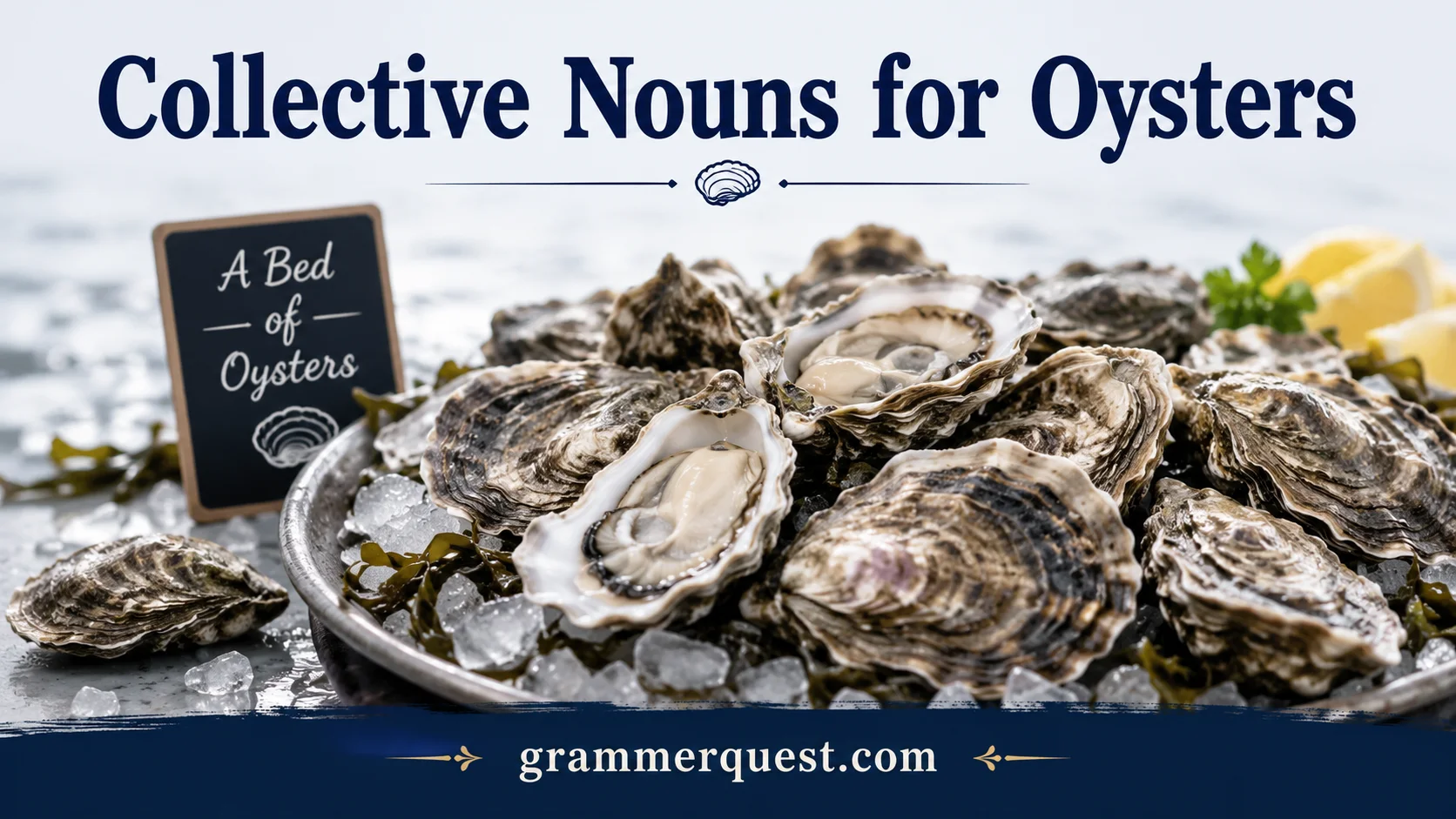
Collective Nouns for Oysters describe how groups of oysters are known as a bed of oysters, commonly found in marine environments. These collective nouns help learners understand how animals are grouped in language, just like a swarm of bees or herd of cows. In oceans, divers and fishermen often observe a bed of oysters while collecting seafood, making it an important concept in grammar and nature studies for better learning and awareness among students and educators worldwide in classrooms today.
Collective nouns are essential parts of English grammar that describe groups of animals, people, or things in a single term. A bed of oysters is a unique example often seen in ocean habitats, inspiring both language learning and creative expressions. These terms help students and writers improve vocabulary and understanding of nature. The concept of Collective Nouns for Oysters is also used in educational content and stylish designs like themed clothing for ocean lovers and learners around the world today.
Collective Nouns for Oysters
The table below presents the most commonly used collective nouns for oysters.
| Collective Noun | Simple Example |
| Bed | A bed of oysters covered the seabed. |
| Reef | A reef of oysters grew along the shoreline. |
| Colony | A colony of oysters thrived in the bay. |
| Cluster | A cluster of oysters attached to the rocks. |
| Gathering | A gathering of oysters filtered water continuously. |
1. Bed of Oysters
A bed is the most common collective noun used for oysters. It refers to a large area where oysters grow together on the ocean floor.
Examples of Bed of Oysters
- A bed of oysters stretched across the bay.
- The fishermen discovered a bed of oysters near the coast.
- A healthy bed of oysters supports marine life.
- The bed of oysters filtered the seawater.
- Scientists studied the bed of oysters carefully.
- The storm damaged the bed of oysters.
- Divers explored a large bed of oysters.
- The bed of oysters provided shelter for fish.
- Conservationists worked to protect the bed of oysters.
- The bed of oysters grew larger every year.
2. Reef of Oysters
When oysters grow densely together and form structures, they are often called a reef.
Examples of Reef of Oysters
- A reef of oysters lined the shoreline.
- The reef of oysters attracted many fish.
- Divers photographed the reef of oysters.
- The reef of oysters improved water quality.
- A reef of oysters protected the coast from waves.
- Scientists restored the reef of oysters.
- The reef of oysters became a thriving habitat.
- Birds searched for food near the reef of oysters.
- The reef of oysters expanded over time.
- Tourists learned about the reef of oysters.
3. Colony of Oysters
The term colony emphasizes oysters living together and functioning as part of a larger community.
Examples of Colony of Oysters
- A colony of oysters lived in the estuary.
- The colony of oysters grew rapidly.
- Researchers monitored the colony of oysters.
- The colony of oysters survived harsh conditions.
- Fish gathered around the colony of oysters.
- The colony of oysters helped clean the water.
- A colony of oysters formed near the rocks.
- The colony of oysters provided habitat for crabs.
- Conservation efforts saved the colony of oysters.
- The colony of oysters remained healthy.
4. Cluster of Oysters
A cluster refers to a small group of oysters attached closely together.
Examples of Cluster of Oysters
- A cluster of oysters clung to the rock.
- The cluster of oysters was easy to spot.
- Divers examined a cluster of oysters.
- A cluster of oysters grew near the dock.
- The cluster of oysters remained underwater.
- Children observed a cluster of oysters.
- The cluster of oysters attracted tiny fish.
- Waves washed over the cluster of oysters.
- Scientists measured the cluster of oysters.
- The cluster of oysters expanded during the season.
5. Gathering of Oysters
Although less common, gathering can be used to describe a collection of oysters in one area.
Examples of Gathering of Oysters
- A gathering of oysters covered the seabed.
- The gathering of oysters filtered seawater daily.
- Researchers found a gathering of oysters in the bay.
- The gathering of oysters supported marine biodiversity.
- A gathering of oysters grew near the shore.
- The gathering of oysters remained healthy.
- Fish swam around the gathering of oysters.
- The gathering of oysters helped improve water clarity.
- Divers explored the gathering of oysters.
- The gathering of oysters expanded naturally.
Read More: Collective Nouns for Bees
FAQs:
Q1: What is the collective noun for oysters?
A: The most commonly used term is a bed of oysters.
Q2: Why are oysters called a bed of oysters?
A: Because oysters usually live and grow in clusters on the seabed.
Q3: Are collective nouns important in English grammar?
A: Yes, they help describe groups of animals, people, or things in a single word.
Q4: Where are oysters commonly found?
A: Oysters are found in oceans, seas, and coastal waters attached to rocks or seabeds.
Q5: Can we use other terms for oysters as a group?
A: “Bed of oysters” is the most accepted term, though variations may appear in creative writing.
Q6: What do oysters form naturally?
A: They form dense clusters or reefs on the ocean floor.
Q7: Who uses the term bed of oysters?
A: Fishermen, marine biologists, and English learners commonly use it.
Q8: Is bed of oysters used in formal writing?
A: Yes, it is widely accepted in educational and descriptive contexts.
Q9: What is the purpose of learning collective nouns?
A: They improve vocabulary and understanding of group descriptions in English.
Q10: Are oysters important in marine life?
A: Yes, they play a key role in ecosystems by filtering water and supporting biodiversity.
Conclusion:
The term Collective Nouns for Oysters, especially bed of oysters, is an important part of English grammar and marine vocabulary. It helps learners understand how groups of living things are named while also connecting language with real ocean life. Understanding such collective nouns improves communication skills, enriches vocabulary, and makes learning English more engaging and practical.

Emma Brooke is a passionate language enthusiast and the voice behind GrammarQuest.com. With a sharp eye for detail and a love for clear communication, she simplifies complex grammar rules into easy, practical lessons. Her goal is to help you write with confidence, clarity, and style—whether you’re a student, professional, or everyday writer.