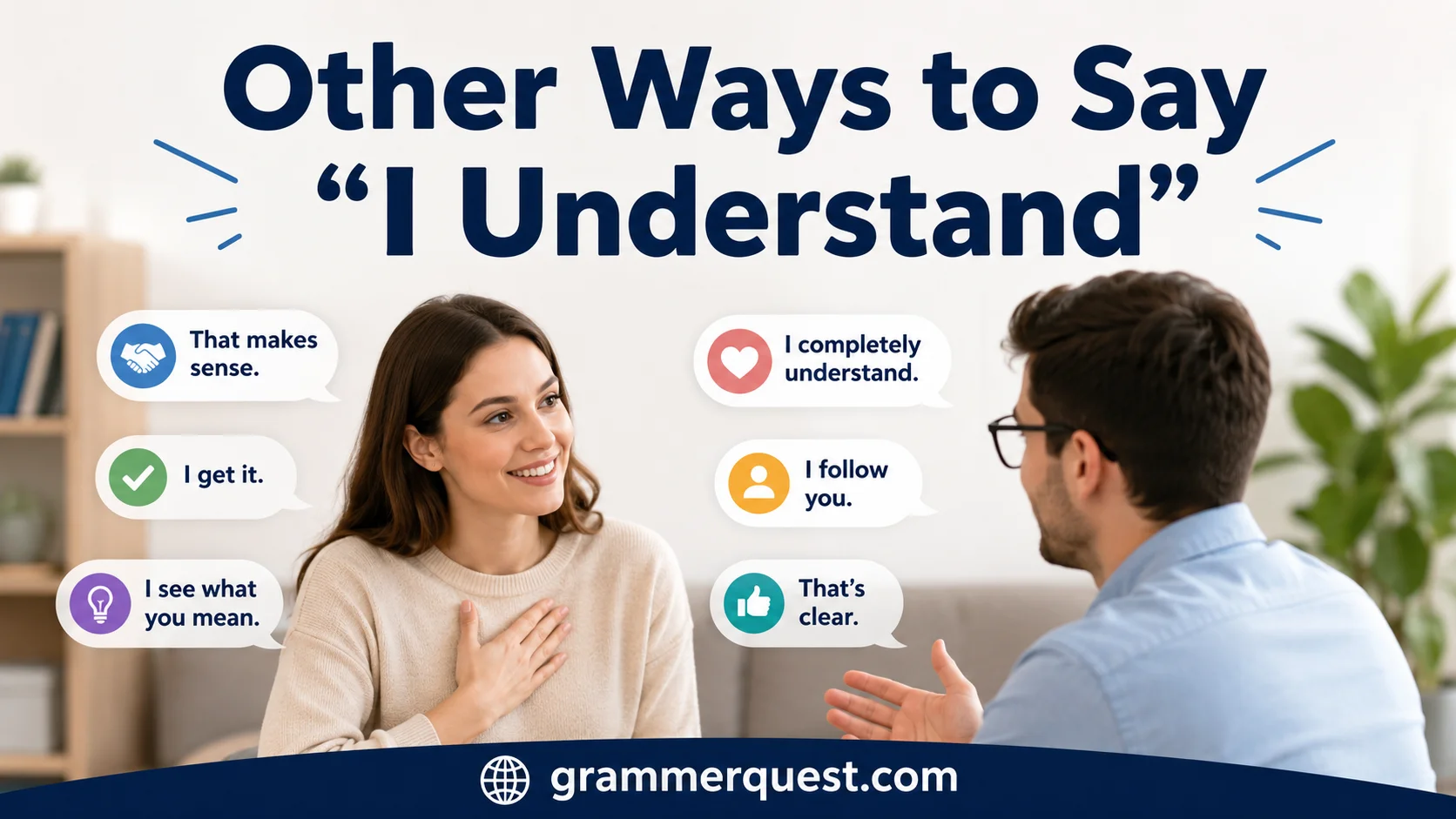
Using Other Ways to Say “I Understand” (With Examples) can improve your communication and help you express your thoughts in a more natural way. In daily conversations, saying I understand again and again may sound mechanical or overly formal. Choosing different phrases helps you show empathy, attention, and a deeper level of understanding when speaking with others.
Finding the right words allows you to create a more meaningful message and build stronger connections. Whether it is a professional meeting, casual conversation, or an emotional discussion, using better alternatives can make people feel validated and respected. Expressions like I hear you and I get what you mean show active listening and genuine care.
Did You Know About “I Understand”?
The phrase “I understand” is one of the most commonly used expressions in English. It does more than show that you’ve heard someone. It also communicates empathy, agreement, comprehension, acknowledgment, and emotional support.
Native English speakers often replace “I understand” with more natural alternatives depending on the situation. Learning these expressions helps your speech and writing sound more fluent, professional, and authentic.
What Does “I Understand” Mean?
The phrase “I understand” means that you have successfully grasped the meaning, feelings, concerns, or information someone has shared. It can express intellectual understanding, emotional empathy, or agreement with another person’s point of view.
Depending on the context, it may simply mean “I get what you’re saying,” or it can show compassion by acknowledging someone’s emotions and experiences.
Professional or Political Ways to Say “I Understand”
In workplaces, meetings, negotiations, or official communications, it’s often better to use more polished alternatives than simply saying “I understand.” Here are several professional expressions:
- I appreciate your perspective.
- I acknowledge your concerns.
- I recognize your point.
- I see your reasoning.
- Your explanation is clear.
- Thank you for clarifying.
- I follow your reasoning.
- I understand your position.
- That makes perfect sense.
- I appreciate the clarification.
These alternatives sound respectful, diplomatic, and suitable for professional environments.
“I Understand” Synonyms
- I See What You Mean
- I Get It
- That Makes Sense
- I Follow You
- I Hear You
- I Completely Understand
- I Appreciate Your Perspective
- I Understand Your Point
- I Can Relate
- I Know What You Mean
- I See Your Point
- I Understand Where You’re Coming From
- I Acknowledge Your Feelings
- I Recognize Your Concern
- I’m With You
- I Grasp the Situation
- That’s Clear
- You’ve Made It Clear
- I Catch Your Drift
- I Take Your Point
- I Understand Your Position
- I Respect Your Opinion
- I Feel the Same Way
- I Understand Completely
- Your Explanation Makes Sense
1. I See What You Mean
Definition: “I see what you mean” is a polite way to show that you understand someone’s explanation or viewpoint. It indicates that you have understood their idea, reasoning, or perspective clearly.
Meanings: This phrase means that you recognize the logic behind someone’s words and can follow their thoughts. It does not always mean that you agree, but it shows that you understand their point of view and appreciate their explanation.
Example: “I see what you mean about changing the project timeline because the current schedule seems unrealistic.”
Detailed Explanation: “I see what you mean” is commonly used in everyday conversations, workplaces, and discussions where people share different opinions. It creates a respectful atmosphere because it acknowledges another person’s thoughts without immediately agreeing or disagreeing. This phrase is especially useful when you want to show active listening and maintain a positive conversation. It is a natural alternative to “I understand” and sounds more conversational.
Tone: Polite, thoughtful, conversational, and respectful
Best Use: Use this phrase during friendly discussions, meetings, problem-solving conversations, and personal conversations when someone explains their ideas or feelings.
2. I Get It
Definition: “I get it” is a casual expression used to show that you understand something quickly. It is commonly used in informal conversations with friends, family, or coworkers.
Meanings: This phrase means “I understand” or “I know what you mean.” It can refer to understanding information, emotions, instructions, or situations. However, because it is informal, it may not always be suitable for official or professional communication.
Example: “I get it. You need some time alone after such a stressful week.”
Detailed Explanation: “I get it” is one of the most common everyday alternatives to “I understand.” People use it when they want to show quick comprehension without sounding too formal. It can express empathy, agreement, or simply recognition of information. In personal conversations, it often creates a feeling of connection because it sounds natural and friendly.
Tone: Casual, friendly, relaxed, and informal
Best Use: Use this expression in daily conversations, text messages, chats, and informal situations. Avoid using it in highly professional emails or formal meetings.
3. That Makes Sense
Definition: “That makes sense” shows that you understand the logic or reason behind something. It tells the speaker that their explanation is clear and reasonable.
Meanings: This phrase means that something is understandable, logical, or easy to accept after hearing an explanation. It can show agreement or acknowledgment without directly saying “I agree.”
Example: “That makes sense. Taking a break will help you focus better on your work.”
Detailed Explanation: “That makes sense” is a useful phrase for conversations where someone provides an explanation, opinion, or solution. It shows that you have processed the information and found it reasonable. This expression is widely used in professional discussions, education, and personal communication because it sounds respectful and encouraging. It helps create a positive exchange of ideas.
Tone: Logical, supportive, and understanding
Best Use: Use it during work discussions, learning situations, explanations, and everyday conversations when you want to acknowledge someone’s reasoning.
4. I Follow You
Definition: “I follow you” means that you understand what someone is explaining or saying. It shows that you can keep up with their thoughts or instructions.
Meanings: This phrase means that you understand the direction of a conversation or the details being shared. It is often used when someone explains a process, idea, or opinion step by step.
Example: “I follow you. So the main reason for the change is to improve customer experience.”
Detailed Explanation: “I follow you” is a natural expression that shows active listening and attention. It is often used in professional environments, especially during meetings, presentations, or discussions. Unlike a simple “yes,” this phrase communicates that you are mentally engaged with the speaker’s message. It helps build trust because it confirms that communication is clear.
Tone: Professional, attentive, and cooperative
Best Use: Use this phrase in business conversations, interviews, meetings, and educational discussions.
5. I Hear You
Definition: “I hear you” means that you understand and acknowledge someone’s feelings or concerns. It often expresses emotional support rather than simple understanding.
Meanings: This phrase means that you recognize what someone is experiencing and are paying attention to their emotions. It is often used to show empathy, compassion, and encouragement.
Example: “I hear you. It has been a difficult situation, and your frustration is completely understandable.”
Detailed Explanation: “I hear you” is a powerful phrase when emotional understanding is needed. It tells someone that their feelings matter and that they are being listened to. This expression is common in supportive conversations, relationships, counseling, and leadership situations. It creates emotional connection because it focuses on the person’s experience, not just the information they share.
Tone: Empathetic, caring, supportive, and compassionate
Best Use: Use it when responding to emotional situations, personal struggles, customer concerns, or sensitive discussions.
6. I Completely Understand
Definition: “I completely understand” is a stronger version of “I understand” that shows full comprehension. It communicates that you clearly recognize the situation, information, or feelings being shared.
Meanings: This phrase means that you have a complete understanding of what someone is saying or experiencing. It can show empathy, agreement, or awareness of a person’s situation, depending on the context.
Example: “I completely understand why you need more time to finish the project.”
Detailed Explanation: “I completely understand” is a useful phrase when you want to reassure someone that their message has been received clearly. It is often used in professional communication, customer service, and personal conversations where showing patience and understanding is important. This expression can help reduce confusion and make the other person feel respected. However, it should be used sincerely because saying it too often may sound automatic.
Tone: Respectful, reassuring, professional, and empathetic
Best Use: Use this phrase in workplace conversations, customer support, serious discussions, and emotional situations where you want to show full awareness.
7. I Appreciate Your Perspective
Definition: “I appreciate your perspective” is a respectful way to acknowledge someone’s viewpoint. It shows that you understand and value the thoughts or opinions they have shared.
Meanings: This phrase means that you recognize another person’s ideas, experiences, or beliefs. It does not always mean you agree, but it shows respect and openness toward their position.
Example: “I appreciate your perspective on this issue, and I will consider your suggestions carefully.”
Detailed Explanation: “I appreciate your perspective” is commonly used in professional, diplomatic, and leadership settings. It helps create respectful communication, especially when people have different opinions. Instead of simply saying “I understand,” this phrase highlights that you have listened thoughtfully and recognize the importance of another person’s viewpoint. It is especially useful in negotiations, teamwork, and discussions involving different ideas.
Tone: Professional, diplomatic, respectful, and thoughtful
Best Use: Use it in business meetings, debates, negotiations, leadership conversations, and formal emails.
8. I Understand Your Point
Definition: “I understand your point” shows that you recognize and comprehend someone’s argument or opinion. It is often used during discussions where different ideas are being considered.
Meanings: This phrase means that you understand the reasoning behind someone’s statement. It acknowledges their argument while leaving room for further discussion or another opinion.
Example: “I understand your point about reducing costs, but we also need to consider quality.”
Detailed Explanation: “I understand your point” is a balanced expression that works well when discussing opinions, suggestions, or disagreements. It allows you to show respect without necessarily accepting the entire argument. This makes it a valuable phrase for professional communication, academic discussions, and thoughtful conversations. It encourages healthy dialogue and demonstrates good listening skills.
Tone: Balanced, respectful, analytical, and professional
Best Use: Use it during meetings, discussions, debates, negotiations, and conversations involving different opinions.
9. I Can Relate
Definition: “I can relate” means that you understand someone’s feelings or experience because you have experienced something similar. It creates a sense of connection and shared understanding.
Meanings: This phrase means that you feel connected to another person’s situation, emotions, or challenges. It is often used when offering emotional support or showing that someone is not alone.
Example: “I can relate to your struggles because I faced a similar challenge last year.”
Detailed Explanation: “I can relate” is a warm and personal alternative to “I understand.” It is especially useful when someone shares a personal story, difficulty, or emotional experience. This phrase shows empathy because it focuses on shared feelings rather than just acknowledging information. It can strengthen relationships by making conversations feel more genuine and supportive.
Tone: Friendly, empathetic, personal, and comforting
Best Use: Use it in personal conversations, friendships, relationships, support discussions, and emotional situations.
10. I Know What You Mean
Definition: “I know what you mean” is a casual expression used to show that you understand someone’s thoughts or feelings. It indicates that their message is familiar or easy to understand.
Meanings: This phrase means that you understand the idea, emotion, or situation someone is describing. It is often used when you have experienced something similar or can imagine their perspective.
Example: “I know what you mean. Sometimes it feels difficult to stay motivated during busy weeks.”
Detailed Explanation: “I know what you mean” is one of the most natural alternatives to “I understand” in everyday English. It helps conversations feel friendly and connected because it shows that you are following the speaker’s thoughts. This phrase is commonly used among friends, family members, and coworkers during informal discussions. It can express agreement, empathy, or simple recognition of an idea.
Tone: Casual, friendly, relatable, and conversational
Best Use: Use it in daily conversations, informal meetings, chats, and personal discussions.
11. I See Your Point
Definition: “I see your point” is a polite expression used to show that you understand someone’s argument or opinion. It acknowledges another person’s reasoning even if you may have a different view.
Meanings: This phrase means that you recognize the logic, explanation, or perspective behind someone’s statement. It is often used when discussing different opinions and shows that you are listening carefully.
Example: “I see your point about improving the design before launching the product.”
Detailed Explanation: “I see your point” is a valuable alternative to “I understand” in professional and personal discussions. It helps maintain respectful communication, especially when people disagree or have different ideas. This expression shows maturity because it recognizes another person’s thoughts without forcing agreement. It is frequently used in meetings, debates, negotiations, and thoughtful conversations where understanding different viewpoints is important.
Tone: Respectful, thoughtful, diplomatic, and open-minded
Best Use: Use it during debates, workplace discussions, negotiations, meetings, and conversations involving different perspectives.
12. I Understand Where You’re Coming From
Definition: “I understand where you’re coming from” shows that you recognize someone’s background, feelings, or reasons behind their opinion. It expresses emotional and logical understanding at the same time.
Meanings: This phrase means that you can see why someone thinks or feels a certain way. It focuses on understanding their motivation, experiences, or circumstances rather than simply understanding their words.
Example: “I understand where you’re coming from. You want to make sure everyone feels included in the decision.”
Detailed Explanation: “I understand where you’re coming from” is a powerful expression for showing empathy and respect. It is often used when someone explains a concern, personal belief, or emotional reaction. This phrase does not necessarily mean you agree with everything they say, but it shows that you respect their reasons. It is especially useful in leadership, relationships, conflict resolution, and meaningful conversations.
Tone: Empathetic, respectful, understanding, and compassionate
Best Use: Use it in personal discussions, workplace conflicts, friendships, relationships, and emotional conversations.
13. I Acknowledge Your Feelings
Definition: “I acknowledge your feelings” is a thoughtful way to show emotional understanding. It communicates that you recognize and respect someone’s emotions.
Meanings: This phrase means that you accept that another person has genuine feelings about a situation. It focuses on emotional awareness and validation rather than simply understanding facts.
Example: “I acknowledge your feelings, and I understand why this situation has been frustrating for you.”
Detailed Explanation: “I acknowledge your feelings” is commonly used in situations where emotional sensitivity is important. It shows that you are not ignoring someone’s concerns and that their emotions matter. This expression is useful for resolving disagreements, supporting others, and building trust. Although it sounds more formal than everyday phrases, it can be very effective in professional communication and caring relationships.
Tone: Compassionate, formal, supportive, and sensitive
Best Use: Use it in conflict resolution, counseling conversations, customer service, leadership roles, and emotional discussions.
Read More: 25 Other Ways to Say “It’s a Pity” (With Examples)
14. I Recognize Your Concern
Definition: “I recognize your concern” is a professional way to show that you understand someone’s worries or issues. It communicates awareness and respect for their situation.
Meanings: This phrase means that you have noticed and understood a person’s concern. It is often used when responding to complaints, feedback, or important matters that require attention.
Example: “I recognize your concern about the deadline, and we are working on a solution.”
Detailed Explanation: “I recognize your concern” is especially common in professional environments, customer relations, and official communication. It shows that you are taking someone’s issue seriously and are willing to address it. Unlike a simple “I understand,” this phrase gives a stronger impression of responsibility and attentiveness. It is often used by managers, representatives, and leaders when handling sensitive situations.
Tone: Professional, responsible, respectful, and reassuring
Best Use: Use it in business emails, customer service responses, workplace discussions, and formal conversations.
15. I’m With You
Definition: “I’m with you” is a supportive expression that shows understanding and agreement. It suggests that you stand beside someone emotionally or mentally.
Meanings: This phrase means that you understand someone’s feelings, ideas, or goals and are willing to support them. It can express friendship, encouragement, and solidarity.
Example: “I’m with you. We will find a way to solve this problem together.”
Detailed Explanation: “I’m with you” is a warm and encouraging alternative to “I understand.” It is often used when someone needs reassurance, motivation, or emotional support. This phrase creates a feeling of teamwork and connection because it shows that the speaker is not alone. It can be used in personal relationships, professional teamwork, and moments when encouragement is needed.
Tone: Supportive, encouraging, friendly, and loyal
Best Use: Use it in friendships, relationships, teamwork, motivational conversations, and situations requiring emotional support.
16. I Grasp the Situation
Definition: “I grasp the situation” is a formal way to express that you understand the details and importance of a matter. It shows that you have a clear awareness of what is happening.
Meanings: This phrase means that you fully understand the circumstances, facts, and possible challenges involved in a situation. It is often used when discussing complex topics that require careful attention.
Example: “I grasp the situation, and I understand why immediate action is necessary.”
Detailed Explanation: “I grasp the situation” is a more formal alternative to “I understand.” It is commonly used in professional environments where clear comprehension is important. This expression suggests that you have carefully considered the information and recognize the seriousness of the matter. It works well in leadership, management, and problem-solving situations where showing awareness and responsibility is necessary.
Tone: Formal, professional, serious, and analytical
Best Use: Use it in business meetings, official discussions, project management, and situations involving important decisions.
17. That’s Clear
Definition: “That’s clear” is a simple expression used to show that you understand information or instructions. It indicates that something has been explained successfully.
Meanings: This phrase means that the message, idea, or explanation is easy to understand. It can also show that you have no further questions or confusion.
Example: “That’s clear. I’ll complete the report by Friday as requested.”
Detailed Explanation: “That’s clear” is a practical alternative to “I understand” that works well when confirming instructions or explanations. It is often used in workplaces, classrooms, and everyday conversations. This phrase helps confirm that communication has been successful and prevents misunderstandings. Although it is short, it shows that you are paying attention and following the conversation.
Tone: Simple, confident, direct, and professional
Best Use: Use it when responding to instructions, explanations, directions, lessons, and workplace communication.
18. You’ve Made It Clear
Definition: “You’ve made it clear” shows that someone’s explanation has helped you understand something. It recognizes the effort they made to communicate effectively.
Meanings: This phrase means that the speaker has successfully explained an idea, situation, or message. It can be used to express appreciation for someone’s communication.
Example: “You’ve made it clear why this change is necessary, and I appreciate your explanation.”
Detailed Explanation: “You’ve made it clear” is a respectful way to acknowledge someone’s explanation. It focuses on the speaker’s ability to communicate rather than only your own understanding. This phrase is useful in professional conversations, teaching environments, and situations where someone has provided detailed information. It encourages positive communication by recognizing clarity and effort.
Tone: Appreciative, respectful, professional, and positive
Best Use: Use it in meetings, presentations, educational settings, feedback conversations, and formal discussions.
19. I Catch Your Drift
Definition: “I catch your drift” is an informal phrase meaning that you understand the hidden meaning or main idea behind someone’s words. It is often used in relaxed conversations.
Meanings: This phrase means that you understand what someone is trying to say, even if they do not explain every detail. It can refer to suggestions, hints, opinions, or indirect messages.
Example: “I catch your drift. You think we should wait before making a final decision.”
Detailed Explanation: “I catch your drift” is a casual and conversational alternative to “I understand.” It is often used among friends or colleagues when the meaning of a conversation is obvious. This expression can make conversations feel natural and relaxed. However, because it is informal, it is not usually suitable for official emails or serious professional situations.
Tone: Casual, friendly, relaxed, and informal
Best Use: Use it in casual conversations, friendly discussions, informal chats, and everyday speech.
20. I Take Your Point
Definition: “I take your point” is a polite phrase used to show that you understand someone’s argument or suggestion. It acknowledges another person’s reasoning during a discussion.
Meanings: This phrase means that you recognize and consider someone’s opinion or explanation. It does not always mean complete agreement, but it shows that their viewpoint has been understood.
Example: “I take your point about saving money, but we also need to think about long-term benefits.”
Detailed Explanation: “I take your point” is commonly used in British English and professional discussions. It is especially helpful when responding to different opinions because it shows respect without creating unnecessary disagreement. This expression encourages balanced conversations and demonstrates good communication skills. It is a useful phrase for debates, negotiations, and workplace discussions.
Tone: Polite, diplomatic, thoughtful, and professional
Best Use: Use it in formal discussions, negotiations, meetings, debates, and intellectual conversations.
21. I Understand Your Position
Definition: “I understand your position” is a formal expression used to show that you recognize someone’s viewpoint or stance. It communicates awareness of their opinions, responsibilities, or circumstances.
Meanings: This phrase means that you understand why someone holds a particular opinion or makes a specific decision. It is often used in professional or diplomatic conversations where different sides need to be considered.
Example: “I understand your position on the matter, and I appreciate the reasons behind your decision.”
Detailed Explanation: “I understand your position” is an effective alternative to “I understand” when discussing serious topics. It is commonly used in business, politics, negotiations, and leadership conversations because it sounds respectful and balanced. This phrase allows you to acknowledge another person’s viewpoint without necessarily agreeing with every detail. It helps create a respectful environment where different perspectives can be discussed openly.
Tone: Formal, diplomatic, respectful, and professional
Best Use: Use it in business negotiations, political discussions, workplace meetings, legal conversations, and formal communication.
22. I Respect Your Opinion
Definition: “I respect your opinion” is a polite way to show that you understand and value another person’s thoughts. It demonstrates openness toward different ideas and beliefs.
Meanings: This phrase means that you recognize someone’s right to have their own viewpoint. It expresses understanding, acceptance, and courtesy, even when opinions may differ.
Example: “I respect your opinion, and I appreciate you sharing your thoughts with me.”
Detailed Explanation: “I respect your opinion” is useful when conversations involve personal beliefs, disagreements, or different perspectives. It promotes healthy communication because it shows that you are willing to listen without judging. This expression is especially helpful in relationships, teamwork, and discussions where people may not have the same ideas. It creates a positive tone and encourages mutual respect.
Tone: Respectful, mature, polite, and open-minded
Best Use: Use it during discussions, disagreements, debates, friendships, relationships, and professional conversations.
23. I Feel the Same Way
Definition: “I feel the same way” expresses that you understand someone because you share the same emotions or opinion. It creates a sense of connection and agreement.
Meanings: This phrase means that your feelings, thoughts, or reactions are similar to another person’s. It is often used when showing emotional understanding or agreement.
Example: “I feel the same way about the importance of spending more time with family.”
Detailed Explanation: “I feel the same way” is a warm alternative to “I understand” when you want to show that you share someone’s feelings. It is commonly used in personal conversations, friendships, and romantic relationships. This phrase creates emotional closeness because it tells the other person that they are not alone in their thoughts or experiences. It can also be used casually when agreeing with someone’s opinion.
Tone: Warm, emotional, supportive, and friendly
Best Use: Use it in personal conversations, relationships, friendships, emotional discussions, and situations involving shared feelings.
24. I Understand Completely
Definition: “I understand completely” is a strong expression that shows full awareness of someone’s message or situation. It emphasizes that there is no confusion or misunderstanding.
Meanings: This phrase means that you fully comprehend the information, feelings, or circumstances being discussed. It can also provide reassurance that someone’s explanation has been received clearly.
Example: “I understand completely why you made that decision, and I support your choice.”
Detailed Explanation: “I understand completely” is a confident and reassuring phrase that can replace a simple “I understand.” It is often used when someone needs confirmation that their message has been received properly. This expression works well in professional and personal situations where trust and clarity are important. However, it should be used carefully because claiming complete understanding may sound too strong if you do not fully know the situation.
Tone: Reassuring, confident, sincere, and respectful
Best Use: Use it in important conversations, customer service, personal support, and situations requiring strong reassurance.
25. Your Explanation Makes Sense
Definition: “Your explanation makes sense” shows that you understand the reasoning behind someone’s explanation. It acknowledges that their information is logical and clear.
Meanings: This phrase means that the details someone provided are understandable and reasonable. It shows that you have listened carefully and can follow their thought process.
Example: “Your explanation makes sense, and now I understand why the changes were needed.”
Detailed Explanation: “Your explanation makes sense” is a thoughtful alternative to “I understand” that focuses on the clarity of the other person’s communication. It is useful when someone has taken time to explain a complex idea, problem, or decision. This phrase encourages effective communication because it recognizes that the message was delivered successfully. It works well in professional, educational, and everyday conversations.
Tone: Appreciative, logical, respectful, and positive
Best Use: Use it in meetings, classrooms, discussions, feedback sessions, and conversations where someone explains an idea or solution.
FAQs:
1. What are some other ways to say “I understand”?
Some common alternatives include I hear you, I get what you mean, That makes sense, I understand your point, and I see what you mean. These phrases can make your communication sound more natural.
2. Why should I use alternatives to “I understand”?
Using different expressions prevents your conversation from sounding repetitive or mechanical. It also helps you show empathy, attention, and a better understanding of someone’s feelings or ideas.
3. Is “I understand” suitable for professional conversations?
Yes, I understand is polite and professional. However, alternatives like I acknowledge your point or I understand your perspective can sound more formal and thoughtful in workplace situations.
4. How can I show emotional understanding?
You can show emotional understanding by using phrases like I hear you, I can see why you feel that way, or I understand how this affects you. These expressions show care and active listening.
5. Can English learners use these alternatives easily?
Yes, English learners can practice these phrases in everyday conversations. Learning different ways to express understanding improves vocabulary, confidence, and communication skills.
Conclusion
Using other ways to say “I understand” helps you make conversations more natural, empathetic, and effective. Different situations require different expressions, whether you are showing emotional understanding, giving feedback, or communicating in a professional environment. By choosing the right words, you can create stronger connections, show genuine care, and make others feel truly heard and respected.

Emma Brooke is a passionate language enthusiast and the voice behind GrammarQuest.com. With a sharp eye for detail and a love for clear communication, she simplifies complex grammar rules into easy, practical lessons. Her goal is to help you write with confidence, clarity, and style—whether you’re a student, professional, or everyday writer.