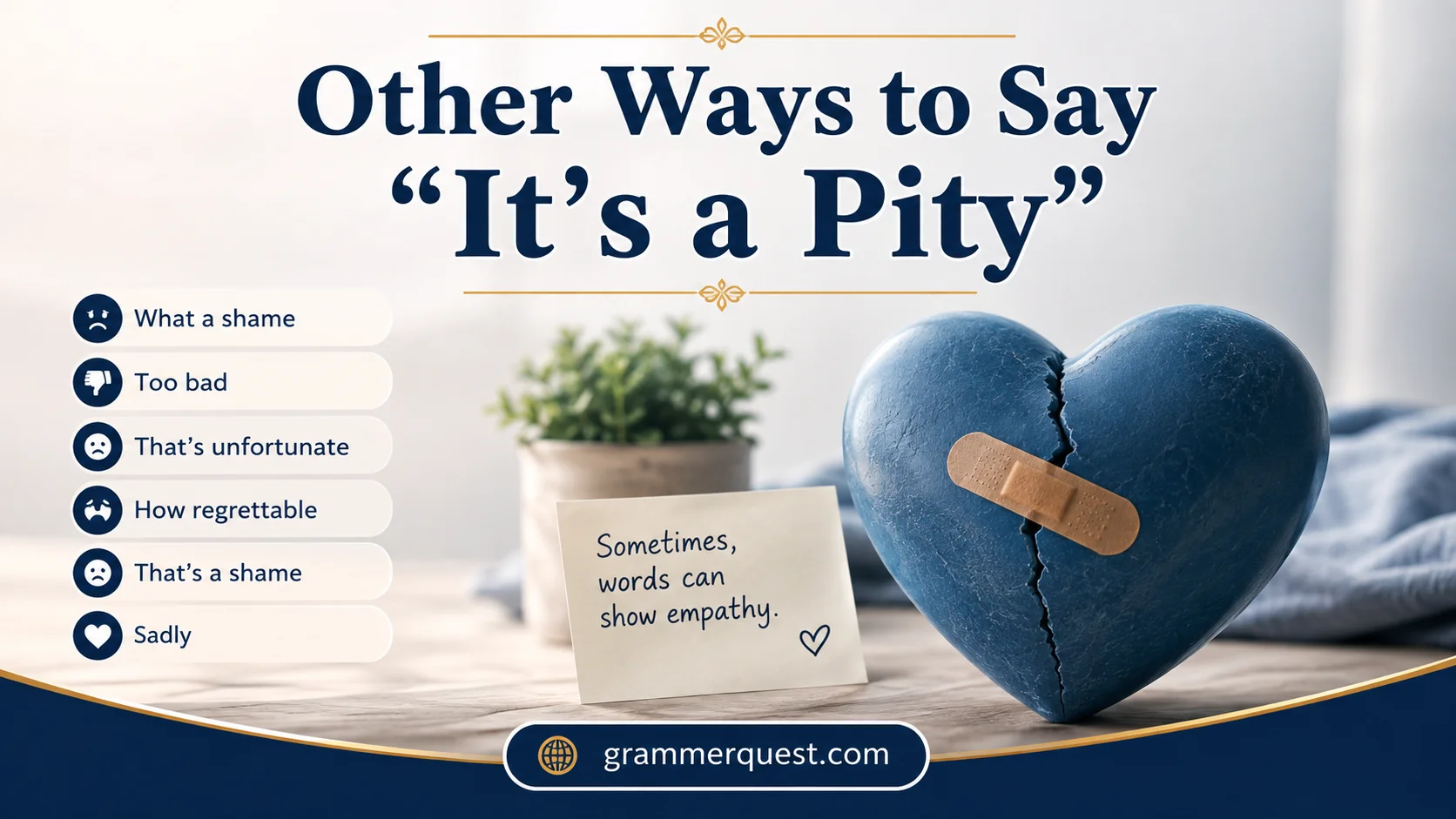
Other Ways to Say “It’s a Pity” (With Examples) helps learners and professionals understand better English expressions for regret, sympathy, and disappointment. These modern alternatives work well in casual, business, and professional contexts. With my writing experience, I share a simple and natural approach that helps people sound more fluent, genuine, and confident while communicating emotions.
Using the same phrase repeatedly can feel limited and less effective. Different alternatives allow you to match the right tone, style, and situation. Whether you are writing email, speaking with colleagues, or chatting with friends, these expressions help create more meaningful and relatable conversations with a clear message.
Did You Know About “It’s a Pity”?
The phrase “It’s a pity” has been used in English for many years to express regret, sympathy, and disappointment. The word “pity” refers to a feeling of sadness or compassion when something unfortunate happens. Unlike harsh expressions of disappointment, this phrase usually carries a gentle and respectful tone.
People often use “It’s a pity” when they want to show understanding without sounding too negative. It can be used for small everyday situations, such as missing an event, or for bigger situations, such as losing an important opportunity.
What Does “It’s a Pity” Mean?
“It’s a pity” means something is unfortunate, disappointing, or regrettable. It is used when someone wishes a situation had been different or when something good did not happen as expected.
For example, if a friend cannot attend a special gathering, you might say, “It’s a pity you couldn’t join us.” This shows that you are disappointed but also understanding of the situation.
The phrase can express different emotions depending on the context, including sadness, sympathy, regret, disappointment, or concern.
Professional or Political Way to Say “It’s a Pity”
In professional or political communication, it is often better to use more formal alternatives instead of the simple phrase “It’s a pity.” Formal expressions sound respectful and diplomatic.
Examples include:
- “It is unfortunate that…”
- “It is regrettable that…”
- “This is a disappointing outcome.”
- “We regret that this situation occurred.”
- “It is unfortunate that we were unable to reach an agreement.”
These phrases help maintain a professional tone while expressing concern or disappointment.
“It’s a Pity” Synonyms
- It’s Unfortunate
- That’s Regrettable
- What a Shame
- It’s a Disappointment
- That’s Too Bad
- It’s Sad to Hear That
- It’s a Real Shame
- That’s Unfortunate
- It’s Disappointing
- I’m Sorry to Hear That
- It’s Regretful
- It’s a Sad Situation
- It’s Truly Unfortunate
- That’s a Letdown
- It’s a Missed Opportunity
- It’s a Great Loss
- It’s Quite Disappointing
- It’s Sadly True
- That’s Unluckily Circumstantial
- It’s Regrettable Circumstances
- It’s a Shame That Happened
- It’s Disheartening
- It’s Painful to See
- It’s a Sad Reality
- It’s Truly a Pity
1. It’s Unfortunate
Definition: “It’s unfortunate” is a formal and polite way to express that something has happened in a disappointing or undesirable way. It shows regret without sounding overly emotional.
Meanings: This phrase means that a situation is unlucky, disappointing, or not what someone hoped for. It is commonly used in professional conversations, official statements, and respectful discussions.
Example: “It’s unfortunate that the meeting had to be canceled because of bad weather.”
Detailed Explanation: “It’s unfortunate” is one of the most common alternatives to “It’s a pity” because it works well in many situations. It expresses disappointment while keeping a calm and mature tone. This phrase is often preferred in workplaces, news reports, and formal conversations. It allows the speaker to acknowledge a negative situation without blaming anyone.
Tone: Formal, polite, respectful.
Best use: Professional emails, workplace conversations, official announcements.
2. That’s Regrettable
Definition: “That’s regrettable” expresses disappointment about an event or decision that caused an undesirable result. It is often used in serious or formal situations.
Meanings: This phrase means that something deserves regret or sadness because it did not happen in the best possible way. It highlights disappointment with a situation.
Example: “That’s regrettable, but we will work on finding another solution.”
Detailed Explanation: “That’s regrettable” is a strong formal alternative to “It’s a pity.” It is frequently used by organizations, leaders, and professionals when discussing problems or mistakes. The phrase sounds thoughtful and controlled, making it suitable for sensitive situations. It focuses more on the situation rather than personal emotions.
Tone: Formal, serious, diplomatic.
Best use: Business meetings, official statements, professional discussions.
3. What a Shame
Definition: “What a shame” is a common expression used to show sadness, disappointment, or sympathy about an unfortunate situation. It is a more casual and emotional alternative to “It’s a pity.”
Meanings: This phrase means that something is disappointing or unfortunate. It shows that the speaker wishes the situation had been better or different.
Example: “What a shame you couldn’t attend the celebration. Everyone was asking about you.”
Detailed Explanation: “What a shame” is one of the most natural alternatives to “It’s a pity” in everyday conversations. It expresses genuine disappointment while still sounding friendly and caring. People often use this phrase when talking with friends, family members, or colleagues in informal situations. It can also show sympathy when someone experiences a small loss, missed chance, or unexpected problem.
Tone: Casual, friendly, sympathetic.
Best use: Daily conversations, friendly messages, personal situations.
4. It’s a Disappointment
Definition: “It’s a disappointment” expresses that something did not meet expectations or hopes. It highlights feelings of sadness caused by an unwanted result.
Meanings: This phrase means that an event, decision, or outcome has caused disappointment because it was not as good or successful as expected.
Example: “It’s a disappointment that the event was postponed after months of preparation.”
Detailed Explanation: “It’s a disappointment” is a useful alternative when you want to clearly express that something did not go as planned. Unlike some softer expressions, this phrase directly focuses on the feeling of being let down. It can be used in both personal and professional conversations. However, it should be used carefully when discussing sensitive topics because it may sound stronger than “It’s a pity.”
Tone: Honest, direct, emotional.
Best use: Work discussions, reviews, personal conversations.
5. That’s Too Bad
Definition: “That’s too bad” is a casual expression used to show sympathy or mild disappointment about an unfortunate situation. It is commonly used in everyday English.
Meanings: This phrase means that something unfortunate has happened, and the speaker feels sorry about it. It is usually friendly and conversational.
Example: “You missed the concert? That’s too bad. It was amazing.”
Detailed Explanation: “That’s too bad” is a simple and natural way to respond when someone shares disappointing news. It does not usually express deep sadness but shows that you understand the situation. Native English speakers often use this phrase in casual conversations because it sounds warm and supportive. It is especially common when reacting to missed opportunities, cancelled plans, or small problems.
Tone: Casual, friendly, supportive.
Best use: Informal chats, conversations with friends, everyday situations.
6. It’s Sad to Hear That
Definition: “It’s sad to hear that” expresses sympathy and emotional concern when someone shares unfortunate news. It focuses on compassion and understanding.
Meanings: This phrase means that the information you received makes you feel sadness or concern. It is often used when responding to someone’s difficulties.
Example: “It’s sad to hear that your family had to move away.”
Detailed Explanation: “It’s sad to hear that” is a caring alternative to “It’s a pity” because it shows emotional support. This phrase is often used when someone experiences a personal challenge, loss, or difficult moment. It creates a connection between the speaker and listener by showing empathy. It is suitable for both casual and respectful conversations.
Tone: Caring, emotional, sympathetic.
Best use: Personal conversations, supportive messages, sensitive situations.
7. It’s a Real Shame
Definition: “It’s a real shame” is a stronger version of “What a shame” and expresses deeper disappointment or regret. It shows that the situation feels especially unfortunate.
Meanings: This phrase means that something is very disappointing or unfortunate. It emphasizes stronger feelings than a simple expression of regret.
Example: “It’s a real shame that such a talented person never got the opportunity to perform.”
Detailed Explanation: “It’s a real shame” adds more emotion and emphasis to the idea of disappointment. People use it when they feel that something valuable was lost or something positive could not happen. This phrase works well when discussing missed opportunities, unfair situations, or disappointing outcomes. It creates a sense of emotional involvement and shows that the speaker truly cares.
Tone: Emotional, sympathetic, expressive.
Best use: Personal stories, emotional discussions, meaningful situations.
8. That’s Unfortunate
Definition: “That’s unfortunate” is a polite expression used to acknowledge a negative or disappointing situation. It is a respectful alternative to “It’s a pity” that works well in many contexts.
Meanings: This phrase means that something has happened in an undesirable way or that the outcome is not what was expected. It expresses regret without showing extreme emotion.
Example: “That’s unfortunate that the project could not be completed on time.”
Detailed Explanation: “That’s unfortunate” is a balanced phrase that can be used in both professional and personal conversations. It recognizes a problem while maintaining a calm and respectful attitude. Many people use this expression when they want to show understanding without sounding overly emotional. It is especially useful when discussing delays, mistakes, missed chances, or unexpected events.
Tone: Polite, neutral, professional.
Best use: Workplace communication, formal discussions, respectful conversations.
9. It’s Disappointing
Definition: “It’s disappointing” expresses a feeling of sadness or dissatisfaction when something does not happen as expected. It focuses on unmet hopes or expectations.
Meanings: This phrase means that the result, action, or situation has caused disappointment because it was less positive than expected.
Example: “It’s disappointing that we couldn’t reach an agreement after so much effort.”
Detailed Explanation: “It’s disappointing” is a direct way to communicate that something did not meet expectations. It is often used when people have invested time, energy, or hope into something. This phrase can describe personal feelings or reactions to larger situations. While it is stronger than “It’s a pity,” it still remains respectful when used carefully.
Tone: Honest, emotional, straightforward.
Best use: Feedback, personal opinions, professional discussions.
10. I’m Sorry to Hear That
Definition: “I’m sorry to hear that” is a compassionate expression used when someone shares bad news or an unfortunate experience. It shows sympathy and concern.
Meanings: This phrase means that you feel sympathy for someone’s situation and regret that they are experiencing difficulty.
Example: “I’m sorry to hear that you lost your job. I hope things improve soon.”
Detailed Explanation: “I’m sorry to hear that” is one of the most caring alternatives to “It’s a pity.” It is commonly used when responding to personal problems, sadness, or unexpected challenges. The phrase does not mean that you caused the problem; instead, it shows emotional support. It helps create a kind and respectful conversation by acknowledging another person’s feelings.
Tone: Compassionate, caring, supportive.
Best use: Sympathy messages, personal conversations, emotional situations.
11. It’s Regretful
Definition: “It’s regretful” expresses sadness or disappointment about something that happened or failed to happen. It shows that the situation causes feelings of regret.
Meanings: This phrase means that something is worthy of regret or sadness. It highlights the feeling that a better outcome would have been preferred.
Example: “It’s regretful that we were unable to support the cause this year.”
Detailed Explanation: “It’s regretful” is a more formal alternative to “It’s a pity” and is often used when discussing serious matters. It communicates disappointment while maintaining a respectful tone. Although less common in everyday speech than “It’s unfortunate” or “That’s a shame,” it can be useful in written communication. It works well when expressing responsibility, reflection, or concern.
Tone: Formal, reflective, serious.
Best use: Official writing, formal statements, professional communication.
12. It’s a Sad Situation
Definition: “It’s a sad situation” describes circumstances that cause feelings of sadness, concern, or disappointment. It focuses on the overall condition rather than one specific event.
Meanings: This phrase means that the circumstances are unfortunate and emotionally difficult. It is often used when discussing serious or meaningful issues.
Example: “It’s a sad situation that many families are struggling during these difficult times.”
Detailed Explanation: “It’s a sad situation” is a thoughtful expression that carries more emotional weight than “It’s a pity.” It is commonly used when talking about problems that affect people, communities, or important relationships. This phrase shows awareness and compassion toward difficult circumstances. It is suitable when you want to express concern in a respectful way.
Tone: Emotional, compassionate, serious.
Best use: Social issues, personal struggles, meaningful discussions.
13. It’s Truly Unfortunate
Definition: “It’s truly unfortunate” is a stronger and more heartfelt way to express regret or disappointment about an unpleasant situation. It shows that the speaker genuinely feels concerned about what happened.
Meanings: This phrase means that something is seriously disappointing, unlucky, or regrettable. The word “truly” adds emphasis and shows deeper feelings about the situation.
Example: “It’s truly unfortunate that such an important event had to be canceled at the last moment.”
Detailed Explanation: “It’s truly unfortunate” is a respectful expression that combines sympathy and seriousness. It is often used when the situation has a meaningful impact or when the speaker wants to show genuine concern. This phrase is suitable for both formal and emotional conversations because it sounds thoughtful without being overly dramatic. It can be used when discussing missed opportunities, unexpected problems, or disappointing outcomes.
Tone: Respectful, sincere, serious.
Best use: Formal conversations, emotional situations, professional communication.
Read More: 25 Other Ways to Say “It Means a Lot to Me” (With Examples)
14. That’s a Letdown
Definition: “That’s a letdown” is an expression used when something fails to meet expectations or causes disappointment. It is a casual way to describe an unsatisfying result.
Meanings: This phrase means that something was disappointing because it was not as good, successful, or enjoyable as expected.
Example: “The final performance was a letdown after all the excitement and preparation.”
Detailed Explanation: “That’s a letdown” is a common conversational alternative to “It’s a pity” when talking about disappointing experiences. It is often used when people expect something positive but receive an unpleasant result instead. This phrase focuses more on personal feelings of disappointment rather than sympathy. It works well in casual conversations about events, experiences, products, or decisions.
Tone: Casual, honest, slightly negative.
Best use: Everyday conversations, reviews, personal opinions.
15. It’s a Missed Opportunity
Definition: “It’s a missed opportunity” describes a situation where someone loses a valuable chance or possibility. It expresses regret about something that could have been beneficial.
Meanings: This phrase means that an important chance was not taken or could not happen. It highlights the value of what was lost.
Example: “Not attending that conference was a missed opportunity to meet industry experts.”
Detailed Explanation: “It’s a missed opportunity” is a useful alternative to “It’s a pity” when discussing chances, growth, success, or progress. Unlike general disappointment, this phrase specifically focuses on possibilities that are no longer available. It is commonly used in education, business, career discussions, and personal development. It encourages people to recognize the importance of future opportunities.
Tone: Reflective, professional, motivational.
Best use: Career discussions, business situations, personal growth conversations.
16. It’s a Great Loss
Definition: “It’s a great loss” expresses deep sadness when something valuable, meaningful, or important is gone or unavailable. It carries a stronger emotional feeling than “It’s a pity.”
Meanings: This phrase means that losing something or someone has a significant negative impact. It can refer to opportunities, talents, relationships, or important things.
Example: “It’s a great loss that such a talented artist never received the recognition they deserved.”
Detailed Explanation: “It’s a great loss” is usually used for situations that have a deeper emotional impact. It can express sadness about a person’s absence, a lost chance, or something valuable that has disappeared. This phrase is more powerful than simple expressions of disappointment and should be used in meaningful contexts. It shows respect and appreciation for what has been lost.
Tone: Deep, emotional, respectful.
Best use: Serious discussions, tributes, important losses.
17. It’s Quite Disappointing
Definition: “It’s quite disappointing” is a polite but clear way to express dissatisfaction with an outcome. It indicates that expectations were not fulfilled.
Meanings: This phrase means that something caused disappointment, although the speaker may still remain calm and respectful.
Example: “It’s quite disappointing that the service did not meet the quality standards we expected.”
Detailed Explanation: “It’s quite disappointing” is often used in professional and personal situations where someone wants to express dissatisfaction politely. The word “quite” softens the statement slightly while still showing that the result was not acceptable. It is useful for feedback, evaluations, and discussions where honesty is needed without being rude.
Tone: Polite, professional, honest.
Best use: Customer feedback, workplace communication, formal opinions.
18. It’s Sadly True
Definition: “It’s sadly true” is used to express regret when acknowledging a fact or situation that is disappointing but unavoidable. It shows acceptance mixed with sadness.
Meanings: This phrase means that although something is unfortunate, it is a reality that must be accepted. It combines truth with emotional disappointment.
Example: “It’s sadly true that many people miss important chances because they are afraid of change.”
Detailed Explanation: “It’s sadly true” is a thoughtful alternative to “It’s a pity” when discussing situations that cannot easily be changed. It is often used when people recognize an unfortunate reality or difficult fact. This expression adds emotional depth because it shows that the speaker wishes things were different. It works well in personal reflections, social discussions, and serious conversations.
Tone: Reflective, emotional, thoughtful.
Best use: Discussions about reality, personal experiences, social topics.
19. That’s Unluckily Circumstantial
Definition: “That’s unluckily circumstantial” describes a situation affected by unfortunate conditions or unexpected circumstances. It suggests that the outcome happened because of factors beyond control.
Meanings: This phrase means that something unfortunate occurred due to circumstances rather than someone’s intention or mistake. It focuses on external reasons behind the problem.
Example: “That’s unluckily circumstantial, but the weather prevented us from completing the outdoor event.”
Detailed Explanation: “That’s unluckily circumstantial” is a more uncommon and formal-sounding alternative that highlights the role of circumstances. It can be used when explaining that an unfortunate result was caused by outside factors. The phrase helps avoid placing blame and shows understanding of the situation. In everyday English, simpler expressions like “It’s unfortunate” or “That’s a shame” are usually more natural.
Tone: Formal, explanatory, neutral.
Best use: Formal explanations, reports, discussions about causes.
20. It’s Regrettable Circumstances
Definition: “It’s regrettable circumstances” refers to unfortunate conditions or events that cause disappointment or concern. It highlights that the situation itself is the reason for regret.
Meanings: This phrase means that certain conditions have created an undesirable outcome. It focuses on the situation rather than blaming individuals.
Example: “Due to regrettable circumstances, the program had to be delayed.”
Detailed Explanation: “It’s regrettable circumstances” is mainly used in formal writing and official communication. It helps describe difficult situations in a respectful and diplomatic way. Organizations often use similar wording when explaining delays, cancellations, or unexpected problems. While it is not a common everyday phrase, it can be useful when you need a professional tone.
Tone: Formal, diplomatic, official.
Best use: Business letters, announcements, official statements.
21. It’s a Shame That Happened
Definition: “It’s a shame that happened” expresses sadness or disappointment about an event that should not have occurred. It shows regret about an unfortunate outcome.
Meanings: This phrase means that something unfortunate took place, and the speaker wishes it had not happened.
Example: “It’s a shame that happened after everyone worked so hard on the project.”
Detailed Explanation: “It’s a shame that happened” is a conversational expression that combines sympathy with disappointment. It is commonly used when reacting to unexpected problems, mistakes, or negative events. The phrase shows that the speaker recognizes the effort or importance behind a situation. It is especially suitable for friendly conversations where emotional understanding is important.
Tone: Casual, sympathetic, emotional.
Best use: Personal conversations, informal discussions, reactions to events.
22. It’s Disheartening
Definition: “It’s disheartening” expresses sadness or discouragement caused by an upsetting situation. It suggests that something has affected someone’s hope or motivation.
Meanings: This phrase means that something causes disappointment, sadness, or a loss of encouragement. It is stronger than simply saying “It’s a pity.”
Example: “It’s disheartening to see so much effort go unnoticed.”
Detailed Explanation: “It’s disheartening” is a powerful expression used when a situation affects emotions deeply. It is often connected with struggles, failures, unfair situations, or disappointing results. This phrase shows that the problem is not only unfortunate but also emotionally discouraging. It is commonly used in motivational, social, and personal discussions.
Tone: Emotional, serious, compassionate.
Best use: Inspirational writing, serious conversations, emotional situations.
23. It’s Painful to See
Definition: “It’s painful to see” expresses strong sadness when witnessing an unfortunate or difficult situation. It shows a deep emotional reaction.
Meanings: This phrase means that observing something negative causes emotional pain or distress. It is used when a situation affects someone deeply.
Example: “It’s painful to see talented people give up on their dreams.”
Detailed Explanation: “It’s painful to see” is a highly emotional alternative to “It’s a pity.” It is used when the speaker feels strong sympathy or sadness about what is happening. This phrase often appears in discussions about human struggles, personal losses, or difficult circumstances. Because it carries strong emotion, it is best used in situations where genuine concern is appropriate.
Tone: Deeply emotional, compassionate, serious.
Best use: Personal stories, social issues, heartfelt conversations.
24. It’s a Sad Reality
Definition: “It’s a sad reality” is used to describe an unfortunate truth or situation that exists despite people wishing it were different. It expresses acceptance along with disappointment.
Meanings: This phrase means that something negative is true or happening, even though it is difficult to accept. It focuses on the reality of an unfortunate circumstance.
Example: “It’s a sad reality that many talented people never receive the opportunities they deserve.”
Detailed Explanation: “It’s a sad reality” is a thoughtful alternative to “It’s a pity” when discussing situations that are disappointing but true. This expression is often used in serious conversations about society, personal experiences, or unavoidable challenges. It shows that the speaker understands the problem and feels concerned about it. The phrase is suitable when you want to express disappointment while acknowledging facts.
Tone: Reflective, serious, thoughtful.
Best use: Social discussions, essays, personal reflections, serious conversations.
25. It’s Truly a Pity
Definition: “It’s truly a pity” is a stronger version of the original phrase “It’s a pity.” It adds emphasis and shows deeper feelings of regret or disappointment.
Meanings: This phrase means that something is especially unfortunate or disappointing. The word “truly” highlights genuine sadness or concern about the situation.
Example: “It’s truly a pity that such a wonderful opportunity was missed.”
Detailed Explanation: “It’s truly a pity” keeps the original meaning while adding more emotional importance. It is useful when the speaker wants to show that they sincerely regret a situation. This phrase can work in personal, professional, and emotional conversations depending on the context. It sounds natural when discussing missed opportunities, disappointing events, or situations that could have had a better outcome.
Tone: Sincere, emotional, respectful.
Best use: Personal conversations, formal discussions, meaningful situations.
FAQs:
1. What does “It’s a pity” mean?
“It’s a pity” is an expression used to show disappointment, sadness, or regret about something unfortunate that happened or something that could not happen.
2. Is “It’s a pity” formal or informal?
“It’s a pity” can be used in both formal and informal conversations, but some alternatives may sound more modern, professional, or emotionally suitable depending on the situation.
3. What are some other ways to say “It’s a pity”?
Some alternatives include “That’s unfortunate,” “What a shame,” “That’s too bad,” “I’m sorry to hear that,” and “It’s disappointing.”
4. Can I use “It’s a pity” in professional communication?
Yes, you can use it in professional communication, but choosing a more specific expression can make your message sound more respectful and appropriate.
5. Why should I learn different ways to express disappointment?
Learning different expressions helps you communicate with more confidence, match the right tone, and make your conversations sound more natural and engaging.
Conclusion
Learning Other Ways to Say “It’s a Pity” (With Examples) can improve the way you express disappointment, regret, and sympathy in different situations. Using suitable alternatives helps your communication sound more natural, polished, and effective. Whether you are talking with friends, writing professionally, or sharing emotions, choosing the right expression can make your message more meaningful and genuine.

Henry Collins is a passionate grammar expert and the voice behind GrammerQuest.com. With a sharp eye for language and a love for clear communication, he simplifies complex grammar rules into easy, practical lessons.