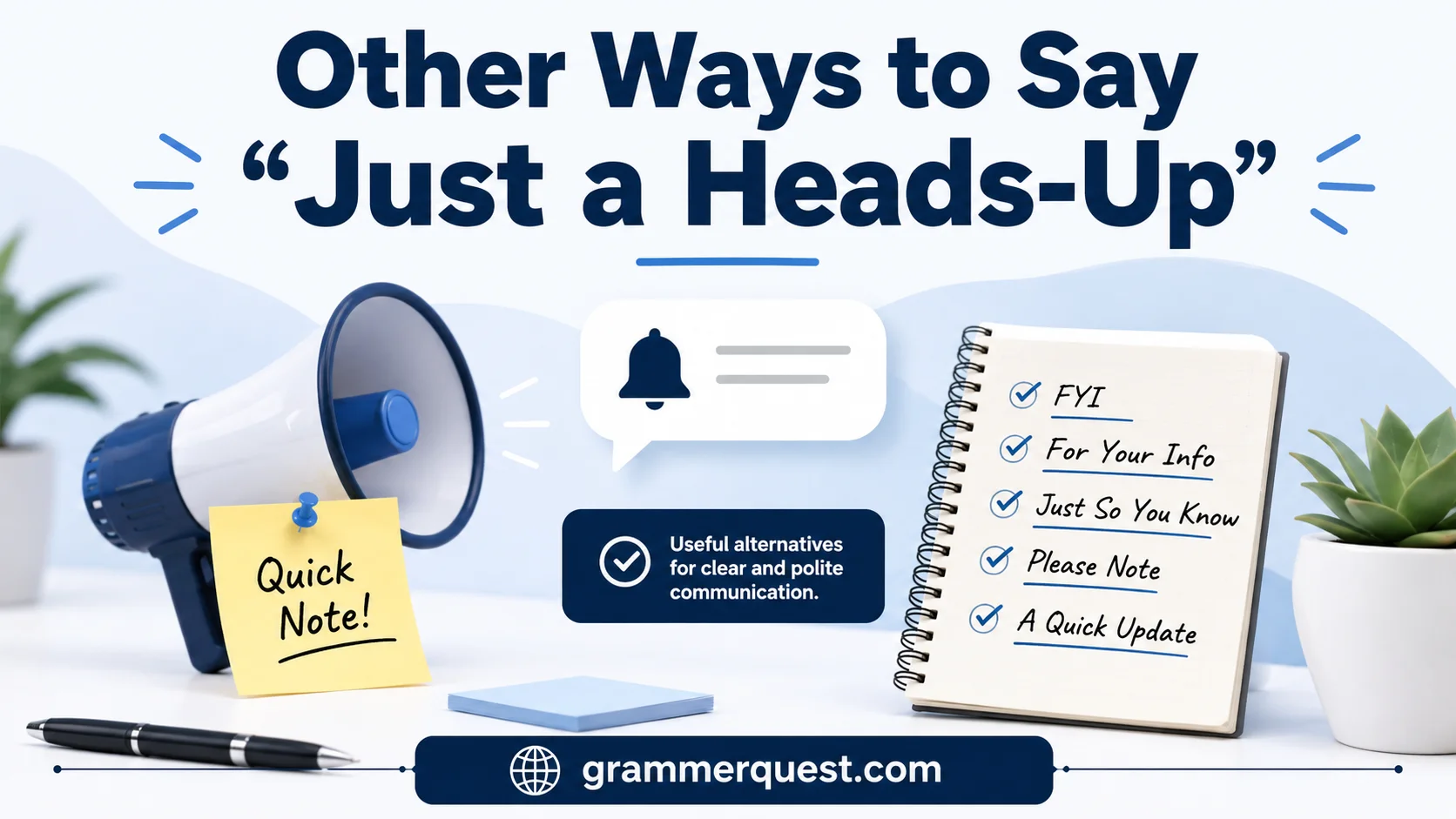
Other Ways to Say “Just a Heads-Up” (With Examples) helps you improve professional communication by using better phrases, right words, and a suitable tone. In daily conversations, people use just a heads up to share information, give a warning, or send a friendly reminder. Choosing clear, helpful, and respectful expressions makes your message more engaging and appropriate for emails, workplace communication, and different situations.
In professional settings, selecting polite language and thoughtful wording helps you deliver updates, provide guidance, and maintain a professional tone. Phrases like just to let you know and you need to know create better clarity and confidence. Using phrase alternatives, effective communication, and considerate communication allows you to sound more approachable, supportive, and prepared while building stronger relationships.
Did You Know (Just a Heads-Up)
The phrase “Just a Heads-Up” has become a popular expression in modern English because it creates a sense of awareness without creating unnecessary worry. It is often used before sharing changes, reminders, updates, or important details.
The word “heads-up” originally referred to a warning or signal that encouraged people to pay attention. Today, it is widely used in workplace conversations, emails, text messages, and casual discussions to politely prepare someone for new information.
What Does “Just a Heads-Up” Mean?
“Just a Heads-Up” means giving someone advance notice, a quick reminder, or a small warning about something they should know. It allows people to prepare mentally or practically before an event, change, or situation occurs.
For example, if a manager says, “Just a heads-up, the office will close early tomorrow,” they are not giving an order. They are simply sharing useful information so everyone can be prepared.
Professional or Political Way to Say “Just a Heads-Up”
In professional, corporate, or formal settings, you may want to replace “Just a Heads-Up” with more polished phrases. Some professional alternatives include:
- Please be advised
- Kindly note
- For your awareness
- I wanted to inform you
- Please be aware
- I would like to bring your attention to
These expressions sound more formal and are suitable for business emails, official announcements, workplace communication, and professional discussions.
“Just a Heads-Up” Synonyms
- A Quick Reminder
- Please Be Advised
- For Your Awareness
- Just to Let You Know
- A Friendly Reminder
- Please Note
- I Wanted to Inform You
- Keep in Mind
- Be Aware That
- I Should Mention
- A Quick Note
- Just So You Know
- Take Note
- I’d Like to Point Out
- For Your Information
- I Wanted to Give You Notice
- Be Prepared For
- A Small Reminder
- I Thought You Should Know
- Please Keep This in Mind
- A Word of Caution
- A Gentle Reminder
- I’m Reaching Out to Inform You
- Please Be Mindful Of
- I Want to Bring This to Your Attention
1. A Quick Reminder
Definition: A quick reminder is a short and polite way to remind someone about important information or an upcoming event.
It is commonly used when you want to refresh someone’s memory without sounding demanding.
Meanings: The phrase means sharing a brief reminder about something that the person may already know but could forget. It is useful for deadlines, meetings, appointments, or important tasks.
Example: “A quick reminder: the project report is due on Friday.”
Detailed Explanation: A quick reminder is one of the closest alternatives to “Just a Heads-Up.” It works well in both personal and professional communication. This phrase is gentle and respectful because it assumes the person may already be aware of the information. It is especially useful in emails, workplace messages, and announcements where clarity is important.
Tone: Friendly, polite, and professional.
Best Use: Use it for emails, meetings, deadlines, appointments, and routine updates.
2. Please Be Advised
Definition: Please be advised is a formal expression used to provide important information or instructions.
It is often found in official communication and professional notices.
Meanings: This phrase means “please take notice of this information.” It signals that the following message is important and should be considered carefully.
Example: “Please be advised that the office will remain closed on Monday.”
Detailed Explanation: Please be advised is a stronger and more formal alternative to “Just a Heads-Up.” It is commonly used in business letters, legal communication, customer service messages, and official announcements. Unlike casual phrases, it creates a serious and respectful tone. It is best when the information requires attention or action.
Tone: Formal, official, and professional.
Best Use: Use it in business emails, policies, notices, and formal communication.
3. For Your Awareness
Definition: For your awareness is a professional phrase used to share information someone may need to know.
It focuses on keeping someone informed rather than asking them to take immediate action.
Meanings: This expression means “I am sharing this information so you are aware of the situation.” It is commonly used in workplaces and organizations.
Example: “For your awareness, the schedule has been updated.”
Detailed Explanation: For your awareness is a useful workplace alternative to “Just a Heads-Up.” It sounds professional and neutral while avoiding pressure. This phrase is ideal when communicating updates, changes, or background information. It helps maintain transparency between teams and individuals.
Tone: Professional, neutral, and informative.
Best Use: Use it for workplace updates, reports, and team communication.
4. Just to Let You Know
Definition: Just to let you know is a casual phrase used to share information politely.
It is commonly used in everyday conversations and friendly messages.
Meanings: This phrase means you are sharing something important or useful without making it sound like a warning or command.
Example: “Just to let you know, I’ll be arriving a little late today.”
Detailed Explanation: Just to let you know is a natural replacement for “Just a Heads-Up” in casual situations. It sounds warm and conversational, making it suitable for friends, family, and coworkers. The phrase creates a relaxed feeling while still making sure the other person receives the information.
Tone: Casual, friendly, and polite.
Best Use: Use it in texts, chats, personal conversations, and informal emails.
5. A Friendly Reminder
Definition: A friendly reminder is a polite way to remind someone about something important without sounding strict or demanding.
It creates a positive and respectful approach while sharing necessary information.
Meanings: The phrase means giving someone a gentle reminder about a task, event, deadline, or responsibility. It is often used when you want to maintain a helpful and supportive tone.
Example: “A friendly reminder: please submit your documents before the end of the day.”
Detailed Explanation: A friendly reminder is a popular alternative to “Just a Heads-Up” because it combines awareness with kindness. It is commonly used in professional emails, customer communication, and personal messages. This phrase shows consideration because it does not assume the person has forgotten. Instead, it simply provides a helpful notification in a respectful manner.
Tone: Friendly, polite, and professional.
Best Use: Use it for workplace emails, reminders, appointments, payments, and follow-ups.
6. Please Note
Definition: Please note is a concise expression used to draw attention to important information.
It is commonly used in formal and professional communication.
Meanings: This phrase means asking someone to pay attention to a specific detail or update. It highlights information that should not be overlooked.
Example: “Please note that the meeting time has changed.”
Detailed Explanation: Please note is a simple and effective replacement for “Just a Heads-Up.” It works well when you need to communicate important details clearly and directly. This phrase is widely used in business emails, announcements, instructions, and official documents. It keeps the message professional while ensuring the reader notices the information.
Tone: Formal, clear, and professional.
Best Use: Use it in workplace communication, instructions, policies, and announcements.
7. I Wanted to Inform You
Definition: I wanted to inform you is a professional phrase used to share news or updates with someone.
It shows that the speaker is intentionally providing useful information.
Meanings: This expression means “I would like to make you aware of something.” It is often used when communicating changes, decisions, or important updates.
Example: “I wanted to inform you that your application has been approved.”
Detailed Explanation: I wanted to inform you is a more formal alternative to “Just a Heads-Up.” It is suitable when the information carries importance and deserves a respectful introduction. This phrase works well in professional emails, customer service messages, and official conversations. It creates a responsible and thoughtful communication style.
Tone: Professional, respectful, and formal.
Best Use: Use it for business messages, announcements, and official updates.
8. Keep in Mind
Definition: Keep in mind is a phrase used to remind someone about an important fact or consideration.
It encourages awareness before making a decision or taking action.
Meanings: The phrase means remembering or considering something important. It is useful when giving advice, reminders, or helpful information.
Example: “Keep in mind that the deadline cannot be extended.”
Detailed Explanation: Keep in mind is a flexible alternative to “Just a Heads-Up” that works in both casual and professional situations. It gently directs attention toward something important without sounding too serious. People often use this phrase when sharing advice, expectations, or possible challenges. It helps the listener think carefully before moving forward.
Tone: Helpful, thoughtful, and conversational.
Best Use: Use it for advice, instructions, planning, and discussions.
9. Be Aware That
Definition: Be aware that is an expression used to alert someone about important information or possible situations.
It encourages attention and understanding before something happens.
Meanings: This phrase means informing someone about a fact, change, or condition they should recognize. It is slightly stronger than a casual reminder.
Example: “Be aware that the road will be closed during construction.”
Detailed Explanation: Be aware that is a useful alternative when you want to provide a warning or important notice. Unlike casual expressions, it highlights the need for attention. It can be used in professional, educational, and safety-related communication. The phrase helps people prepare for changes and avoid misunderstandings.
Tone: Serious, informative, and direct.
Best Use: Use it for warnings, instructions, safety messages, and important updates.
10. I Should Mention
Definition: I should mention is a conversational phrase used to introduce additional information.
It allows the speaker to share an important detail naturally.
Meanings: This phrase means “there is something else you should know.” It is often used when adding useful information to a conversation.
Example: “I should mention that the event starts earlier than usual.”
Detailed Explanation: I should mention is a softer and more natural alternative to “Just a Heads-Up.” It works well in conversations where you want to add information without making it feel like a formal announcement. This phrase is common in meetings, discussions, and personal conversations. It creates a smooth transition before sharing an important point.
Tone: Casual, polite, and conversational.
Best Use: Use it in meetings, discussions, interviews, and everyday conversations.
11. A Quick Note
Definition: A quick note is a short way to introduce brief but useful information.
It suggests that the message will be simple and easy to understand.
Meanings: The phrase means sharing a small piece of information, reminder, or update. It is often used in written communication.
Example: “A quick note: the office will open at 10 AM tomorrow.”
Detailed Explanation: A quick note is a friendly replacement for “Just a Heads-Up” that works especially well in emails and messages. It prepares the reader for a short update without creating urgency. This phrase is useful when communicating simple changes or reminders. It keeps communication clear, organized, and approachable.
Tone: Friendly, simple, and professional.
Best Use: Use it for emails, notifications, and short workplace updates.
12. Just So You Know
Definition: Just so you know is a casual expression used to share information with someone.
It is often used in friendly conversations and informal communication.
Meanings: This phrase means providing information simply because the person may benefit from knowing it. It does not usually require immediate action.
Example: “Just so you know, your package has already arrived.”
Detailed Explanation: Just so you know is one of the most natural alternatives to “Just a Heads-Up” in everyday English. It creates a relaxed and friendly tone while still making someone aware of something important. This phrase is commonly used among friends, family members, and coworkers. It works well when the information is helpful but not urgent.
Tone: Casual, friendly, and relaxed.
Best Use: Use it in conversations, text messages, and informal communication.
13. Take Note
Definition: Take note is an expression used to encourage someone to pay attention to important information.
It highlights details that should be remembered or considered carefully.
Meanings: The phrase means “pay attention to this information” or “remember this important point.” It is commonly used when sharing instructions, changes, or important facts.
Example: “Take note that all applications must be submitted before Monday.”
Detailed Explanation: Take note is a stronger alternative to “Just a Heads-Up” because it encourages active attention. It is often used in educational, professional, and official settings where information needs to be remembered. This phrase helps emphasize important details without sounding overly strict. It is useful when the listener or reader needs to understand the significance of the information.
Tone: Direct, professional, and informative.
Best Use: Use it for instructions, announcements, meetings, and formal communication.
Read This: 25 Other Ways to Say “I Would Be Remiss” (With Examples)
14. I’d Like to Point Out
Definition: I’d like to point out is a polite phrase used to introduce a specific detail or important fact.
It draws attention to something that deserves consideration.
Meanings: This phrase means highlighting information that may not be immediately noticed. It is often used when explaining ideas, making suggestions, or sharing observations.
Example: “I’d like to point out that we have already completed most of the project.”
Detailed Explanation: I’d like to point out is a professional alternative to “Just a Heads-Up” that works well in discussions and presentations. It allows someone to bring attention to a matter respectfully. The phrase is useful when you want to emphasize a fact without sounding forceful. It creates a thoughtful communication style in workplaces and formal conversations.
Tone: Professional, respectful, and thoughtful.
Best Use: Use it in meetings, presentations, reports, and discussions.
15. For Your Information
Definition: For your information is a formal phrase used to provide someone with knowledge about a situation.
It is often shortened as FYI in emails and workplace messages.
Meanings: The phrase means “I am sharing this information so you are aware.” It usually does not require immediate action but keeps someone updated.
Example: “For your information, the schedule has been updated on the company website.”
Detailed Explanation: For your information is one of the most common professional alternatives to “Just a Heads-Up.” It is widely used in business communication, emails, and official updates. This phrase helps maintain transparency by making sure people receive important information. Although it can sometimes sound formal, it remains a useful and respectful way to share updates.
Tone: Formal, neutral, and professional.
Best Use: Use it in workplace emails, reports, announcements, and official communication.
16. I Wanted to Give You Notice
Definition: I wanted to give you notice is a phrase used to inform someone about something before it happens.
It emphasizes providing advance information or preparation time.
Meanings: This expression means letting someone know about a future event, change, or situation early enough for them to prepare.
Example: “I wanted to give you notice that the maintenance work will begin next week.”
Detailed Explanation: I wanted to give you notice is a thoughtful alternative to “Just a Heads-Up” when timing and preparation are important. It shows consideration because you are informing someone ahead of time. This phrase is often used for schedules, workplace changes, appointments, and official matters. It creates a responsible and respectful tone.
Tone: Polite, considerate, and professional.
Best Use: Use it for advance warnings, schedule changes, and formal notifications.
17. Be Prepared For
Definition: Be prepared for is a phrase used to alert someone about something that may happen.
It encourages readiness and awareness before an upcoming situation.
Meanings: The phrase means getting ready for a possible event, change, challenge, or responsibility. It is often used when preparation is necessary.
Example: “Be prepared for possible delays during the construction period.”
Detailed Explanation: Be prepared for is a useful alternative to “Just a Heads-Up” when the information involves planning or caution. It helps people understand that they may need to take action or adjust their expectations. This phrase is common in professional advice, travel information, safety notices, and personal guidance. It creates awareness while encouraging responsibility.
Tone: Practical, serious, and helpful.
Best Use: Use it for warnings, preparation advice, instructions, and planning.
18. A Small Reminder
Definition: A small reminder is a gentle way to bring attention to something important.
It communicates information without creating pressure or urgency.
Meanings: This phrase means giving a brief reminder about a task, event, or detail that someone should remember.
Example: “A small reminder: please bring your ID card tomorrow.”
Detailed Explanation: A small reminder is a softer version of “Just a Heads-Up” that works well in friendly communication. It creates a positive and supportive feeling because it presents the information as helpful rather than demanding. This phrase is suitable for personal messages, workplace conversations, and customer communication. It keeps the conversation polite and approachable.
Tone: Gentle, friendly, and caring.
Best Use: Use it for reminders, follow-ups, appointments, and casual notifications.
19. I Thought You Should Know
Definition: I thought you should know is a phrase used when sharing information that may be valuable or meaningful to someone.
It shows consideration and personal attention.
Meanings: This expression means “I am telling you this because I believe it is useful or important for you.” It often carries a caring or thoughtful feeling.
Example: “I thought you should know that your application has moved to the next stage.”
Detailed Explanation: I thought you should know is a warm alternative to “Just a Heads-Up.” It is often used when the information has personal importance or when the speaker wants to show kindness. The phrase works well in both professional and personal situations. It creates a connection between the speaker and listener by showing that the information is being shared with good intentions.
Tone: Thoughtful, caring, and personal.
Best Use: Use it for personal updates, important news, and considerate communication.
20. Please Keep This in Mind
Definition: Please keep this in mind is a polite expression used to remind someone about an important consideration.
It encourages someone to remember specific information when making decisions.
Meanings: The phrase means asking someone to consider or remember something important. It is commonly used when giving advice or explaining expectations.
Example: “Please keep this in mind when preparing your final presentation.”
Detailed Explanation: Please keep this in mind is a respectful alternative to “Just a Heads-Up” that focuses on awareness and consideration. It is useful in professional discussions, instructions, and planning situations. The phrase does not sound aggressive, but it clearly highlights something important. It helps people make better choices by remembering key details.
Tone: Polite, professional, and advisory.
Best Use: Use it for advice, instructions, planning, and workplace communication.
21. A Word of Caution
Definition: A word of caution is an expression used to provide a gentle warning or important advice.
It helps someone become aware of a possible problem, risk, or challenge.
Meanings: This phrase means sharing a warning or recommendation so someone can make a careful decision. It is often used when the information requires attention or preparation.
Example: “A word of caution: be careful when sharing personal information online.”
Detailed Explanation: A word of caution is a stronger alternative to “Just a Heads-Up” because it focuses on preventing mistakes or problems. It is commonly used when offering advice, safety information, or professional guidance. This phrase shows concern while remaining respectful and helpful. It is useful when you want someone to think carefully before taking action.
Tone: Caring, serious, and advisory.
Best Use: Use it for warnings, safety advice, professional guidance, and important reminders.
22. A Gentle Reminder
Definition: A gentle reminder is a polite and soft way to remind someone about something important.
It communicates information while maintaining kindness and respect.
Meanings: The phrase means providing a friendly reminder without making the other person feel pressured. It is commonly used when following up on tasks or responsibilities.
Example: “A gentle reminder: please review the document before tomorrow’s meeting.”
Detailed Explanation: A gentle reminder is a warm alternative to “Just a Heads-Up” that works well in professional and personal communication. It creates a positive atmosphere because it focuses on helpfulness rather than correction. This phrase is especially useful when communicating with clients, coworkers, or people you want to maintain a good relationship with. It shows patience and understanding.
Tone: Warm, respectful, and friendly.
Best Use: Use it for emails, follow-ups, deadlines, and polite requests.
23. I’m Reaching Out to Inform You
Definition: I’m reaching out to inform you is a professional phrase used when contacting someone with important information.
It shows a thoughtful and intentional approach to communication.
Meanings: This phrase means contacting someone specifically to provide an update, announcement, or important detail. It is common in business and customer communication.
Example: “I’m reaching out to inform you that your appointment has been rescheduled.”
Detailed Explanation: I’m reaching out to inform you is a formal alternative to “Just a Heads-Up” that is often used in professional emails and customer service messages. It creates a respectful tone and shows that the sender values clear communication. This phrase is useful when sharing updates, changes, or decisions with someone directly. It sounds organized and considerate.
Tone: Professional, respectful, and formal.
Best Use: Use it for business emails, customer messages, official updates, and announcements.
24. Please Be Mindful Of
Definition: Please be mindful of is a polite expression used to encourage awareness and careful attention.
It reminds someone to consider a specific situation, rule, or responsibility.
Meanings: The phrase means asking someone to remember or consider something important while acting or making decisions.
Example: “Please be mindful of the shared workspace and keep it clean.”
Detailed Explanation: Please be mindful of is a thoughtful alternative to “Just a Heads-Up” that focuses on awareness and consideration. It is commonly used when encouraging respectful behavior or careful actions. This phrase works well in workplaces, communities, and personal relationships. It communicates expectations in a polite and positive way rather than sounding like a command.
Tone: Respectful, considerate, and polite.
Best Use: Use it for guidelines, workplace culture, social situations, and gentle instructions.
25. I Want to Bring This to Your Attention
Definition: I want to bring this to your attention is a formal phrase used to highlight important information.
It shows that the speaker wants someone to carefully notice a specific matter.
Meanings: This expression means directing someone’s focus toward an issue, update, or important detail. It is often used when the information requires awareness or action.
Example: “I want to bring this to your attention that the policy has recently changed.”
Detailed Explanation: I want to bring this to your attention is one of the most formal alternatives to “Just a Heads-Up.” It is suitable when discussing important matters that need careful consideration. This phrase is frequently used in business, official letters, reports, and professional discussions. It communicates seriousness while remaining respectful and clear.
Tone: Formal, professional, and direct.
Best Use: Use it for official communication, workplace matters, reports, and important announcements.
FAQs:
1. What does “just a heads up” mean?
Just a heads up means giving someone advance information, a reminder, or a warning about something important. It helps the person prepare before an event, change, or situation happens.
2. Is “just a heads up” professional?
“Just a heads up” is common in casual conversations, but in professional settings, phrases like just to let you know, please be aware, or I wanted to inform you may sound more polished.
3. What are professional alternatives to “just a heads up”?
Some professional alternatives include advance notice, please note, I would like to inform you, for your awareness, and I wanted to bring this to your attention.
4. When should I use “just a heads up”?
You can use just a heads up in friendly conversations, quick messages, and informal communication. For formal emails or business communication, choose more professional wording.
5. Why is choosing the right phrase important?
Choosing the right phrase improves clarity, professionalism, and communication effectiveness. It helps your message sound respectful, thoughtful, and suitable for the situation.
Conclusion
Using Other Ways to Say “Just a Heads-Up” (With Examples) helps you improve your communication skills and choose the right words for different situations. Whether you are writing emails, speaking in a workplace conversation, or sharing important updates, professional alternatives can make your message more clear, polite, and respectful. Choosing the right phrases, tone, and language allows you to communicate with confidence while creating a positive impression on others.

George Whitaker is the voice behind GrammarQuest, dedicated to making grammar simple, engaging, and easy to understand. He helps learners turn confusion into confidence with clear explanations and real-world examples.