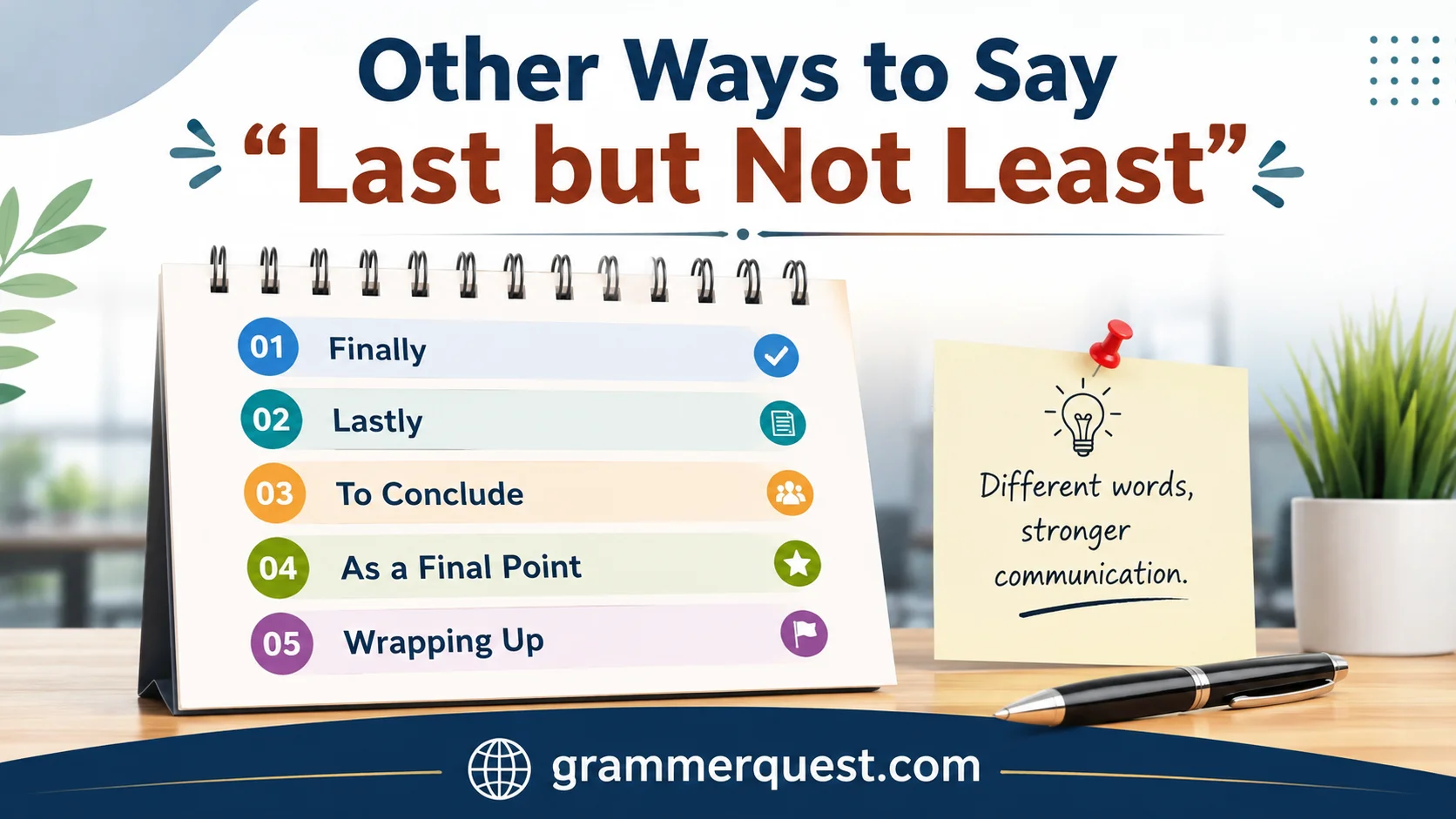
Other Ways to Say “Last but Not Least” (With Examples) helps writers find better words when they want to replace common phrases like firstly, secondly, and thirdly. The right words can make a message feel more human, thoughtful, and clearer. These alternatives improve writing, add confidence, and create a more natural and meaningful flow for every reader.
Using creative alternatives in emails, speeches, presentations, and reports makes your writing more professional, engaging, and informative. I believe choosing the right tone, style, and phrases helps you convey your idea clearly while making the final point feel valuable, included, and memorable.
Did You Know About “Last but Not Least”?
The phrase “last but not least” has been used in English for many years to introduce the final item in a list while emphasizing that it deserves equal attention. It is often used in speeches, articles, meetings, and conversations to prevent the final point from being overlooked.
Many speakers use this expression because it creates a sense of balance. It tells the audience that although something appears at the end, it is not less valuable than the points mentioned earlier. This phrase is especially useful when recognizing people, thanking a group, or presenting multiple ideas.
The popularity of “last but not least” comes from its ability to combine two important messages: order and importance. It signals that something is the final point while reminding listeners that it still matters.
What Does “Last but Not Least” Mean?
The expression “last but not least” means that the final person, thing, or idea being mentioned is just as important as the previous ones. It is used to give equal value and recognition to the last item in a sequence.
For example, if someone says, “Last but not least, I would like to thank my parents,” they are showing that their parents are the final people mentioned but are still extremely important.
This phrase is commonly used in:
- Presentations
- Speeches
- Award ceremonies
- Professional meetings
- Personal conversations
- Written content
Using alternatives to “last but not least” can make your communication sound more natural, expressive, and suitable for different audiences.
Professional or Political Ways to Say “Last but Not Least”
In professional, business, or political settings, it is often better to use expressions that sound polished and respectful. Instead of repeating “last but not least,” speakers can choose phrases that highlight importance, recognition, or final consideration.
Some professional alternatives include:
- Finally, and equally important
- To conclude, I would like to highlight
- As a final point
- In closing, I want to recognize
- Before I finish, I must acknowledge
- One final but significant point
- To end on an important note
These expressions are useful during business presentations, political speeches, interviews, and formal announcements because they maintain a professional tone while emphasizing the value of the final point.
“Last but Not Least” Synonyms
- Finally, and equally important
- To end on an important note
- One final thought
- Last in order, but not in importance
- Before I conclude
- As a final point
- To wrap things up
- Saving the best for last
- One more thing worth mentioning
- In closing
- To finish on a high note
- The final piece of the puzzle
- Not forgetting
- Before we finish
- A final but meaningful point
- Ending with something special
- To bring everything together
- One final reminder
- The final highlight
- As we reach the end
- One last important detail
- To close this discussion
- The final word goes to
- Bringing up the rear, but still important
- Ending with a valuable note
1. Finally, and Equally Important
Definition: “Finally, and equally important” is a formal alternative to “last but not least” that introduces the final point while emphasizing its equal value. It shows that the last item deserves the same attention and respect as everything mentioned before.
Meanings: This phrase means that although something is being mentioned at the end, it should not be considered less significant. It highlights importance, fairness, and balance when presenting ideas, people, or achievements.
Example: “Finally, and equally important, we want to thank our dedicated volunteers for their endless support.”
Detailed Explanation: This expression works especially well in professional speeches, presentations, and reports where the speaker wants to maintain a respectful tone. It clearly communicates that the final point is not an afterthought but a valuable part of the overall message. The phrase creates a smooth transition toward the ending while keeping the audience’s attention. It is a strong choice when recognizing contributions, summarizing achievements, or introducing a final recommendation.
Tone: Formal, respectful, professional
Best Use: Use this phrase in business meetings, academic presentations, official speeches, and professional writing when you want to emphasize equal importance.
2. To End on an Important Note
Definition: “To end on an important note” is an expression used to introduce a final idea that carries special meaning or significance. It creates a strong ending by drawing attention to the last message.
Meanings: This phrase means that the speaker wants to finish a conversation, speech, or article with something valuable, memorable, or meaningful. It focuses on the impact of the final point rather than its position.
Example: “To end on an important note, remember that success requires patience and continuous effort.”
Detailed Explanation: This alternative is useful when the final statement is meant to leave a lasting impression. It is commonly used in motivational speeches, articles, and discussions where the conclusion needs emotional strength. Unlike a simple ending phrase, it suggests that the final message contains wisdom, advice, or an important reminder. It helps the audience focus on the takeaway message.
Tone: Inspirational, thoughtful, professional
Best Use: Best for speeches, motivational content, presentations, and personal advice.
3. One Final Thought
Definition: “One final thought” introduces a last idea, opinion, or reflection before ending a discussion. It gives importance to the speaker’s final words.
Meanings: This phrase means that the speaker has one more meaningful idea to share before finishing. It is often used to introduce advice, reflection, or a concluding message.
Example: “One final thought: kindness can make a bigger difference than we realize.”
Detailed Explanation: “One final thought” is a flexible expression that works in both casual and professional conversations. It sounds natural and allows the speaker to transition smoothly into the closing part of a message. This phrase is often used by writers, teachers, leaders, and speakers who want their final point to feel personal and meaningful. It creates curiosity because listeners expect an important idea to follow.
Tone: Friendly, reflective, conversational
Best Use: Use it in blogs, speeches, interviews, discussions, and personal messages.
4. Last in Order, but Not in Importance
Definition: “Last in order, but not in importance” directly explains that the final item mentioned still has great value. It is a clear and professional replacement for “last but not least.”
Meanings: This phrase means that something appears at the end of a list only because of arrangement, not because it matters less. It emphasizes fairness and equal recognition.
Example: “Last in order, but not in importance, we appreciate our customers who continue to support us.”
Detailed Explanation: This expression is ideal when you want to remove any doubt that the final person or idea is less valuable. It is especially effective in formal situations where recognition and appreciation are important. The phrase clearly communicates respect and prevents the audience from ignoring the final point. It is commonly used in award ceremonies, reports, and official statements.
Tone: Formal, respectful, appreciative
Best Use: Best for formal announcements, ceremonies, professional documents, and speeches.
5. Before I Conclude
Definition: “Before I conclude” is a phrase used to introduce a final message before ending a speech, discussion, or presentation. It prepares the audience for the closing point.
Meanings: This expression means that the speaker is about to finish but wants to mention one last important detail. It creates a natural transition toward the ending.
Example: “Before I conclude, I would like to express my gratitude to everyone who helped make this project successful.”
Detailed Explanation: This phrase is commonly used in formal communication because it sounds organized and professional. It signals that the speaker is moving toward the conclusion while giving attention to a final idea. It works well when thanking people, summarizing information, or sharing a final message. The phrase creates a smooth ending without making the final point seem forgotten.
Tone: Professional, polite, formal
Best Use: Use it in presentations, speeches, meetings, and official communication.
6. As a Final Point
Definition: “As a final point” is a professional alternative to “last but not least” used when introducing the last idea in a discussion or presentation. It shows that the speaker is moving toward the conclusion while highlighting one more important detail.
Meanings: This phrase means that the upcoming information is the final point being shared, but it still has value and deserves attention. It is often used to organize thoughts clearly and create a smooth ending.
Example: “As a final point, I want to remind everyone that teamwork is the foundation of our success.”
Detailed Explanation: “As a final point” is a simple and effective expression for structured communication. It is commonly used by speakers who want to present information in an organized way. The phrase helps the audience understand that the discussion is coming to an end while preparing them for an important conclusion. It works well in professional environments because it sounds clear, direct, and respectful. Unlike casual alternatives, it maintains a formal tone and keeps the focus on the message.
Tone: Formal, organized, professional
Best Use: Best for business presentations, meetings, academic discussions, reports, and speeches.
7. To Wrap Things Up
Definition: “To wrap things up” is a casual and friendly way to introduce the final point of a conversation or activity. It signals that the speaker is bringing the discussion to an end.
Meanings: This phrase means that the speaker is summarizing the final thoughts or sharing one last important idea before finishing. It creates a natural and relaxed closing.
Example: “To wrap things up, let’s remember the key lessons we learned from this experience.”
Detailed Explanation: “To wrap things up” is commonly used in everyday conversations, online meetings, and informal presentations. It gives the audience a feeling that the speaker is bringing everything together in a simple way. This phrase is less formal than “last but not least,” making it suitable for friendly environments. It helps create a smooth transition from the main discussion to the final message. Many teachers, managers, and content creators use it when ending explanations.
Tone: Casual, friendly, conversational
Best Use: Use it in team discussions, casual presentations, videos, emails, and everyday conversations.
8. Saving the Best for Last
Definition: “Saving the best for last” is an expressive phrase used when the final item is considered especially exciting, valuable, or memorable. It suggests that the ending contains something special.
Meanings: This phrase means that something important or impressive has intentionally been kept until the end. It creates anticipation and makes the final point feel more meaningful.
Example: “Saving the best for last, we are excited to announce the winner of this year’s award.”
Detailed Explanation: This alternative is more emotional and engaging than a simple replacement for “last but not least.” It is often used when introducing a surprise, achievement, celebration, or special announcement. The phrase creates excitement because it suggests that the audience should pay extra attention to what comes next. However, it should be used carefully because it implies that the final item may actually be better than the previous ones. It is perfect for situations where creating enthusiasm is important.
Tone: Exciting, positive, celebratory
Best Use: Best for events, announcements, entertainment, marketing content, and celebrations.
9. One More Thing Worth Mentioning
Definition: “One more thing worth mentioning” introduces an additional idea that deserves attention before ending a discussion. It highlights the value of a final detail.
Meanings: This phrase means that the speaker wants to add another important piece of information before finishing. It shows that the final point has relevance and should not be ignored.
Example: “One more thing worth mentioning is the incredible support we received from our community.”
Detailed Explanation: This expression works well when the speaker wants to add a final reminder or detail that may not fit into the main discussion but still matters. It sounds natural in conversations, articles, and presentations. The phrase creates a sense of importance without sounding too formal. It is especially useful when acknowledging people, sharing updates, or adding extra information. It helps the audience understand that the final point has a purpose.
Tone: Friendly, informative, thoughtful
Best Use: Use it in emails, conversations, blogs, presentations, and announcements.
10. In Closing
Definition: “In closing” is a formal phrase used to introduce the final statement or conclusion of a speech, message, or presentation. It indicates that the speaker is reaching the end.
Meanings: This expression means that the speaker is about to share final thoughts, a summary, or an important closing message. It gives structure and professionalism to communication.
Example: “In closing, I would like to thank everyone who contributed to this successful project.”
Detailed Explanation: “In closing” is widely used in professional and formal communication because it creates a clear ending. It helps listeners recognize that the final message is approaching and prepares them to focus on the conclusion. This phrase is often found in speeches, business letters, academic presentations, and official statements. It provides a polished transition and allows the speaker to finish with confidence. It is a strong alternative when you want your final words to sound meaningful and organized.
Tone: Formal, professional, respectful
Best Use: Best for business speeches, formal emails, presentations, academic writing, and official communication.
11. To Finish on a High Note
Definition: “To finish on a high note” means ending a conversation, event, or message with something positive, memorable, or uplifting. It focuses on leaving a good final impression.
Meanings: This phrase suggests that the final point should create happiness, motivation, or inspiration. It is often used when ending something in a successful or positive way.
Example: “To finish on a high note, let’s celebrate the amazing progress our team has made this year.”
Detailed Explanation: This expression adds emotional energy to the ending of a message. It is especially useful when the speaker wants the audience to remember the final moment positively. Unlike a simple closing phrase, it creates a feeling of achievement and optimism. It works well in speeches, celebrations, motivational talks, and personal conversations. The phrase encourages the audience to focus on success and positive outcomes.
Tone: Positive, inspiring, enthusiastic
Best Use: Use it in celebrations, motivational speeches, team meetings, and personal messages.
12. The Final Piece of the Puzzle
Definition: “The final piece of the puzzle” is an expressive alternative that describes the last element needed to complete an idea, plan, or situation. It emphasizes that the final point has an important role in creating a complete picture.
Meanings: This phrase means that the last person, idea, or detail being mentioned helps complete the overall understanding. It suggests that although it comes at the end, it is necessary and valuable.
Example: “The final piece of the puzzle is understanding our customers’ needs and expectations.”
Detailed Explanation: This expression is often used when discussing solutions, projects, strategies, or important discoveries. It creates the idea that every part matters and that the final addition brings everything together. The phrase is more creative than “last but not least” because it uses imagery to explain importance. It works well in professional conversations, storytelling, and educational content. It helps the audience understand that the final point completes the entire message.
Tone: Creative, thoughtful, professional
Best Use: Best for business strategies, problem-solving discussions, articles, presentations, and explanations.
13. Not Forgetting
Definition: “Not forgetting” is a simple phrase used to mention someone or something important before ending a list or discussion. It shows that the final point has not been overlooked.
Meanings: This phrase means that the speaker wants to make sure a specific person, idea, or detail receives recognition. It is often used when adding appreciation or mentioning something valuable.
Example: “Not forgetting our hardworking employees who made this achievement possible.”
Detailed Explanation: “Not forgetting” is a warm and appreciative alternative to “last but not least.” It is commonly used when thanking people or recognizing contributions. The phrase carries a feeling of care because it suggests that the speaker intentionally wants to include someone important. It is suitable for both personal and professional situations. While it is shorter than other alternatives, it can create a meaningful emotional connection with the audience.
Tone: Appreciative, warm, sincere
Best Use: Use it in thank-you messages, speeches, acknowledgments, and personal writing.
Also Read This: 25 Other Ways to Say “Just a Heads-Up” (With Examples)
14. Before We Finish
Definition: “Before we finish” is a natural expression used to introduce a final thought or important detail before ending. It creates a smooth transition toward the conclusion.
Meanings: This phrase means that there is one more thing to discuss before the conversation, meeting, or presentation comes to an end. It gives attention to the final message.
Example: “Before we finish, I want to recognize everyone who supported this project.”
Detailed Explanation: This phrase is commonly used in everyday and professional conversations because it sounds natural and approachable. It allows speakers to introduce a final point without making the ending feel too formal. The expression works well when the speaker wants to add appreciation, reminders, or important information. It keeps the audience engaged until the very end. Because of its simplicity, it can be used in many different communication styles.
Tone: Friendly, polite, conversational
Best Use: Best for meetings, discussions, presentations, emails, and informal speeches.
15. A Final but Meaningful Point
Definition: “A final but meaningful point” emphasizes that the last idea being shared has special value and significance. It highlights importance while introducing the conclusion.
Meanings: This phrase means that the speaker is presenting one final idea that carries a deeper message or valuable lesson. It focuses on quality rather than position.
Example: “A final but meaningful point is that true success comes from consistency and dedication.”
Detailed Explanation: This alternative is useful when the final message is designed to create reflection or emotional impact. It works especially well in motivational writing, speeches, and educational content. The phrase tells the audience that the final statement deserves attention because it contains an important lesson. It creates a sense of purpose and helps the speaker end with a strong message. It is a thoughtful replacement for “last but not least” when the ending carries special meaning.
Tone: Reflective, inspirational, meaningful
Best Use: Use it in motivational speeches, essays, articles, and personal discussions.
16. Ending with Something Special
Definition: “Ending with something special” is a warm expression used when the final point has emotional or personal importance. It suggests that the conclusion contains something memorable.
Meanings: This phrase means that the speaker wants to finish with an idea, person, or message that has special value. It focuses on creating a positive and lasting impression.
Example: “Ending with something special, I want to thank my family for their endless support.”
Detailed Explanation: This phrase is especially suitable for emotional moments where appreciation, love, or gratitude are involved. It can make a conclusion feel more personal and heartfelt. Unlike formal expressions, it creates a connection between the speaker and the audience. It is often used in personal speeches, celebrations, and meaningful messages. The phrase helps transform the final point into a memorable closing moment.
Tone: Emotional, warm, heartfelt
Best Use: Best for weddings, thank-you speeches, personal letters, celebrations, and emotional messages.
17. To Bring Everything Together
Definition: “To bring everything together” is a phrase used to introduce a final idea that connects all previous points. It shows that the conclusion completes the overall message.
Meanings: This phrase means that the speaker is combining different ideas, examples, or details into one final understanding. It emphasizes unity and connection.
Example: “To bring everything together, our success depends on teamwork, innovation, and dedication.”
Detailed Explanation: This alternative is useful when summarizing information or creating a clear conclusion. It helps the audience understand how different points connect with each other. The phrase is commonly used in presentations, reports, and educational discussions. It creates a feeling of completion because the final statement ties everything into one main idea. It is a strong choice when the goal is clarity and organization.
Tone: Professional, organized, explanatory
Best Use: Use it in presentations, reports, lessons, meetings, and written content.
18. One Final Reminder
Definition: “One final reminder” is a phrase used to introduce an important message or detail before ending a conversation, speech, or announcement. It highlights something the audience should remember after the discussion ends.
Meanings: This phrase means that the speaker wants to share one last piece of advice, information, or encouragement. It focuses on the importance of remembering the final message.
Example: “One final reminder: always treat others with kindness and respect.”
Detailed Explanation: “One final reminder” is a useful alternative to “last but not least” when the final point is meant to guide, encourage, or inform the audience. It creates a sense of importance because it suggests that the upcoming message should stay in people’s minds. This phrase is commonly used by teachers, managers, speakers, and writers. It works well when giving instructions, sharing advice, or ending a discussion with a key takeaway. The expression is simple but effective because it draws attention to the final message.
Tone: Helpful, respectful, informative
Best Use: Best for instructions, presentations, educational content, workplace communication, and advice.
19. The Final Highlight
Definition: “The final highlight” refers to the last important or impressive point in a series of ideas, events, or achievements. It emphasizes that the ending deserves special attention.
Meanings: This phrase means that the final item being mentioned is a notable feature or important part of the overall message. It focuses on value and significance.
Example: “The final highlight of the event was the recognition of our outstanding volunteers.”
Detailed Explanation: This expression is often used when describing achievements, celebrations, or memorable moments. It gives the final point a sense of importance and excitement. Unlike a simple transition phrase, “the final highlight” suggests that the ending contains something remarkable. It works especially well in articles, event summaries, presentations, and storytelling. It helps create a strong closing impression by making the audience focus on the final detail.
Tone: Positive, exciting, appreciative
Best Use: Use it in event descriptions, reports, articles, speeches, and celebrations.
20. As We Reach the End
Definition: “As we reach the end” is a natural expression used when introducing the final thoughts of a conversation or presentation. It signals that the speaker is moving toward the conclusion.
Meanings: This phrase means that the discussion is almost complete, and the speaker wants to share one final idea before finishing. It creates a smooth and gentle transition.
Example: “As we reach the end, I want to express my gratitude to everyone who contributed.”
Detailed Explanation: This phrase is a flexible alternative that works well in both formal and casual situations. It allows the speaker to move naturally from the main discussion into the closing section. It does not sound too strict or overly formal, making it suitable for many audiences. The expression helps create a calm ending while giving importance to the final message. It is especially useful when the speaker wants the conclusion to feel thoughtful and organized.
Tone: Calm, polite, reflective
Best Use: Best for speeches, presentations, meetings, articles, and personal messages.
21. One Last Important Detail
Definition: “One last important detail” introduces a final piece of information that deserves attention. It shows that the last point has practical value.
Meanings: This phrase means that the speaker has one more significant fact, reminder, or idea to share before ending. It highlights usefulness and importance.
Example: “One last important detail: please remember to submit your documents before Friday.”
Detailed Explanation: This alternative is especially useful when the final message contains instructions, facts, or necessary information. It clearly tells the audience that the upcoming point should not be ignored. The phrase works well in professional and everyday communication because it sounds direct and helpful. It is often used in emails, meetings, announcements, and educational situations. It gives the final detail the attention it deserves without making the conversation feel repetitive.
Tone: Practical, clear, informative
Best Use: Use it in emails, workplace communication, instructions, announcements, and guides.
22. To Close This Discussion
Definition: “To close this discussion” is a formal phrase used to introduce the final statement or summary of a conversation. It indicates that the speaker is bringing the topic to an end.
Meanings: This phrase means that the speaker is preparing to conclude a discussion by sharing a final thought, decision, or summary. It provides a clear ending.
Example: “To close this discussion, we must focus on creating solutions that benefit everyone.”
Detailed Explanation: This expression is commonly used in professional, academic, and organizational settings. It creates a structured ending and helps listeners understand that the final message is important. The phrase works well during meetings, debates, and formal conversations where clarity is needed. It gives the speaker a confident way to transition from discussion to conclusion. This makes it a strong alternative to “last but not least” in serious communication.
Tone: Formal, professional, organized
Best Use: Best for meetings, debates, reports, academic discussions, and official communication.
23. The Final Word Goes To
Definition: “The final word goes to” is an expression used when giving the last opportunity to a person, idea, or message. It highlights the importance of the final speaker or point.
Meanings: This phrase means that the final opinion, statement, or recognition belongs to someone or something specific. It often suggests respect and importance.
Example: “The final word goes to our team leader, who guided us throughout this journey.”
Detailed Explanation: This phrase is often used in interviews, discussions, debates, and public events. It creates a sense of respect by allowing the final message to come from an important source. Unlike “last but not least,” it focuses more on giving attention or authority to the final person or statement. It can create a powerful ending because the audience expects a meaningful conclusion. It is especially useful when highlighting someone’s contribution or perspective.
Tone: Respectful, formal, authoritative
Best Use: Use it in interviews, debates, ceremonies, speeches, and discussions.
24. Bringing Up the Rear, But Still Important
Definition: “Bringing up the rear, but still important” is a creative expression used to describe the final item in a list while emphasizing its value. It shows that being last does not mean being less significant.
Meanings: This phrase means that something comes at the end of a sequence but still deserves recognition and attention. It focuses on equality and importance regardless of position.
Example: “Bringing up the rear, but still important, our customer support team plays a major role in our success.”
Detailed Explanation: This expression is a more casual and conversational alternative to “last but not least.” It uses the idea of being at the back of a group while reminding the audience that the final person or point still matters. It is suitable for friendly communication where a relaxed tone is preferred. Although it is less formal than other alternatives, it can make a message feel more natural and engaging. It works well when introducing the final member of a group or the last item in a list.
Tone: Casual, friendly, lighthearted
Best Use: Best for informal presentations, conversations, blogs, social media content, and friendly announcements.
25. Ending With a Valuable Note
Definition: “Ending with a valuable note” is a phrase used to introduce a final thought that contains importance, wisdom, or useful information. It helps create a meaningful and memorable conclusion.
Meanings: This phrase means that the speaker wants to finish with something beneficial, inspiring, or worth remembering. It focuses on the value of the final message.
Example: “Ending with a valuable note, always remember that small efforts can lead to great achievements.”
Detailed Explanation: This expression is a thoughtful replacement for “last but not least” when the goal is to leave the audience with an important lesson or reminder. It works well in motivational speeches, articles, personal messages, and professional communication. The phrase creates a sense of completion while making the final point feel purposeful. It encourages listeners or readers to remember the message after the conversation ends. This makes it an excellent choice for strong conclusions.
Tone: Inspirational, meaningful, positive
Best Use: Use it in speeches, articles, motivational writing, presentations, and personal reflections.
FAQs:
1. What does “Last but Not Least” mean?
“Last but Not Least” means that the final item, person, or idea mentioned is still important and should not be considered less valuable than the previous ones.
2. Why should I use other ways to say “Last but Not Least”?
Using different alternatives helps your writing sound more natural, avoids repetition, and makes your communication more engaging and professional.
3. Can I use “Last but Not Least” in formal writing?
Yes, it can be used in many situations, but in formal reports, essays, and professional documents, choosing a more specific phrase can create a polished tone.
4. What are some professional alternatives for “Last but Not Least”?
Professional alternatives include phrases like “Finally,” “Most importantly,” “In conclusion,” and “The final point to consider.” The best choice depends on the context.
5. Is “Last but Not Least” suitable for speeches?
Yes, it is commonly used in speeches and presentations because it helps introduce the final idea while showing that it is still meaningful and valuable.
Conclusion
Using Other Ways to Say “Last but Not Least” (With Examples) can make your writing more clear, creative, and professional. Choosing the right phrases helps you avoid repetition, improve your vocabulary, and make your final point feel equally important. Whether you are writing a speech, presentation, email, or report, these alternatives help you express ideas with more confidence, style, and a natural tone.

Henry Collins is a passionate grammar expert and the voice behind GrammerQuest.com. With a sharp eye for language and a love for clear communication, he simplifies complex grammar rules into easy, practical lessons.