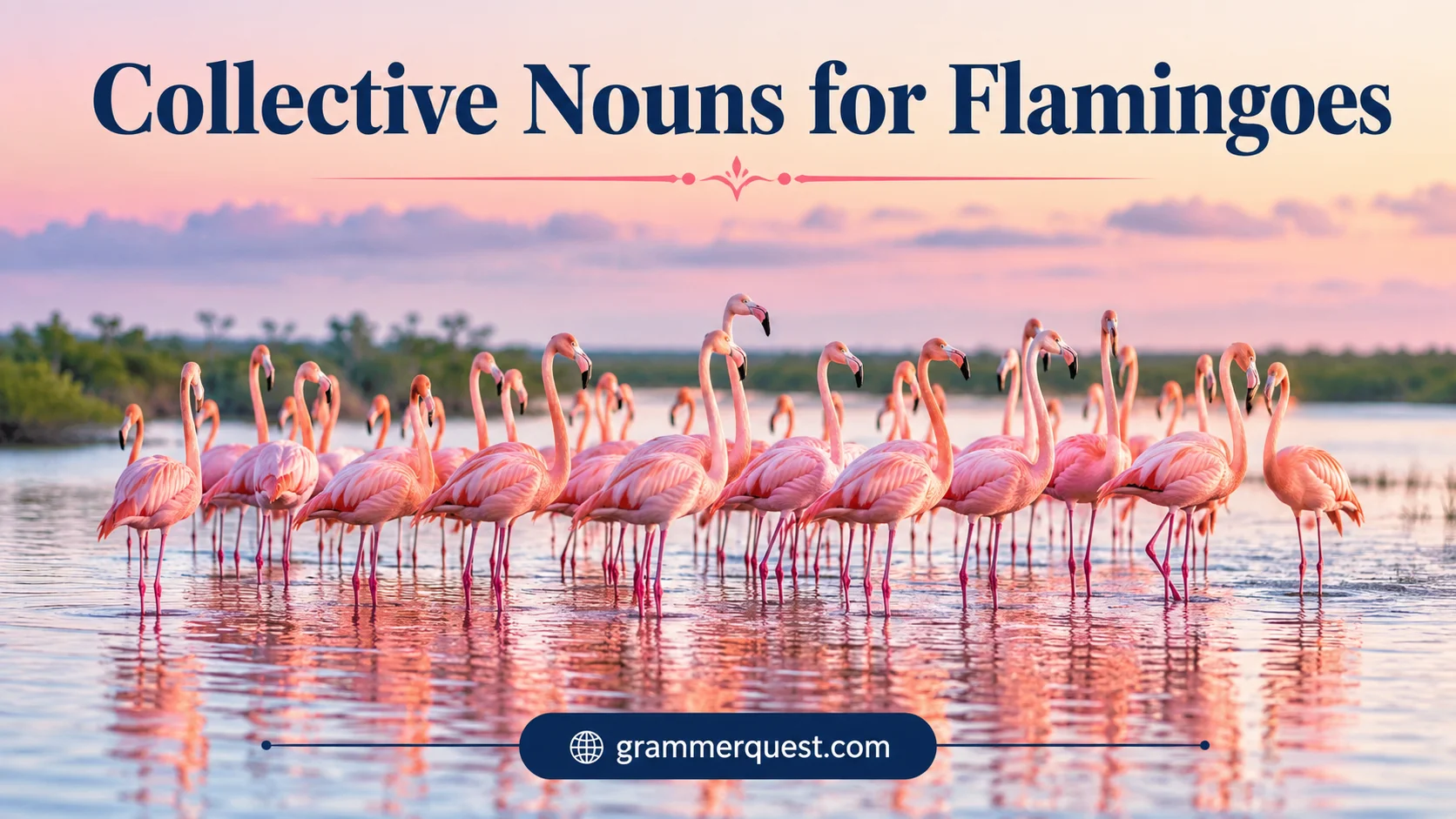
Collective Nouns for Flamingoes are fascinating terms that help describe groups of these beautiful and highly social birds. Flamingoes are known for their bright pink feathers, graceful appearance, and habit of living in large communities. The most common collective nouns include a flamboyance, colony, and stand of flamingoes. Each term reflects a unique aspect of their behavior and appearance, making them interesting examples of how the English language describes animal groups.
Flamingoes often gather in large numbers near lakes, lagoons, and other salty wetlands where they feed and rest together. A flamboyance of flamingoes is especially popular because it highlights their colorful and striking look. A colony refers to a group living together in a shared habitat, while a stand comes from their well-known habit of standing motionless, often on one leg. These collective nouns add depth and charm to wildlife vocabulary.
Collective Nouns Used for Flamingoes
| Collective Noun | Simple Example |
| Flamboyance | A flamboyance of flamingoes stood near the lake. |
| Colony | A colony of flamingoes rested by the shore. |
| Pat | A pat of flamingoes walked through the water. |
| Stand | A stand of flamingoes gathered in the wetland. |
| Flock | A flock of flamingoes flew across the sky. |
Flamboyance of Flamingoes
The word “flamboyance” is the most popular collective noun for flamingoes. It perfectly matches their bright colors and elegant appearance. A flamboyance of flamingoes creates a beautiful and eye-catching sight in nature.
Examples of Flamboyance of Flamingoes
- A flamboyance of flamingoes danced near the water.
- We saw a flamboyance of flamingoes at the zoo.
- The flamboyance of flamingoes looked pink in the sunlight.
- A flamboyance of flamingoes rested beside the lake.
- Tourists photographed the flamboyance of flamingoes.
- The flamboyance of flamingoes moved together gracefully.
- Children admired the flamboyance of flamingoes.
- A flamboyance of flamingoes searched for food in the lagoon.
- The flamboyance of flamingoes stood on one leg.
- A flamboyance of flamingoes created a colorful scene.
Colony of Flamingoes
A colony refers to a large group of flamingoes living together in one area. Flamingoes are highly social birds and prefer staying in colonies for safety and breeding.
Examples of Colony of Flamingoes
- A colony of flamingoes nested near the river.
- The colony of flamingoes made loud sounds together.
- Scientists studied the colony of flamingoes carefully.
- A colony of flamingoes lived in the wetland.
- The colony of flamingoes protected their young birds.
- We watched a colony of flamingoes from a boat.
- A colony of flamingoes gathered near the shore.
- The colony of flamingoes looked peaceful at sunset.
- Birds flew above the colony of flamingoes.
- A colony of flamingoes searched for shrimp in the water.
Pat of Flamingoes
The collective noun “pat” is less common but still used for flamingoes. It usually describes a smaller group moving together in shallow water.
Examples of Pat of Flamingoes
- A pat of flamingoes walked through the lake.
- We noticed a pat of flamingoes near the beach.
- The pat of flamingoes looked calm and quiet.
- A pat of flamingoes searched for food together.
- The pat of flamingoes stood close to each other.
- Visitors admired the pat of flamingoes.
- A pat of flamingoes crossed the wetland slowly.
- The pat of flamingoes moved gracefully in the water.
- A small pat of flamingoes rested near the trees.
- The pat of flamingoes created gentle ripples in the lake.
Stand of Flamingoes
The term “stand” is used because flamingoes often stand still for long periods, usually balancing on one leg.
Examples of Stand of Flamingoes
- A stand of flamingoes rested near the pond.
- The stand of flamingoes looked elegant at sunrise.
- We saw a stand of flamingoes in the distance.
- A stand of flamingoes waited quietly in the water.
- The stand of flamingoes attracted many photographers.
- A stand of flamingoes remained still for hours.
- The stand of flamingoes looked beautiful in the evening light.
- A stand of flamingoes gathered beside the lake.
- Tourists watched the stand of flamingoes carefully.
- The stand of flamingoes reflected in the clear water.
Flock of Flamingoes
“Flock” is a common collective noun used for many birds, including flamingoes. It is often used when flamingoes are flying or traveling together.
Examples of Flock of Flamingoes
- A flock of flamingoes flew across the sky.
- The flock of flamingoes landed near the water.
- We photographed a flock of flamingoes at sunset.
- A flock of flamingoes traveled together.
- The flock of flamingoes looked amazing in flight.
- A flock of flamingoes crossed the wetland.
- The flock of flamingoes searched for food together.
- Children pointed at the flock of flamingoes.
- A flock of flamingoes moved toward the lagoon.
- The flock of flamingoes created a stunning view.
Read More: Collective Nouns for Rainbowfish
Interesting Facts About Flamingoes
Long Lifespan of Flamingoes
Flamingoes are surprisingly long-lived birds. In the wild, they can live for around 20 to 30 years, while some flamingoes in zoos have lived for more than 50 years. Their long lifespan makes them one of the most fascinating water birds in the animal kingdom. Flamingoes also form strong social bonds and often stay with their colonies for many years.
Unique Physical Features
Flamingoes are easily recognized because of their long legs, curved necks, and bright pink feathers. Their pink color comes from pigments found in algae and shrimp they eat. Another unique feature is their ability to stand on one leg for long periods without getting tired. Scientists believe this helps them conserve body heat and energy.
Dietary Habits of Flamingoes
Flamingoes mainly eat algae, shrimp, and small aquatic organisms. They use their specially shaped beaks to filter food from muddy water. Their feeding style is very unusual because they often eat with their heads upside down. The nutrients in their diet are responsible for the beautiful pink shades in their feathers.
Why Collective Nouns for Flamingoes Are Important
Collective nouns make language more descriptive and enjoyable. Words like “flamboyance” and “colony” help people picture the beauty and social behavior of flamingoes more clearly. These terms also show how closely flamingoes live and interact with each other in nature.
Understanding collective nouns not only improves vocabulary but also increases appreciation for wildlife. Flamingoes are remarkable birds with unique biological traits, colorful appearances, and strong social connections. Learning about their collective nouns and fascinating behaviors helps people admire these elegant birds even more.
FAQs :
1. What is the most common collective noun for flamingoes?
The most common collective noun for flamingoes is a flamboyance of flamingoes because of their colorful and eye-catching appearance.
2. What is a group of flamingoes called?
A group of flamingoes can be called a flamboyance, colony, or stand of flamingoes.
3. Why is it called a flamboyance of flamingoes?
The term flamboyance comes from words associated with brightness, color, and style, which perfectly describe flamingoes.
4. What does a stand of flamingoes mean?
A stand of flamingoes refers to a group of flamingoes, inspired by their habit of standing still, often on one leg.
5. What is a colony of flamingoes?
A colony of flamingoes describes a large group living and nesting together in the same habitat.
6. Do all flamingo species live in groups?
Yes, all flamingo species are highly social birds and usually live, feed, and breed in groups.
7. How many species of flamingoes are there?
There are six species of flamingoes found in different parts of the world.
8. Where do flamingoes usually live?
Flamingoes typically live near lagoons, lakes, wetlands, and salty water bodies.
9. Why do flamingoes stand on one leg?
Scientists believe flamingoes stand on one leg to conserve body heat and reduce muscle fatigue.
10. Are collective nouns important in English?
Yes, collective nouns make language more descriptive and help identify groups of animals, people, or objects accurately.
Conclusion :
Collective Nouns for Flamingoes showcase the creativity and richness of the English language. Whether you use a flamboyance, colony, or stand of flamingoes, each term reflects a unique characteristic of these elegant birds. Learning such collective nouns not only improves vocabulary but also makes writing and communication more engaging and descriptive.

Emma Brooke is a passionate language enthusiast and the voice behind GrammarQuest.com. With a sharp eye for detail and a love for clear communication, she simplifies complex grammar rules into easy, practical lessons. Her goal is to help you write with confidence, clarity, and style—whether you’re a student, professional, or everyday writer.